

Here is the thing. For months, I had been staring at product spec sheets, trying to write decent copy for something called a trenchless drilling machine. The words all made sense individually — push/pull force, torque, mud flow rate. But together? Total blur.
So last week, I went to the factory to take a look at an HDD rig machine with my own eyes. Touch it. Ask dumb questions. Maybe get a little grease on my shirt.
An engineer named Wang — calloused hands, slow talker, very patient — walked me over to a huge green machine. “This is the YG-320,” he said. I looked up at it for a few seconds. “So it’s like… a giant toy excavator?” Wang didn’t get mad. He laughed. “It doesn’t dig,” he said. “It drills. Underground. That is what a trenchless drilling machine does.”
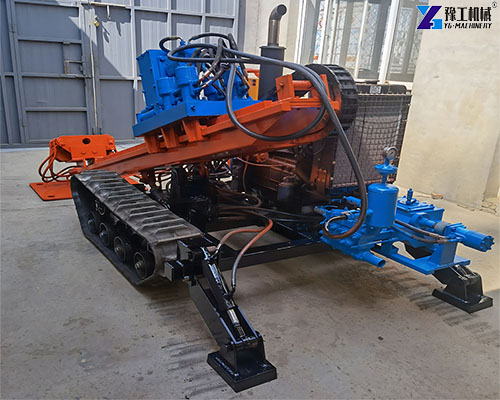
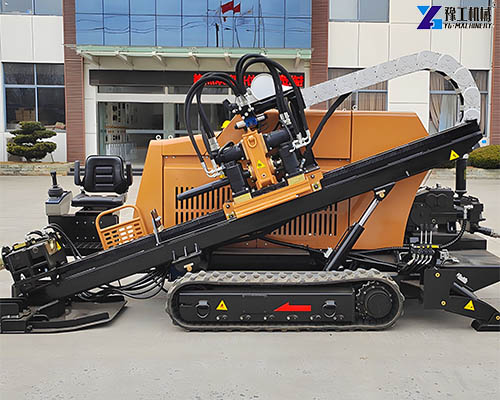
How Does A Trenchless Drilling Machine “Drill” The Ground?
Wang walked me over to a smaller machine (I later learned it was the YG-160A). He pointed at the long, threaded steel stick sticking out the front. “Three meters long,” he said. “We connect them one by one, push them into the ground at an angle, and steer the drill bit exactly where we want it to go. Then we pull the pipe back through the hole.”
“So it’s like… sewing?” Wang blinked. “I mean,” I said, “sewing is when a needle goes in from one side of the fabric and comes out the other side, pulling thread behind it. What you just described is exactly that, but underground. With pipes.” He looked at me for a long moment. “You know,” he finally said, “I’ve trained a lot of operators over twenty years. Nobody has ever called this machine a sewing needle. But you are not wrong.”
That was the moment I finally understood why anyone would spend money on a trenchless drilling machine. No road ripping, no traffic shutdowns, no huge trenches dug and refilled. Simply seam the pipeline into place, leaving the ground surface completely untouched.
Why Are There So Many Models Of Hdd Rig Machine?
We walked through the factory floor. Five machines lined up in a row: YG-160A, YG-180, YG-280, YG-320, YG-320A.
| Model | YG-160A | YG-180 | YG-280 | YG-320 | YG-320A |
| Engine rated power | 100KW | 97KW | 160KW | 140KW/160KW | 160KW |
| Push and pull | Cylinder | Motor | Motor | Cylinder | Motor |
| Maximum drag/feed force | 160/100KN | 180/180KN | 280/280KN | 320/320KN | 320/320KN |
| The maximum torque of the powerhead | 5000N.n | 6000N.n | 10000N.n | 12000N.n | 12000N.n |
| Powerhead speed | 0-180r/min | 0-140r/min | 0-120r/min | 0-140r/min | 0-140r/min |
| Moving speed of powerhead | 30m/min | 20m/min | 20m/min | 20m/min | 20m/min |
| Moving speed of the powerhead | Φ600mm | Φ600mm | Φ750mm | Φ800mm | Φ800mm |
| Drill rod length (single) | 3m | 3m | 3m | 3m | 3m |
| Drill pipe diameter | Φ60mm | Φ60mm | Φ73mm | Φ73mm | Φ73mm |
| Drill pipe diameter | 10-23° | 10-22° | 10-23° | 10-20° | 10-20° |
| Maximum mudflow | 160L/min | 250L/min | 320L/min | 320L/min | 320L/min |
| Maximum mud pressure | 100bar | 80bar | 80bar | 80bar | 80bar |
| Overall quality | 6700kg | 8500kg | 12500kg | 11500kg | 11200kg |
| Dimension(length*width*height) | 5700*1820*2400mm | 6400*2270*2340mm | 7100*2260*2450mm | 7100*2250*2450mm | 7100*2250*2550mm |
“Why five?” I asked. “Isn’t one enough?” Wang grabbed a marker and drew on a whiteboard. “Different projects are like different packages,” he said. “Sometimes you are just pulling a fiber optic cable across a small road. Light package. Small machine. Sometimes you are pulling a half-meter-wide gas pipe under a river. Heavy package. Big machine.”
The specs from the YG document tell the story. The YG-160A is the smallest. Engine power: 100KW. Push/pull force: 160KN on push, but only 100KN on pull. That pull number is important. Wang pointed at it. “This machine works fine for smaller pipes under shorter distances,” he said. “But if you need to pull something heavy, you step up to the YG-180. That one gives you 180KN both ways — push and pull. Motor drive, smoother operation.”
“So it’s like… different size trucks for different size deliveries,” I said. Wang put the marker down. “Have you considered becoming an engineer?” While I politely declined, I still truly appreciated this kind compliment.
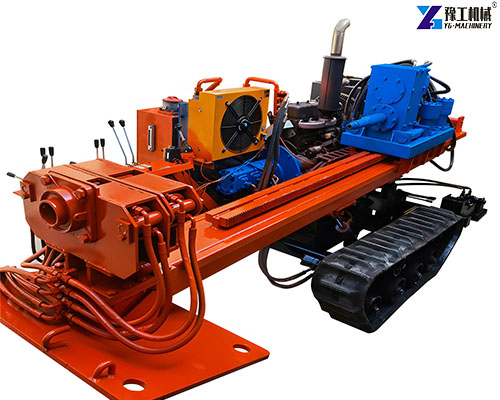
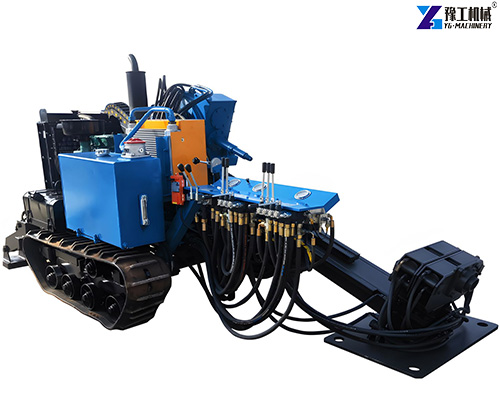
What Is The Difference Between A Hydraulic Cylinder And A Motor?
Wang took out a pen and a tape measure. The pen and tape measure made him look very engineer-like. “An oil cylinder is like pushing a heavy door open with your shoulder. Simple. Strong. Cheap to fix. But when the cylinder reaches the end of its stroke, you feel a little bump — the machine has to switch cylinders. Some old operators don’t mind it. They say it gives them ‘feeling.’”
“And motor?” “Motor is like an automatic door. Smooth. No bump. But if it breaks, you replace the whole gearbox. More expensive.”
“So which is better?” Wang smiled. “We sell both. The customers decide. There is no ‘better.’ There is only what you prefer.”
That was the first time in my career that a product manager gave me an answer like that. Most people say, “ours is the best.” Wang said, “Both are fine, pick one.” I trusted him more after that.
Who Actually Buys These Machines?
On the way back, I kept thinking about one question: Who would buy a horizontal direction drilling rig?
Later, I looked through the company’s client list and found several categories:
- Gas companies: They need to lay pipelines under the city walls, but they can’t close roads.
- Telecommunications companies: They need to lay fiber optic cables in the countryside, without damaging farmland.
- Water companies: They need to replace water pipes, but they can’t dig up the roads in residential areas.
- Utility contractor: Needs to lay gas pipelines under roads or telecommunications pipelines under railway crossings. Purchase a brand new horizontal directional drilling rig; it can drill horizontally through obstacles without excavating trenches.
- Construction team owners: They buy machines to find jobs, earning money from jobs that “others can’t do.”
The last category impressed me the most. They weren’t buying a machine; they were buying the “capability to take on jobs.”
As Engineer Wang once said, something I’ve saved in my phone’s notes:
“Some jobs can only be taken with large machines. If a client sees you don’t even have a 320, they’ll turn around and walk away. So many bosses buy YG-320s not because they have such big jobs this year, but because they can handle them if they do next year.”
That’s when I understood—this machine wasn’t just a machine; it was an “entry ticket.”
If You’d Also Like To See These Hdd Rig Machines
I wrote this article for the person who has never seen a hdd drilling equipment before. If you’ve read this article and are interested in any of the YG-160A, YG-180, YG-280, YG-320, or YG-320A models, or simply want to ask Engineer Wang any questions I haven’t covered, please contact YG Company. We offer 24/7 online service.