You use dry ice for cleaning, for shipping cold goods, or for industrial cooling. Buying dry ice from a supplier costs money every time. You have to order ahead, pay delivery fees, and sometimes they run out. What if you could make your own dry ice, right at your facility, whenever you need it?
A dry ice pellet machine turns liquid CO₂ into solid dry ice pellets. You connect it to a tank of liquid carbon dioxide. The machine does the rest. In minutes, you have dry ice ready to use. You save money, control quality, and never wait for a delivery again.
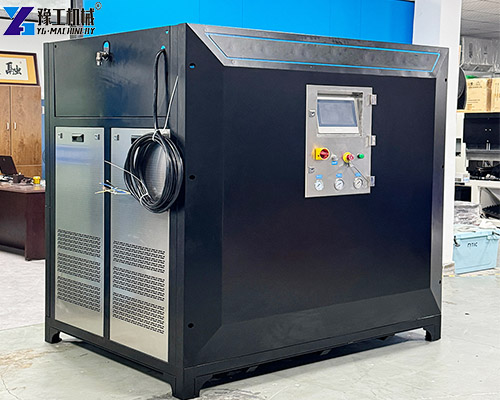
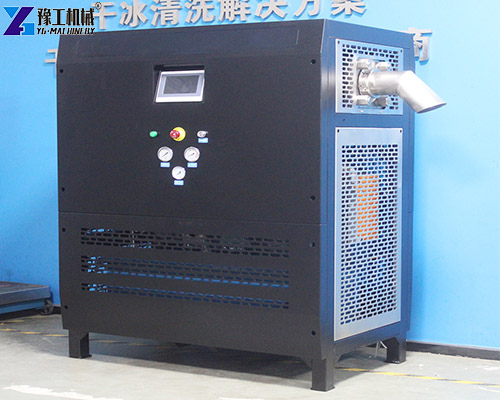
YG offers four models of dry ice pellet-making machines: YG30, YG50, YG100, and YG200. The numbers tell you the approximate capacity in kilograms per hour. All models use a 7-inch color touchscreen with PLC control. You can produce pellets in sizes from 3mm to 19mm (default 16mm).
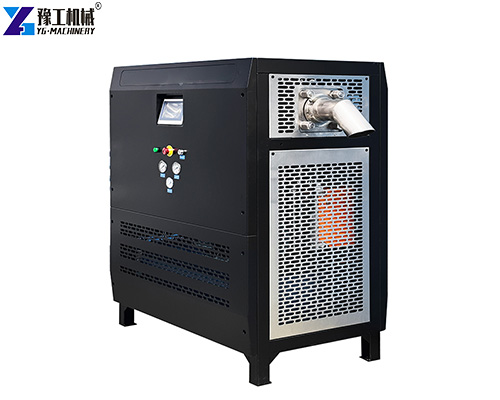
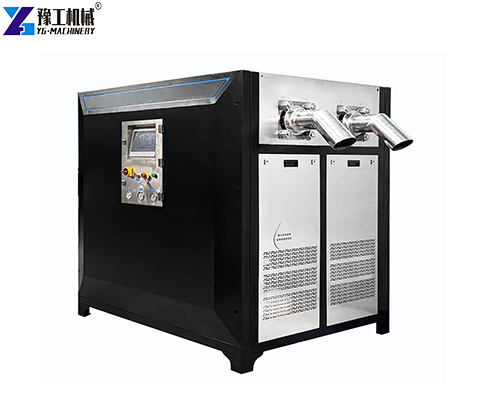
Four Dry Ice Pellet Machine Models
| Equipment Model | YG30 | YG50 | YG100 | YG200 |
| Equipment capacity (kg/hour) | ≤30 | ≤50 | ≤100 | ≤170 |
| Motor power (kilowatts) | 3 | 4 | 5.5 | 7.5 |
| Hydraulic oil tank capacity (liters) | 20 | 50 | 80 | 80 |
| Net weight of equipment (kg) | 108 | 185 | 252 | 320 |
| Weight including wooden crate packaging (kg) | 127 | 218 | 305 | 375 |
| Equipment floor space (square meters) | 0.37m² | 0.51m² | 0.74m² | |
| Equipment dimensions (mm) | 780*480*580/1280 | 880*580*1280 | 1080*680*1320 | |
| Packaging box dimensions (mm) | 950*600*760/1450 | 1030*730*1450 | 1230*830*1480 | |
| Packaged volume (CBM) | 0.4 / 0.74 CBM | 1.1 CBM | 1.52 CBM | |
| Voltage requirements | Two-phase 220V / Three-phase 380V | Three-phase 380V AC power | ||
| System pressure | ≤160 Bar | ≤180 Bar | ||
| Granulation range | Default is 16mm (options: 3, 6, 9, 13, 16, 19mm) | |||
| Granulation density | ≤1550kg/m³ | |||
| Carbon dioxide pressure requirements | 12-22 Bar ≥66ppm | |||
| carbon dioxide consumption | ≥75L /hr | ≥125L / hr | ≥250L / hr | ≥420L / hr |
| Power consumption per hour | ≥4 kWh | ≥5 kWh | ≥7 kWh | ≥9 kWh |
| Operating method | 7-inch color touchscreen & PLC programmable operating system & automated production | |||
| Operating Language | customized | |||
What these numbers mean:
- Capacity – How much dry ice the machine makes per hour. Choose based on your daily usage.
- CO₂ consumption – You need a liquid CO₂ tank. This is the raw material.
- Power consumption – Electricity cost to run the machine.
- Floor space – All models are very compact. Even the largest fits in a corner.
Why Make Your Own Dry Ice Instead Of Buying?
Many customers buy dry ice from suppliers. Here is why owning a dry ice pellet machine is better.
- Lower cost per kilogram. You buy liquid CO₂ in bulk, which is much cheaper than buying solid dry ice. The machine pays for itself over time.
- No delivery delays. You make dry ice when you need it – early morning, late night, weekends. No waiting for a truck.
- Consistent quality. You control the pellet size and density. The YG machine produces pellets up to 1550 kg/m³ density – hard, slow‑melting, and effective for blasting or cooling.
- No waste. Make only what you need. No leftover dry ice sublimating in storage.
- Simple operation. The touchscreen and PLC automation mean anyone can run it after a short training.
How Does A Dry Ice Pellet Making Machine Work?
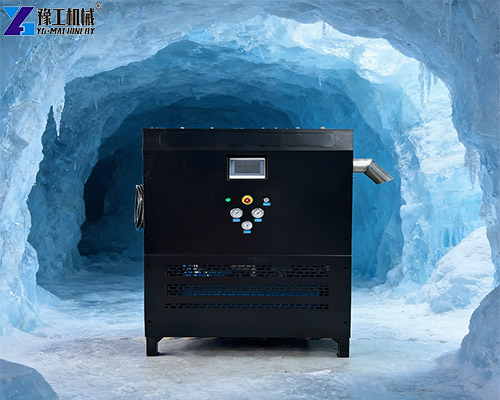
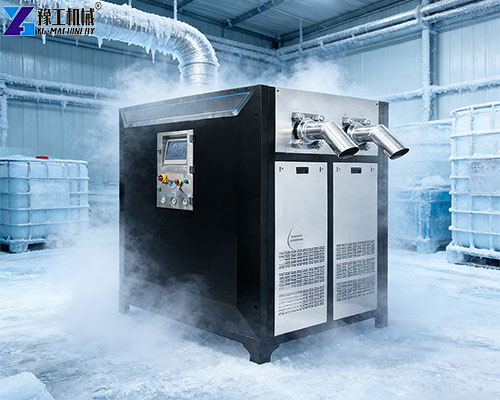
Liquid CO₂ is stored in a tank under high pressure. When you release it through the machine, the pressure drops. The liquid instantly turns into a mixture of solid snow and cold gas. The machine compresses this snow through a die. The result is hard, dense pellets. The pellets fall into a container or directly into your dry ice blaster.
The YG machine uses a hydraulic system to push the snow through the die. The motor powers a hydraulic pump. The touchscreen controls the pressure, pellet size, and production rate. The whole process is automated. You press “start,” and the machine runs until you stop it or until the CO₂ tank is empty.
Who Buys A Dry Ice Pellet Machine?
These examples are based on typical users of such equipment.
Case 1 – A food processing plant in Australia. They used dry ice to cool the dough during mixing. They bought pellets in bags. Delivery was twice a week. One Monday, the truck broke down. They lost a day of production. They bought a YG100. Now they make dry ice every morning. The production manager said, “We are never out of dry ice again. And we saved 40% on our CO₂ bill.”
Case 2 – A dry ice blasting service company in Germany. They cleaned molds for plastic factories. They needed different pellet sizes for different customers. They bought a YG200 with multiple dies. Now they produce 3mm for electronics cleaning and 16mm for heavy mold cleaning. The owner said, “Having our own dry ice pellet machine means we control our cost and quality. We are not dependent on suppliers.”
Is A Dry Ice Pellet Making Machine Right For You?
If you regularly buy dry ice, you are paying a premium for someone else to make it and deliver it. A dry ice pellet machine puts production in your hands. YG offers four models from 30 kg/hour up to 170 kg/hour. You choose based on your daily usage.
All models feature a 7-inch touchscreen, PLC automation, and adjustable pellet sizes. The machines are compact – the largest takes less than one square meter. They run on 220V or 380V power. You need a liquid CO₂ tank (supplied separately) and standard industrial-grade CO₂.
The savings are significant. Raw material cost is often 50‑70% less than buying finished dry ice. Plus, you never wait for deliveries. You produce exactly what you need, when you need it. The machine pays for itself in months for regular users.
YG Machinery also offers dry ice blasting machines (cleaning equipment) and accessories. Contact YG directly with your approximate daily dry ice usage in kilograms. They will recommend the right model, provide a quote, and advise on CO₂ tank requirements. Stop buying dry ice – start making it.
Frequently Asked Questions
No. The 7-inch color touchscreen makes it simple. PLC automation controls everything. You just press start.
Change hydraulic oil periodically. Clean the die if pellets become irregular. The document does not specify intervals – typical is every 500‑1000 hours.
Once the machine is connected to CO₂ and power, it produces dry ice within minutes. No warm‑up time.
Use an insulated container, but do not seal it tightly. Dry ice turns to gas. If sealed, pressure builds and can burst the container.