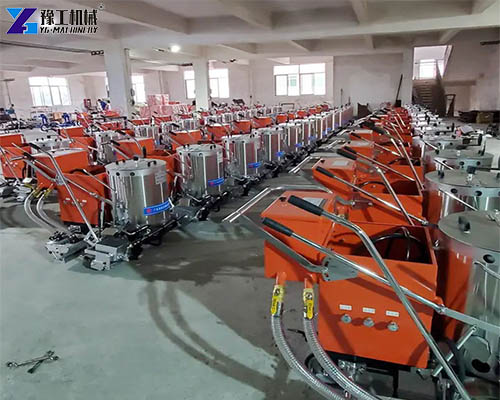
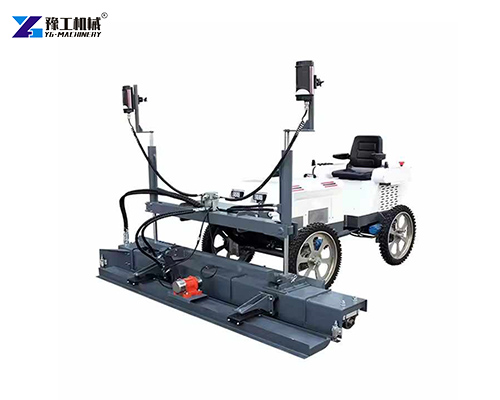
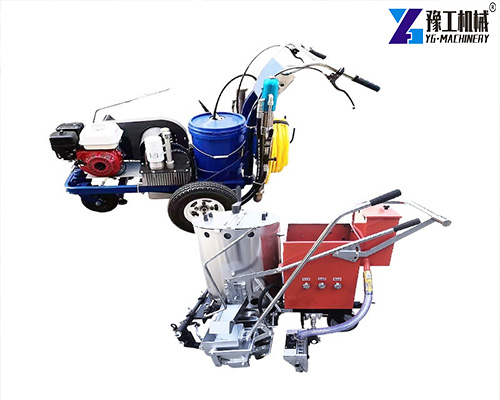
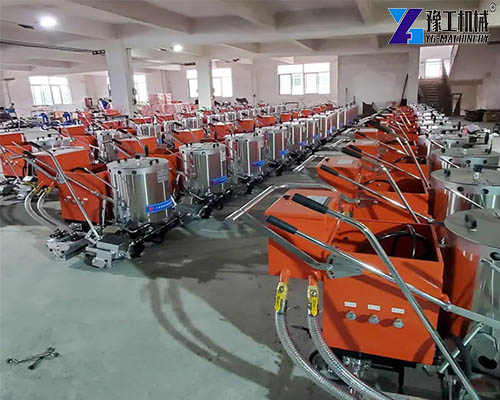
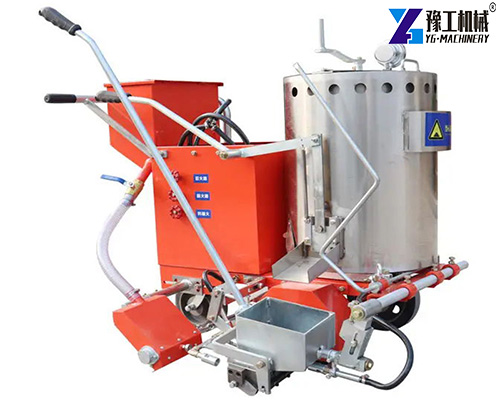
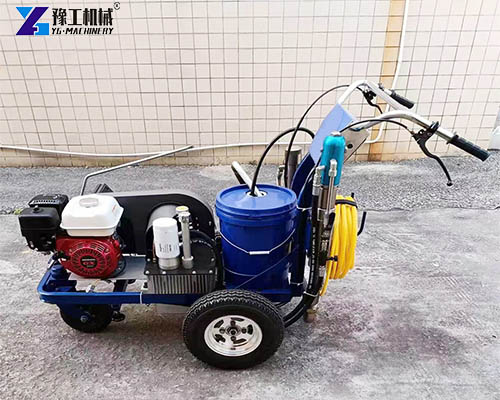
Road marking melters are specialized heating devices used to melt solid thermoplastic road marking paint at temperatures between 180°C and 220°C for application on highways, parking lots, and urban streets. The current global boom in road infrastructure expansion, airport apron construction, and parking facility upgrades has driven a surge in demand for efficient melting equipment.
YG Machinery has launched five road marking melter models: CK300 mechanical single cylinder, CK600 mechanical double cylinder, CK800 hydraulic double cylinder, CK1000 hydraulic double cylinder, and CK1200 hydraulic double cylinder. They feature high-efficiency LPG direct injection burners, high-density aluminum silicate insulation (saving 20% gas), vertical paddle mixers for uniform stirring, stainless steel tanks with high-carbon steel bottoms, and integrated safety protection devices.
They offer extremely low fuel consumption per square meter of marking, significant long-term operating cost advantages compared to non-insulated kettles, corrosion-resistant and durable construction, and automatic emergency disconnection or overload overflow protection for operator safety. They are suitable for road marking projects of different scales – from small parking lot stripes to large-scale highway edge lines – and are a highly reliable choice for marking contractors seeking both fuel efficiency and continuous melting capacity for full-shift production.
But with multiple capacity options and two drive system designs (mechanical vs hydraulic), how do you choose the right one? In this head-to-head comparison, we pit YG Machinery‘s five road marking melter variations against each other and against non-insulated or single-layer tank competitors, focusing on kettle capacity, engine power, mixing method, daily workload, and project suitability.
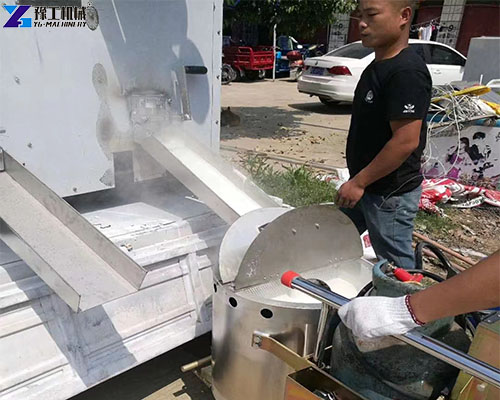
Technical Specifications Of YG Road Marking Melter Models
All five models are trailer-mounted paint melters designed for solid thermoplastic material. Below are the core parameters.
| Model | YG-CK300 Mechanical Single Cylinder | YG-CK600 Mechanical Double Cylinder | YG-CK800 Hydraulic Double Cylinder | YG-CK1000 Hydraulic Double Cylinder | YG-CK1200 Hydraulic Double Cylinder |
| Engine | 6.5HP evaporative water-cooled diesel engine | 8.0HP evaporative water-cooled diesel engine | 15HP electric start evaporative water-cooled diesel engine | ||
| Kettle Capacity | 300kg | 300kg*2 | 360kg*2 | 500kg*2 | 600kg*2 |
| Dimensions | 1400mm*900mm*1600mm | 1320mm*1400mm*1650mm | 1730mm*1620mm*1570mm | 1750mm*1620mm*1700mm | 1860mm*1820mm*1700mm |
| Net Weight | 500kg | 800kg | 1000kg | 1200kg | |
| Daily Workload | 600-800m2 | 800-1200m2 | 1000-2000m2 | 1200-2000m2 | |
| Structure | Frame structure, high-density aluminum silicate insulation material is installed between the inner liner and the outer cover of the kettle, saving 20% of gas | Frame structure, insulation material is installed between the inner liner and the outer wall of the kettle | |||
| Safety Device | Custom-designed automatic protection device; the diesel engine and reducer are automatically disconnected in case of an emergency to ensure the safety of workers | Custom-designed overload overflow device to prevent misoperation | |||
| Heating System | High-efficiency and energy-saving LPG direct injection burner | ||||
All models use high-efficiency LPG direct injection burners. The double cylinder design lets you heat two colors or formulations independently. The vertical paddle mixer ensures even heat distribution and prevents filler sedimentation.
YG Road Marking Melters Vs Non-Insulated And Single-Layer Kettles
Many contractors still use uninsulated single-layer steel kettles or even direct-fire pots without any mixing mechanism. Each method has serious drawbacks. Let us break down four critical dimensions across YG‘s lineup and compare them to these alternatives.
Heating Efficiency and Fuel Cost: Uninsulated kettles waste 25-35% of heat through the bare steel walls. A typical non-insulated 400kg pot takes 75-90 minutes to melt a full batch and consumes 3-4 LPG cylinders per 8-hour shift. YG’s high-density aluminum silicate insulation installed between the inner liner and outer cover saves 20% of gas compared to ordinary models. Combined with the LPG direct injection burner (higher thermal efficiency than standard burners), the total fuel saving reaches approximately 30% per square meter of marking. For a contractor marking 2000m² daily, this translates to savings of 1-2 LPG cylinders per day – over $5000 per year.
Mixing Uniformity and Marking Quality: Manual stirring (by hand rod) or non-agitated kettles allow glass beads and titanium dioxide (reflective and white pigments) to settle at the bottom, causing inconsistent viscosity and patchy color. YG‘s vertical paddle mixer runs continuously during melting. In hydraulic models (CK800, CK1000, CK1200), the forward and reverse stirring action further homogenizes the melt by periodically changing direction, preventing clumping and ensuring every batch has identical flow properties. The result: uniform color, consistent line thickness, and stable retroreflectivity across the entire job.
Drive System Comparison – Mechanical vs Hydraulic: Mechanical models (CK300, CK600) use a manual clutch to engage the agitator. The system is simple, robust, and low-maintenance, but cannot reverse direction. The operator controls mixing speed by engine throttle. Hydraulic models (CK800, CK1000, CK1200) feature a BM-type hydraulic motor with a multi-way integrated valve, enabling stepless forward and reverse speed regulation. This allows the operator to adjust mixing intensity according to material viscosity – slow and gentle for fine aggregates, faster for thick materials. The hydraulic drive also provides smoother power delivery and can supply molten paint to two separate marking machines at the same time – a major productivity advantage.
Capacity and Continuous Workflow: Small single-cylinder kettles (300kg) require refilling after every batch, causing the marking crew to wait 20-30 minutes for the next melt. YG’s double cylinder models (600kg to 1200kg total capacity) allow one operator to draw from one cylinder while the other cylinder heats the next batch – zero downtime between refills. The independent heating of each cylinder also lets you switch between colors (e.g., white lane lines and yellow warning lines) without cleaning the whole kettle. This cuts job completion time by up to 35% on multi-color projects.
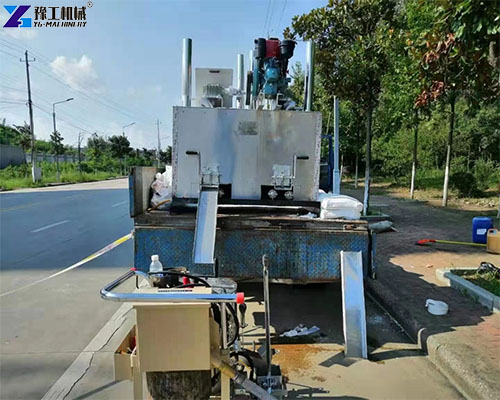
Which Road Marking Melter Model Should You Choose?
Based on our comparison, here is the straightforward advice.
Choose CK300 Mechanical Single Cylinder if: Your typical daily output is 600-800m² – small parking lots, residential access roads, or short urban segments. You have a limited budget but still want an insulated kettle with an automatic safety disconnect. The 300kg capacity handles one shift of continuous marking without frequent refills. Best for entry-level contractors.
Choose CK600 Mechanical Double Cylinder if: Your daily target is 800-1200m² and you want double cylinders for continuous supply, but prefer the simplicity of mechanical drive. The 600kg total capacity gives you two 300kg kettles. You can heat two colors or keep one always ready while using the other. Most popular mechanical model for growing marketing businesses.
Choose CK800 Hydraulic Double Cylinder if: Your daily output is 1000-2000m² and you want forward/reverse stirring plus electric start. The 720kg total capacity and 15HP engine provide plenty of power. You can also supply two marking machines simultaneously. This is the most popular hydraulic model for general road marking contractors.
Choose CK1000 or CK1200 Hydraulic Double Cylinder if: You focus on large highway edge marking or long-duration continuous line jobs (1200-2000m² daily). The 1000kg or 1200kg total capacity reduces refill stops to once per shift. The larger dimensions require more towing capacity but deliver the highest productivity per operator. Best for contractors bidding on state or provincial highway projects.
Avoid non-insulated or manually stirred melters if: Your daily output exceeds 500m², or you need consistent paint quality across the entire job. The fuel waste, uneven mixing, and worker safety risks simply cannot compete with a proper road marking melter.
Get The Right Melter For Your Crew‘s Daily Meterage
Stop losing fuel to uninsulated tanks and risking uneven paint quality with manual stirring. YG Machinery – Shaping Tomorrow Since 2005 – has supplied road marking melters to contractors in over 40 countries. Our team provides 24/7 technical support, safety device verification, and optional burner configurations for different regional LPG standards.
Contact us now for a free project consultation, a customized quote based on your daily marketing target, or a live video demonstration. Take the first step toward faster melting, lower fuel costs, and more consistent road markings.