You took a job to profile an uneven tunnel wall. The client required a smooth surface without damaging the remaining structure. You used a breaker hammer for three days. The noise was so loud that your crew got tinnitus. The surveying team in the adjacent tunnel filed four complaints. Worst of all, you over‑excavated by 15 centimeters and spent an extra eighty thousand on backfill concrete.
That was not your fault. It was the wrong tool for the job. The machine I am about to describe — a hydraulic milling excavator — was built specifically to solve problems like that.
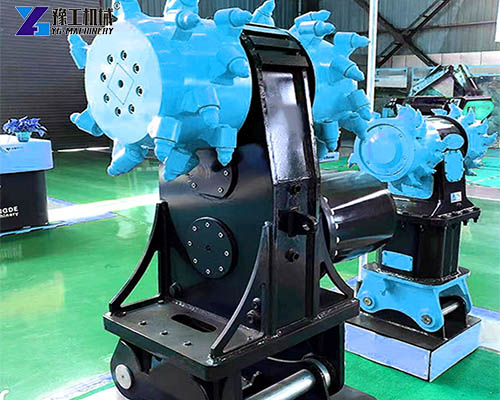
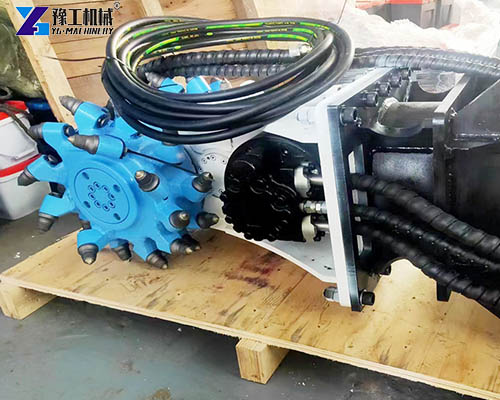
The Fundamental Difference Between A Breaker Hammer And A Hydraulic Milling Excavator
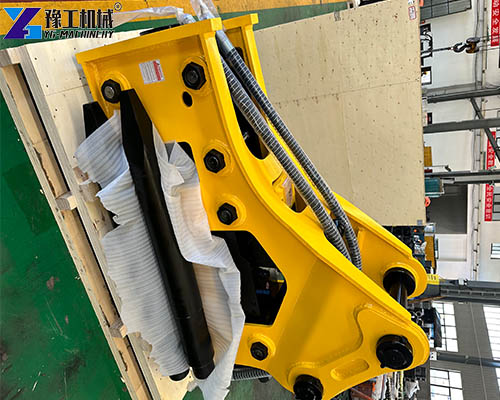
A breaker hammer works like a sledgehammer — it shatters material through impact. The advantage is speed. The disadvantage is a lack of control. The shock wave spreads in all directions, causing cracks to extend where you do not want them.
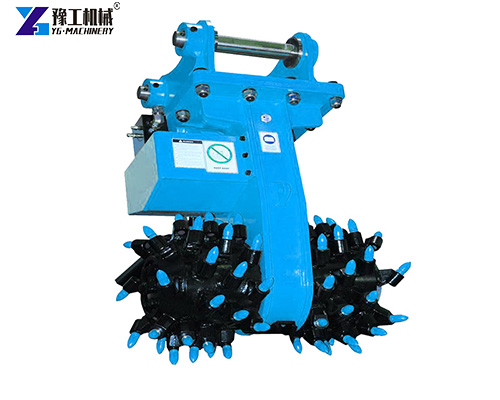
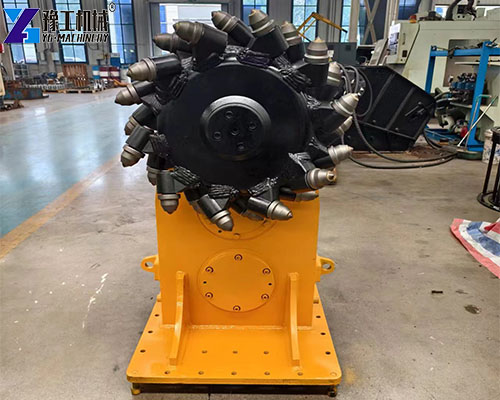
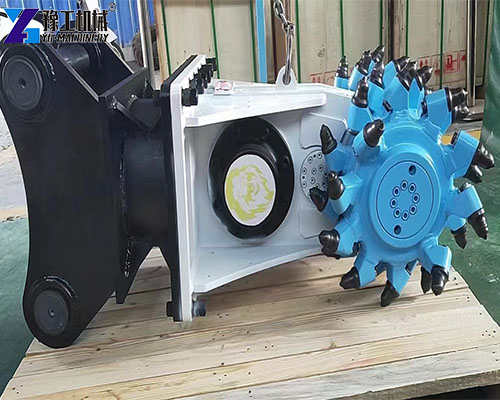
A hydraulic milling excavator works completely differently. Its drum is studded with dozens of tungsten carbide teeth. A hydraulic motor spins the drum at high speed, and the teeth scrape away material layer by layer.
Think of it this way:
- A breaker hammer = chopping wood with an axe → splinters fly everywhere, cracks are unpredictable.
- A hydraulic milling excavator = planing wood with a carpenter‘s plane → you remove exactly as much as you want, leaving a smooth, controllable surface.
That is why, on many European tunnel jobs, a tunnel milling machine has already become standard equipment rather than an “optional attachment”.
How To Choose From The 11 YG Series Models?
| Model | Excavator Weight (tons) | Max Torque (N·m) | Max Flow (L/min) | Summary |
| YGM 140 | 3-8 | 3000 | 40 | Even mini excavators can use it — small trenches, edge trimming |
| YGM 160 | 6-12 | 5200 | 174 | Main workhorse for urban repairs |
| YGM 180 | 8-14 | 5600 | 160 | High speed (120 rpm) — ideal for asphalt and soft rock |
| YGM 210S | 12-18 | 9000 | 268 | Increased torque version — handles medium-hard rock |
| YGM 240 | 16-25 | 12800 | 280 | 12800 N·m torque — entry level for hard rock |
| YGM 200 | 15-21 | 12800 | 400 | Same torque, but requires higher flow |
| YGM 280 | 20-25 | 12000 | 337 | The “golden size” for tunnel profiling |
| YGM 350 | 25-35 | 23500 | 580 | Torque doubles — now you can chew hard rock |
| YGM 400 | 30-45 | 46500 | 670 | Medium-large tunnels and mining |
| YGM 800 | 60-100 | 111300 | 1800 | Industrial scale — needs a 100-ton excavator |
| YGM 1250 | 120-160 | 121400 | 2700 | Largest model — hard-rock mining, no problem |
Six Real‑World Scenarios And How A Rock Milling Cutter Handles Each
Scenario 1: Tunnel Profile Repair
Traditional method: blast first, then clean up with a breaker hammer. The result is often 10‑20 centimeters of over‑excavation, dramatically increasing the volume of backfill concrete.
The rock milling cutter approach: follow the design contour and mill away the excess rock layer by layer. Precision can be held to within 3 centimeters. A tunnel wall profiled with a hydraulic milling excavator is so smooth that shotcrete can be applied directly, without any additional leveling.
Recommended models: YGM 280 (for 20‑30 ton excavators), YGM 350 (30‑50 ton excavators)
Scenario 2: Urban Utility Trenching
The biggest headaches: you cannot close the road for long, you cannot disturb residents, and you cannot damage adjacent buried lines.
The moment a breaker hammer starts, complaint hotlines light up. A tunnel milling machine produces 30‑50% less noise than a breaker hammer, and because there is no shock wave, it will not crack nearby old water mains. Milling asphalt at 2 AM with a hydraulic milling excavator — residents upstairs may not even wake up.
Recommended models: YGM 160 (10‑15 ton excavators), YGM 180 (10‑20 ton excavators)
Scenario 3: Reinforced Concrete Demolition
You need to remove a concrete wall, but the rebar inside must be saved.
A breaker hammer will snap the rebar. A rock milling cutter mills the concrete and slides off when it touches steel — the rebar stays intact.
Recommended models: YGM 210S (18-25 ton excavators), YGM 240 (20-30 ton excavators)
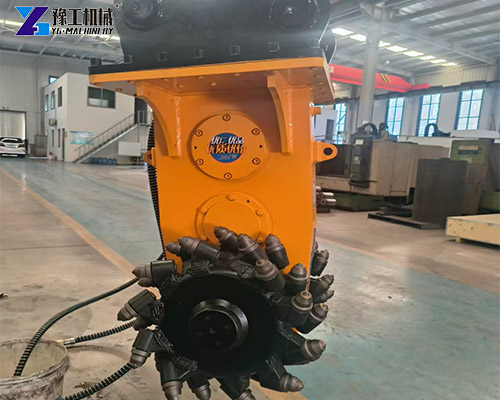
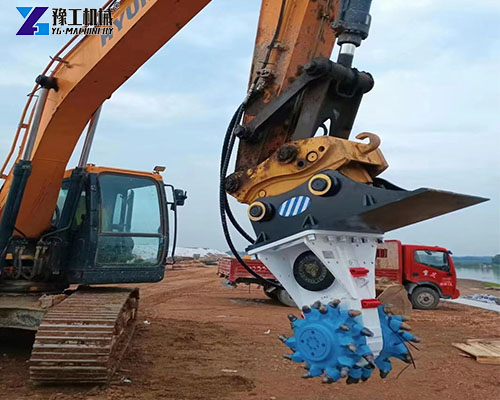
Scenario 4: Rock Trenching
You need to dig a trench 400mm wide and 2 meters deep through medium‑hard sandstone.
With a breaker hammer, the trench walls will be irregular and severely over‑excavated, doubling the backfill volume. With a hydraulic milling excavator, the walls are vertical and smooth — like cutting a cake.
Recommended models: YGM 200 (20-30 ton excavators), YGM 280 (20-30 ton excavators)
Scenario 5: Mining
Small mines are not allowed to use explosives. Previously, the only option was a breaker hammer — low efficiency, excessive ore fragmentation, and high loss rates.
A tunnel milling machine can “nibble” the ore vein directly. The resulting ore is uniformly sized, with minimal fines and a high recovery rate.
Recommended models: YGM 400 (40‑60 ton excavators), YGM 800 (80‑120 ton excavators), YGM 1250 (120‑160 ton excavators)
Scenario 6: Pavement Milling
More flexible than a dedicated pavement miller — an excavator arm can reach corners, manhole surrounds, and bridge abutment bases.
With asphalt‑specific teeth, a hydraulic milling excavator produces uniform reclaimed granules that can be directly recycled.
Recommended models: YGM 140 (3‑8 ton mini excavators), YGM 160 (10‑15 ton excavators)
One Honest Truth At The End
Not every project needs a hydraulic milling excavator.
If you are tearing down an ordinary brick wall or digging a foundation in soft soil, a breaker hammer is fine.
But if you face any of the following:
- Tunnel profiling with strict over‑excavation limits
- Night work in a city center where noise must be minimized
- Selective demolition of reinforced concrete while keeping rebar intact
- Rock trenching that requires straight, smooth walls
- Mining without explosives
Then you should take a serious look at a tunnel milling machine.
It will not always make you work faster — in some cases, it may even be slightly slower than a breaker hammer. But it will make you work more precisely, more quietly, and more cost‑effectively.
And in tunnel engineering and urban construction, “more precise” usually means higher unit prices and fewer headaches.