Semi-automatic concrete block machines are specialized production equipment that balance cost and output for small- and medium-sized brick plants. The current market offers three common choices: traditional manual pressing (slow, inconsistent), cheap semi-auto presses from unknown brands (prone to frequent breakdowns), and reliable semi-auto block machines.
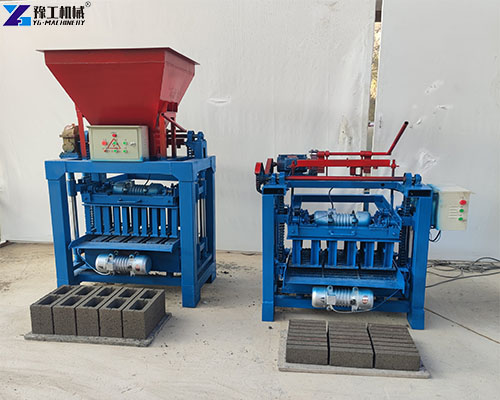
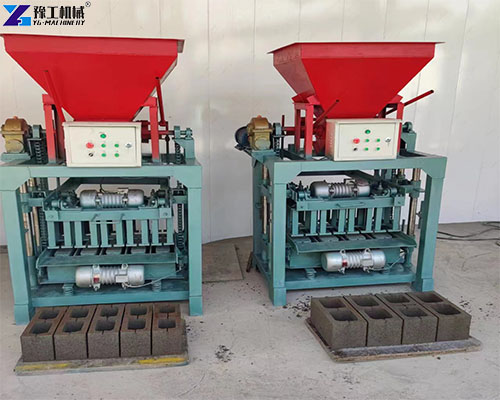
YG has launched a proven semi-auto block press. It features high production speed, low labor cost, consistent brick quality, and reduced long-term maintenance. It avoids the inefficiency of manual methods and the unreliability of low-end alternatives, with durable construction and stable performance. It is suitable for production targets with limited budgets and offers a highly reliable choice for brick plants upgrading from manual or low-end equipment.
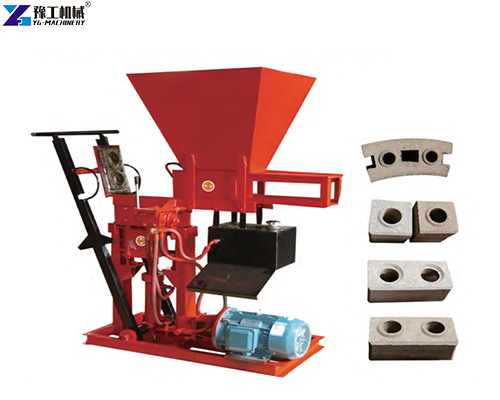
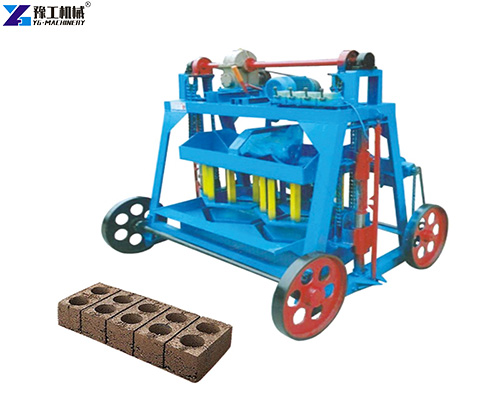
Technical Specifications Of YG’s Compact Brick Molding Equipment
Before diving into the comparison, let us look at the core parameters of YG’s compact brick making machine. This unit is designed for workshops with limited space and operators.
| Item | Specification |
| Molding Cycle | 35 seconds |
| Total Power | 6.3 kW |
| Capacity (Standard Brick 240×53×115 mm) | 15,000 pcs per 8-hour shift |
| Capacity (Hollow Block 390×190×190 mm) | 2,400 pcs per 8-hour shift |
| Pallet Size | 850×550×30 mm |
| Machine Dimensions | L1250×W1350×H1550 mm |
| Weight | 800 kg |
| Number of Operators | 2–3 persons |
With a 35-second cycle and only 800kg footprint, this small brick molding machine fits into any concrete block plant. The 6.3 KW power consumption keeps electricity bills low while delivering consistent compaction.
YG Semi-Auto Vs Manual Vs Cheap Semi-Auto Presses
Many buyers searching for a semi-auto brick press get confused by low-price offers. Let us break down three critical dimensions.
Production Output per Shift: A manual press (two workers hand‑compacting molds) produces at most 500–800 standard bricks per shift – slow and exhausting. A cheap semi‑auto press from unknown sellers often claims 8,000–10,000 bricks per shift, but frequent jams and mold misalignments cut real output to 5,000–6,000. YG’s semi automatic concrete block machine delivers a verified 15,000 standard bricks or 2,400 hollow blocks per shift, cycle after cycle, with no mid‑shift breakdowns.
Labor Requirement and Skill Level: Manual pressing needs 4-5 strong workers plus a mixer operator – high labor cost and inconsistent brick density. Cheap semi-auto presses require 3-4 operators because the feeding and ejection systems are not synchronized. YG’s machine needs only 2-3 operators. The control panel uses simple push buttons, and the automatic vibrator and press head cycle run without constant adjustment. After one hour of training, any worker can run it.
Brick Quality and Mold Change Flexibility: Manual bricks vary in size, edges crumble easily. Cheap semi‑auto presses use soft steel molds that wear out in 3-4 months, producing out‑of‑spec blocks. YG’s equipment features hardened steel molds with precision‑ground surfaces. Each brick has clean edges, uniform height, and consistent strength. The quick mold change system (under 10 minutes) lets you switch between standard bricks (240×53×115 mm) and hollow blocks (390×190×190 mm) without extra tools.
Core Advantages Of YG’s Semi Automatic Concrete Block Machine Over Alternatives
Why do smart brick plant owners choose YG’s semi-auto block machine? Three unbeatable strengths.
High Efficiency with Low Power: The 35‑second molding cycle is among the fastest in its class. Yet total power is only 6.3 kW – less than a household water heater. This means you produce 15,000 bricks per shift while spending pennies on electricity.
Compact, Stable, and Easy to Move: With dimensions of L1250×W1350×H1550 mm, this machine fits through a standard door. The 800kg steel frame absorbs vibration, so it does not need a special foundation – just a flat concrete floor. You can relocate it to a new workshop in half a day.
Versatile Production – One Machine, Two Block Types: Change molds in under 10 minutes. Produce solid standard bricks for walls, or hollow blocks for foundations and fences. This flexibility lets you take on more customer orders without buying a second machine.
Which Brick Production Solution Should You Choose?
Based on our comparison, here is the straightforward advice.
Choose manual pressing only if: You make less than 1,000 bricks per week as a hobby or on a very small construction site, and labor is free (family members). Not recommended for any business.
Choose a cheap semi‑auto press if: You have a very tight budget and are willing to accept frequent repairs, inconsistent brick quality, and lower daily output. Only suitable for short‑term projects.
Choose YG’s semi automatic concrete block machine if: You run a small to medium brick plant aiming for 10,000-15,000 bricks per shift; you need both standard bricks and hollow blocks; you want low operating cost (2-3 workers, low power, minimal repairs); and you plan to grow your business for 5+ years. This machine gives you the best return on investment – typically recouping the extra upfront cost within 6-8 months through labor savings alone.
Start Making Better Bricks Today – Upgrade Your Plant with YG
Stop losing money on slow manual methods or unreliable, cheap presses. YG Machinery – Shaping Tomorrow Since 2005 – has supplied semi automatic concrete block machines to brick plants in over 25 countries. Our team provides 24/7 technical support, spare parts, and optional mold customization for any block size.
Contact us now for a free production consultation, a customized quote, and a live video demonstration. Take the first step toward consistent, high-quality bricks that build customer trust.