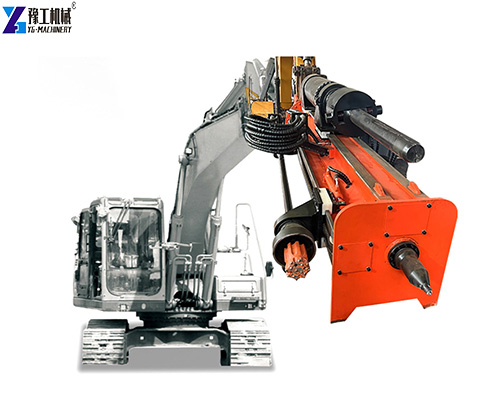
You’ve felt the frustration:
- Breakers take forever on hard stone, and they rattle your excavator to pieces.
- Blasting requires permits, safety zones, and angry neighbors.
- Hand tools? Forget it. You’d be there for a week.
- Dust and noise complaints pile up faster than the rubble.
And if you work near buildings, roads, or pipelines? Explosives are simply off the table.
The YG hydraulic hard rock splitter was built for exactly those moments. No shockwaves, no dust clouds, no paperwork nightmares.
Meet The Lineup: YG-250, YG-350, And YG-450
Three models. One simple choice—pick the one that matches your rock hardness and hole depth.
| Model | YG-250 | YG-350 | YG-450 |
| Wedge Length(mm) | 250mm | 350mm | 450mm |
| Piston Stroke(mm) | 90/220mm | 90/220mm | 90/220mm |
| Drilling Depth(mm) | >500mm | >700mm | >900mm |
| Punching Diameter(mm) | 42mm | 46mm | 46mm |
| Crack Width(mm) | 10-20mm | 10-20mm | 10-20mm |
| Cleavage Time(s) | 10-15/s | 10-15/s | 10-15/s |
| Splitting Force(T) | 500t | 800t | 800t |
| Weight(kg) | 240kg | 250kg | 260kg |
YG-250 – light and nimble. 500 tons of splitting force. Drilling depth only needs to be 500mm. Perfect for concrete demolition, boulders, and medium-hard stone.
YG-350 – the workhorse. 800 tons of force needs a 700mm hole depth. 46mm hole diameter. Handles tough granite and reinforced concrete with ease.
YG-450 – the deep-digger. Same 800 tons, but wedge length is 450mm, and drilling depth goes past 900mm. When you’ve got thick, stubborn rock layers, this one cracks them clean.
All three share the same piston stroke (90/220mm), crack width (10-20mm), and lightning-fast 10-15 second cycle time.
Power Options – Electric Or Diesel, You Choose
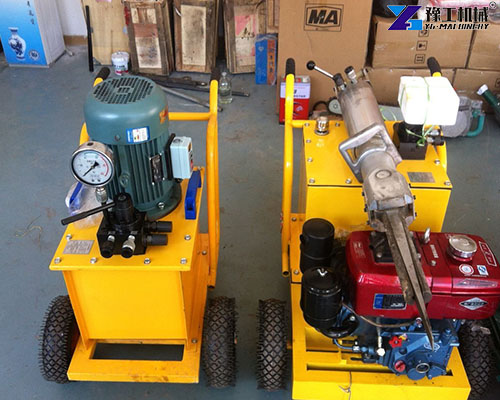
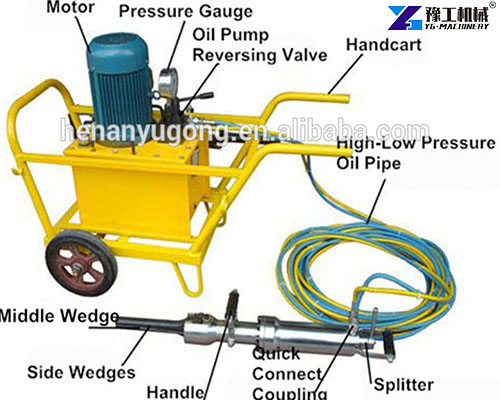
The hydraulic rock splitter machine comes in two parts: the pump station and the splitter gun.
The pump station is your power source. Two choices:
- Electric pump – plug it in, press start, and go. Quiet, clean, no fumes. Best for indoor jobs, tunnels, or anywhere with grid power.
- Diesel pump – no outlet? No problem. Runs on diesel fuel. Perfect for remote quarries, mountain sites, or emergency jobs.
Which one to pick? Simple: if you have electricity handy, go electric. If you’re out in the bush or moving between sites, diesel gives you freedom.
Note: if you choose electric, tell us your voltage and frequency. We’ll match the motor.
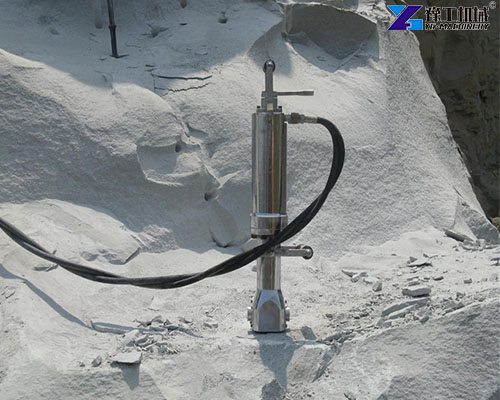
One Pump, Multiple Guns – How Many Do You Need?
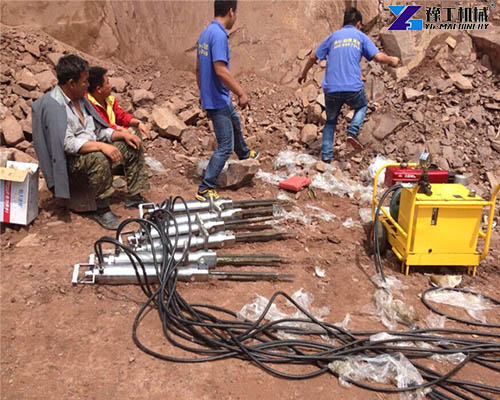
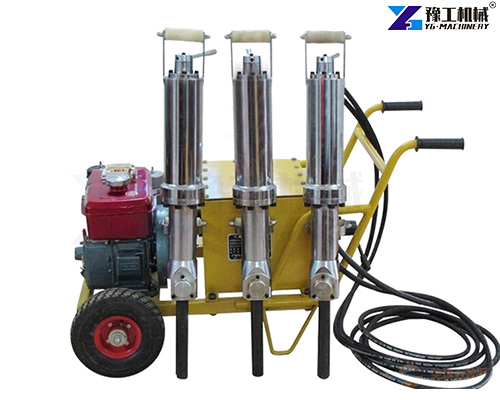
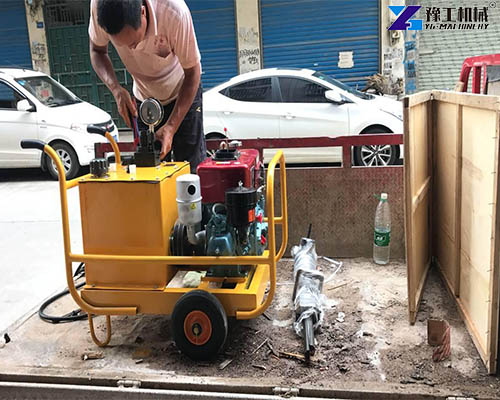
A single pump station can run up to 6 splitter guns at the same time.
Most customers go with one pump and two guns—that way, two operators work side by side, doubling output.
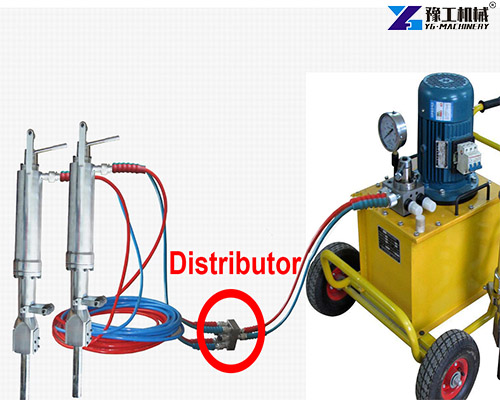
If you’re using 2 or more guns, you’ll need a flow divider to split the oil evenly between them. One gun? No divider needed.
Pricing breaks down like this:
Total price = pump station + splitter gun(s) + flow divider (if needed) + hydraulic hoses + spare wear parts (the middle wedges)
One more thing: the system uses Shell #46 hydraulic oil. You’ll need about 38 liters to fill the tank to 90% on the gauge. Don’t run it low—the pump will cavitate, lose flow, and you’ll be down for hours.
Where Does This Hydraulic Rock Splitter Machine Shine?
Pretty much everywhere explosives can’t go:
- Mines and quarries – dimension stone, granite, marble, ore blocks.
- Construction sites – foundation excavation, concrete pillar removal, trenching.
- Tunnel projects – rock breaking where blasting would collapse the lining.
- Urban demolition – near schools, hospitals, apartment blocks.
- Pipeline and road work – precise breaking without damaging underground cables.
If you’re working in a noise-sensitive area, this is your only real answer. No vibration, no complaints.
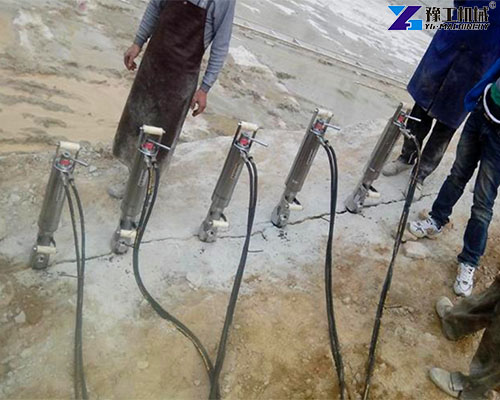
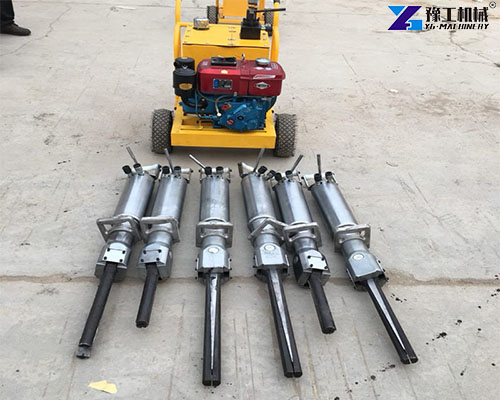
Pre-Operation Checklist – Don’t Skip This
Before you fire up the pump, do these three things:
- Check the hydraulic oil level – fill with Shell #46 to 90% on the gauge. Running low = pump damage.
- Inspect all hoses and fittings – any leaks? Tighten or replace.
- Examine the splitter wedge – worn? Cracked? Swap in a fresh one before you start.
Once everything checks out, you’re good to go.
Let’s Build Your Perfect Setup
Just answer these few questions, and we’ll send you a complete quote:
- How many splitter guns per pump? (Most popular: 1 pump + 2 guns. 3 guns are also common.)
- Electric or diesel pump? (If electric, tell us your voltage and frequency.)
- How far from the pump to the work site? (We’ll size the hoses accordingly.)
- What kind of rock are you splitting? (Granite? Concrete? Marble? Sandstone? Helps us confirm the best model.)
We’ll come back with a drawing, a parts list, and a clear price breakdown—pump, guns, divider, hoses, and spare wedges. No fluff, no upsell.
Ready To Split Without The Shake?
Stop wrestling with breakers or waiting on blasting permits. Get a hydraulic rock splitter machine that cracks stone clean, quietly, and fast.
Whether you need a single YG-250 for a small demolition job or a full YG-450 with 6 guns for quarry production—we’ve got the setup.
Tell us your site conditions. We’ll spec the right gear and ship it.