

Every year, millions of scrap tyres end up in landfills or are illegally dumped. They take decades to decompose and create serious environmental and health hazards. But those same tyres contain valuable materials: high-quality rubber, steel wire, and textile fibre. A scrap tyre processing line unlocks this value. It processes whole tyres through cutting, shredding, magnetic separation, fibre separation, grinding, and finally produces clean rubber powder, separated steel, and fibre. These outputs can be sold for playground surfaces, sports tracks, rubber mats, fuel for cement plants, or further processed into reclaimed rubber.
YG Machinery offers complete tyre recycling lines with capacities from 1 to 35 tons per day. Models include YG-3, YG-6, YG-10, YG-16, YGL-16, and YG-30. The system can be configured as batch, semi-continuous, or fully continuous. Final rubber powder fineness is adjustable. The line features durable cutters, magnetic separators, fibre separators, and cooling systems. Noise level is kept at ≤60 dB. This article uses only the information from the YG product document. You will learn how the line works, what equipment is included, the different process flows, applications of the final products, and answers to common questions. No guesswork. Just practical facts to help you invest in the right scrap tyre processing line for your business.
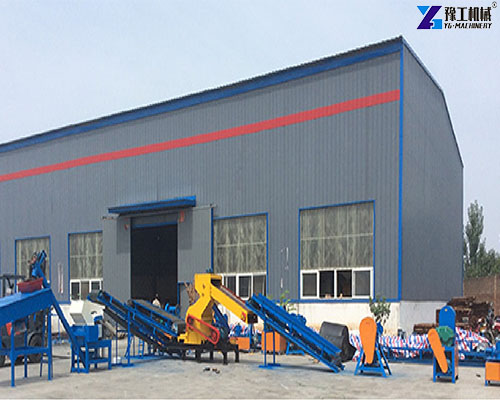
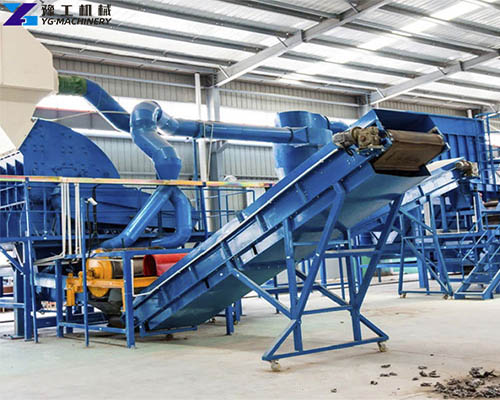
Tyre Recycling Line – Complete Technical Parameters
Below are the full specifications for the YG scrap tyre processing lines. Capacities range from 1-3 tons per day up to 30-35 tons per day.
| Model | YG-3 | YG-6 | YG-10 | YG-16 | YGL-16 | YG-30 |
| Capacity | 1-3t/d | 4-6t/d | 8-10t/d | 12-16t/d | 8t/d (only for rubber powder) | 30-35t/d |
| Working Process | Batch | Batch | Batch | Batch | Semi-continuous | Fully continuous |
| Reactor Size | φ1400*4900mm | φ2200*6000mm | φ2600*6600mm | φ2800*7100mm | φ2800*7100mm | φ1800*18500mm |
| Land (L*W*H) | 18m*4.2m*6m | 30m*12m*8m | 30m*13m*8m | 33m*13m*8m | 33m*13m*8m | 70m*20m*10m |
| Power | 16.65kw | 37.85kw | 44.3kw | 55.6kw | 55.6kw | 256kw |
| Burner | 2*200,000 kcal | 2*300,000 kcal | 2*300,000 kcal | 2*400,000 kcal | 2*400,000 kcal | 2.5 million kcal per set |
| Total Weight of Shipped Materials | About 18t | About 24.5t | About 28t | About 34.5t | About 34.5t | About 150t |
| Noise (dB) | ≤60 | ≤60 | ≤60 | ≤60 | ≤60 | ≤60 |
How Does A Tyre Recycling Line Work?
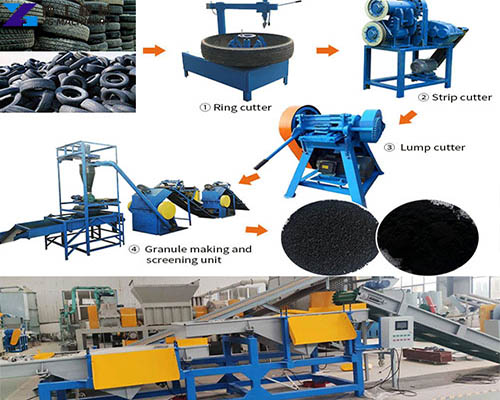
Option A – Simple pre-treatment:
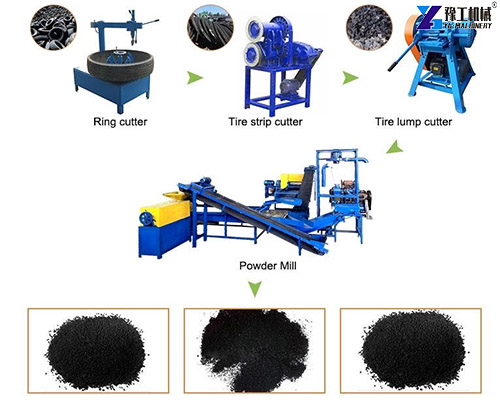
Waste tyre → Tyre cutter → Automatic strip cutter → Block cutter → Rubber blocks
Option B – With bead wire separation:
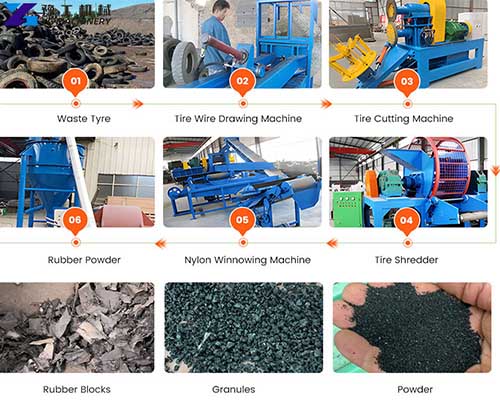
Waste tyre → Bead wire separator (removes bead steel) → then tyre cutter → strip cutter → block cutter → rubber blocks
Option C – With shredder:
Waste tyre → Tyre wire puller → Tyre shredder (with screen) → Rubber blocks
After pre-treatment, the rubber powder production line takes over:
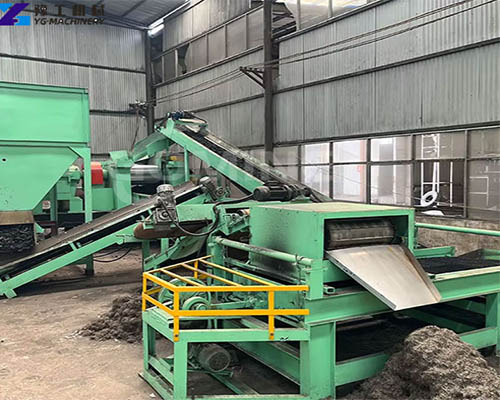
Rubber blocks → Main conveyor → Cracker mill → Primary screen → Mixing conveyor → Three‑roll magnetic separator → Finished screen → Finished product conveyor → Rubber powder cooling unit → Air classifier → Final rubber powder
During this process:
- Steel wire is collected by the magnetic separators at multiple stages.
- Fibre is removed by the air classifier and fibre separator.
- The rubber powder is cooled to prevent caking.
- Finished powder is bagged or stored in silos.
Key Advantages Of A YG Tyre Recycling Line
- Complete separation of all tyre components – Steel wire, textile fibre, and rubber powder are fully separated. Nothing is wasted. The steel can be sold to scrap metal recyclers. The fibre can be used for energy recovery or as filler. The rubber powder has many high-value uses.
- Adjustable particle size – You can produce rubber granules (3-28mm for sports surfaces) or fine rubber powder (for reclaimed rubber or moulded products). Screens can be changed to meet customer orders.
- Low noise operation – All YG models operate at ≤60 dB. This is important for working near residential areas or meeting local environmental permits.
- Energy efficient – The document states (low power consumption). The total power ranges from 16.65 kW (YG-3) up to 256 kW (YG-30). For the capacity, this is competitive.
- Durable cutters – The blades and knives have long service life and can be re-sharpened multiple times. Replaceable.
- Multi-functional – One line can produce both rubber granules and fine powder. You can switch between products based on market demand.
- Customizable – YG can design the line according to your specific requirements: capacity, final particle size, level of automation, and layout.
- Handles steel-belted tyres – The system is designed to process steel radial tyres and completely separate the steel from the rubber. No residue left.
What Are the Final Products Used For?
Rubber granules:
- Plastic running tracks (athletic tracks)
- Sports fields, football pitches (as infill)
- Playground surfaces (safety flooring)
- Rubber floor tiles (indoor and outdoor)
- Playground filler material
- Rubber composite products – flower pots, rubber bricks, etc.
Rubber powder:
- Reclaimed rubber production – replaces virgin rubber
- Rubber products – shoe soles, gaskets, seals, rubber mats
- Asphalt modifier (road construction)
Fuel use: Tyre-derived fuel (TDF) for cement kilns, power plants, and steel mills.
Other applications: Pyrolysis oil production
Is A Tyre Recycling Line Right for You?
If you have access to a steady supply of waste tyres (from collection centres, garages, tyre shops, or municipal sources), a scrap tyre processing line transforms a disposal problem into a profit centre. The output products – rubber granules, rubber powder, steel wire, and fibre – all have established markets.
Before buying, ask YG for a site visit or video of the line in operation. They can help you choose the right model based on your local tyre type, your target output products, and your available space.
Contact YG directly with your capacity requirement and budget. They will provide a layout drawing, equipment list, and price quote.
Common Questions Buyers Ask
Small production lines take 30-45 days, large ones take 60 days.
Fully automated production lines require 1-2 people.