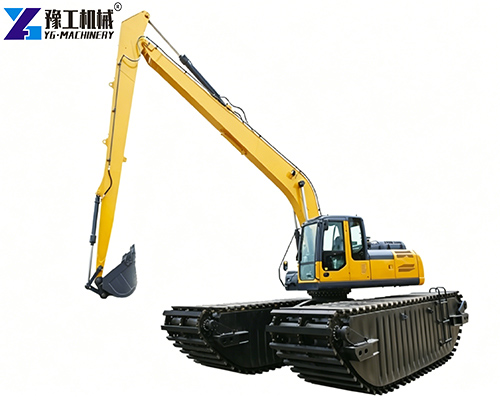
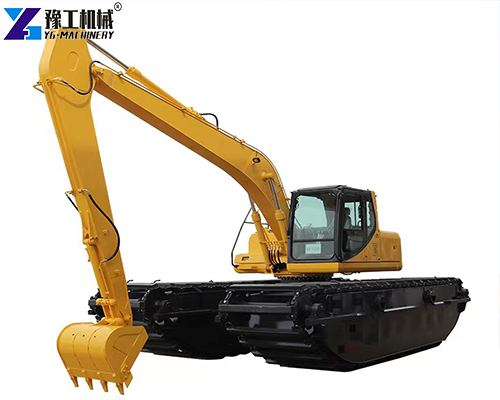
An excavator pontoon system allows compatible excavators to work in wetlands, muddy terrain, shallow-water areas, and dredging sites where conventional undercarriages may struggle. YG Machinery offers pontoon systems for excavators in the 6–50 ton range, with different pontoon dimensions, track configurations, and spud options to suit various working conditions.
Choose a suitable system based on your excavator model, operating weight, water depth, ground conditions, and required working stability. Contact YG Machinery with your machine specifications and project details to discuss a suitable configuration.
Request a Quote | Check Excavator Compatibility
YG Excavator Pontoon – Key Specifications
Here are the complete parameters for all seven models. Choose based on your excavator weight and work environment.
| Serial No. | Model / Tonnage Class | Number of Chains | Single Bare Body Dimension (m) | Single Assembled Dimension (m) | Overall External Dimension (m) | Total Weight of Pontoons (t) | Material Specification | Side Pontoon Dimension | Production Lead Time (Days) | Telescopic Range | Spud Specification |
| 1 | 6-7 | 2 | 4.5×1×1 | 5.7×1.25×1.34 | 5.7×3.0×1.34 | 6 | Q345 (4×6) | 3×1×0.8m | 20 | / | φ133 (4 m) |
| 2 | 10-16 | 2 | 6×1.25×1.4 | 7.5×1.57×1.74 | 7.5×4.6×1.74 | 13 | Q345 (4×6) | 6×1.5×1m | 20 | 700 mm | φ219 (8 m) |
| 3 | 18-20 Small Model | 2 | 7×1.5×1.5 | 8.5×1.8×1.84 | 8.5×4.6×1.84 | 15 | Q345 (4×6) | 6×1.25×1m | 25 | 700 mm | φ219 (8 m) |
| 4 | 18-22 Large Model | 3 | 8×1.5×1.5 | 9.5×1.8×1.84 | 9.5×5.2×1.84 | 17 | Q345 (4×6) | 6×1.25×1m | 25 | 700 mm | φ219 (8 m) |
| 5 | 27-30 | 3 | 9×1.5×1.5 | 10.5×1.8×1.84 | 10.5×5.4×1.84 | 23 | Q345 (6×8) | 7×1.5×1m | 25 | 600 mm | φ219 (8 m) |
| 6 | 30-40 | 3 | 9×2×1.5 | 10.5×2.4×1.84 | 10.5×6.4×1.84 | 29 | Q345 (6×8) | 8×1.25×1m | 25 | 700 mm | φ273 (9 m) |
| 7 | 40-50 | 3 | 10×2×1.8 | 11.5×2.4×2.14 | 11.5×6.5×2.14 | 31 | Q345 (6×8) | 8×1.5×1m | 30 | 1000 mm | φ273 (9 m) |


Where Can You Use An Excavator Pontoon System?
Environments:
- Marshes and wetlands
- Low‑yield farmland improvement
- Saline‑alkali land improvement
- Coastal tidal flats
- Shallow seas and offshore oil/gas well sites
- Tailings ponds and photovoltaic (solar) farms
- Land reclamation projects
- Dredging and desilting operations
Applications:
- Excavation, dredging, slope repair, embankment construction
- Water diversion and supply projects
- Pipeline installation in water
- Flood control and emergency rescue
If your excavator needs to work in or near water, a pontoon system makes it possible.
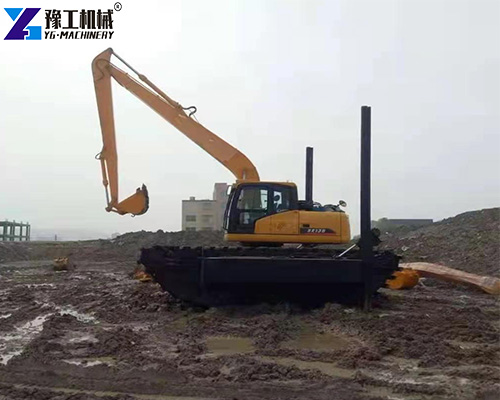

How Does An Excavator Pontoon Work?
An excavator pontoon system is essentially a set of large steel boxes (pontoons) that bolt onto the excavator’s tracks. Here is how it works.
The pontoons: These are hollow steel chambers – like big boat hulls. They displace water, providing buoyancy. The total buoyancy must be greater than the combined weight of the excavator plus the pontoons. Operators split the pontoons into one center section and two side sections. They can slide the side pontoons inward or outward within the telescopic range to alter the overall width and improve stability.
The tracks: The pontoons have steel tracks on their outer faces. These tracks are driven by the excavator‘s existing undercarriage drive system. The excavator‘s own tracks drive the pontoon tracks. When the excavator moves, the whole floating platform moves.
Spud poles: For stationary work (dredging, pile driving, digging), the pontoons have spud poles – long steel piles that can be driven into the waterbed to anchor the platform in place. This prevents drifting during excavation.
Operation: The excavator sits on the center pontoon section. The operator works from the cab, just like on land. The machine moves across water or soft terrain using the pontoon tracks. For stationary work, drop the spud poles and dig.
Key Features Of YG Excavator Pontoons
1. High‑strength steel. Q345 steel is used for all pontoons. It is strong enough to withstand heavy loads, rough water, and abrasive materials. The thicker 6×8 material is used for larger models (27 tons and above).
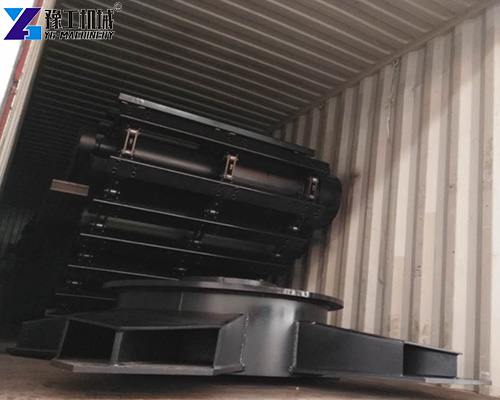
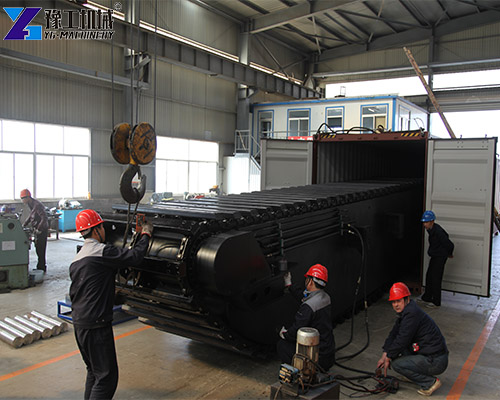
2. Modular design. The pontoons are assembled from multiple sections. This makes transport easier – you can ship the sections separately and assemble on site.
3. Adjustable width. The telescopic range (600‑1000mm) allows you to widen or narrow the track base. Wider base = more stability in rough water. Narrower base = easier transport.
4. Spud pole anchors. Long steel piles (φ133‑273mm, 4‑9m long) allow you to anchor the platform firmly. Perfect for dredging, pile driving, or any stationary work in water.
5. Two or three chains. The number of chains (track systems) increases with machine size. 2 chains for up to 20 tons, 3 chains for 18‑50 tons. More chains = better weight distribution and flotation.
6. Corrosion resistance. Q345 steel has good corrosion resistance for marine and wetland environments. The pontoons are painted or coated for protection.


Float Your Excavator With YG Pontoons
An excavator pontoon system is a practical, cost‑effective way to take your excavator into water, swamps, and soft terrain. YG offers seven models for 6‑50 ton excavators. The pontoons are made from Q345 steel, assembled from modular sections, and include spud poles for anchoring. Overall width ranges from 3.0m to 6.5m. Total pontoon weight from 6 to 31 tons. Lead time is 20‑30 days. The side pontoons can be adjusted for stability, and the track systems drive from your excavator‘s existing undercarriage.
The applications are extensive: wetland improvement, dredging, flood control, offshore construction, tailings pond work, and more. Instead of buying a specialized amphibious excavator, convert your existing machine for a fraction of the cost.
YG Machinery also offers excavator pontoons for other size classes – if your excavator is outside the 6‑50 ton range, ask about custom options. Contact YG with your excavator model and working environment. They will recommend the right excavator pontoon tracks system and provide a quote. Float your excavator – expand your work area.
Frequently Asked Questions
A: Yes. The pontoons are designed to bolt onto your excavator‘s undercarriage. They use the existing track drive system. Provide your excavator model and weight – YG will supply the correct pontoon size and mounting kit.
A: The pontoon system floats the excavator. It can work in water deep enough to float. However, the tracks need contact with the bottom for propulsion. In very deep water, you may need to use spud poles to anchor and dredge from a fixed position.
A: The wide footprint (up to 6.5m overall width) and the weight of the excavator provide good stability. The side pontoons can be adjusted wider for rough conditions. In very rough seas, a larger barge would be needed.
A: Production lead time is 20‑30 days, depending on the model. Factor this into your project planning.
A: Regularly inspect the pontoons for corrosion, cracks, or damage. Check the track systems. Keep the spud poles lubricated. Touch up paint as needed. Q345 steel is durable, but water and salt exposure require regular care.
A: Yes. The pontoons are modular – the side sections and center section can be separated for road transport. This is standard for shipping.