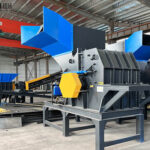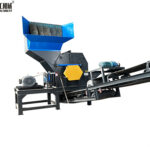
A metal recycling customer in the United States handles light scrap metal, mainly including discarded paint buckets, color-coated steel sheets, and light iron sheet scrap. This type of material is bulky, irregular in shape, and may contain plastic, paint residue, or other impurities. Directly feeding material to magnetic separation, air separation or baling without size reduction takes up much yard space and weakens downstream handling stability.
The customer’s main challenge is not simply “not having a scrap metal crusher.” The customer needs a processing line that matches the material characteristics:
- Discarded paint buckets, color-coated steel sheets, and light iron sheet scrap are bulky. Without crushing, they occupy valuable yard space and reduce the efficiency of transport and baling.
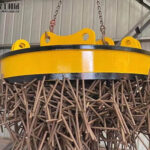
- The material may contain plastic and paint residue. After crushing, magnetic separation and air separation are needed to prepare a more stable material stream for downstream baling and smelting.
- The customer is concerned about finished product size and density. A smaller screen opening produces smaller finished pieces and lower output. Therefore, the objective is not “crush as fine as possible,” but to balance finished product density, screen size, and output.
- The customer needs to confirm the maximum feed thickness and dimensions, as well as materials that cannot enter the machine. This is necessary to avoid blockages or downtime caused by oversize feed.
- The project is not a single crushing step. It is part of a recycling line: manual sorting—crushing—magnetic separation—air separation—baling—smelting and remelting.
According to the scrap metal recycling flow chart in the available material, bulky scrap metal with a thickness greater than 5 mm is suitable for a metal shredder and then sent to a smelter for remelting. YG processes metal light scrap containing plastic or paint with a metal crusher, magnetic separation and air separation, then bales and presses the material prior to delivery to the smelter. The customer’s main materials fall into the latter category, so the selection focus is on the crushing and separation of light metal scrap containing paint and plastic.
Get Your Project‑Specific Quote
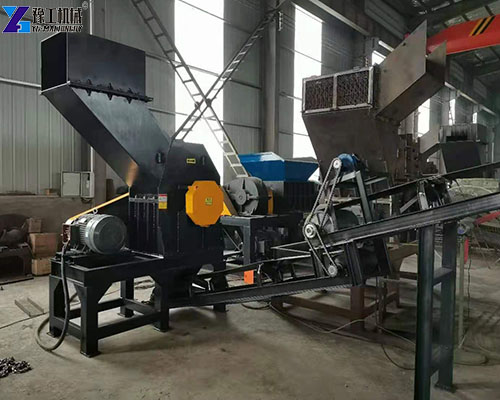
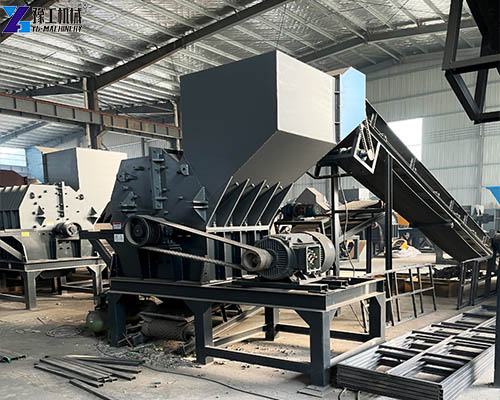
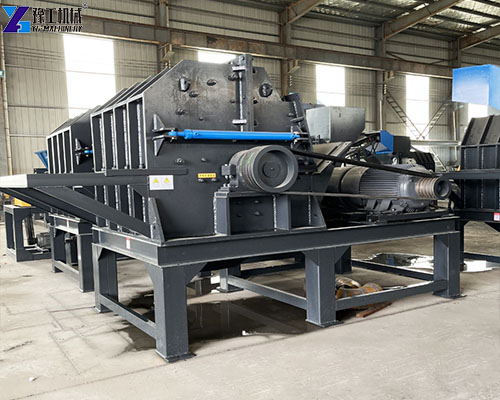
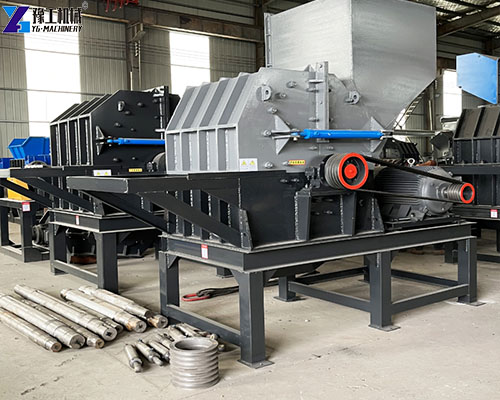
Why Consider the YG-1000 Scrap Metal Crusher Instead of Other Models
The YG-1000 was shortlisted not because it is the largest or the most expensive model, but because its listed applications directly match the customer’s main materials: discarded paint buckets, color-coated steel sheets, and light iron sheet scrap.
| Project challenge | Selection requirement | How the YG-1000 corresponds |
| Discarded paint buckets, color-coated steel sheets, and light iron sheet scrap are bulky and take up yard space | Need size reduction for bulky light scrap | The YG-1000 for discarded paint buckets, color-coated steel sheets, and light iron sheet scrap |
| Material contains plastic and paint and requires downstream separation | Crushed material must connect to magnetic separation and air separation | Metal light scrap containing plastic/paint—metal crusher—magnetic separation—air separation—baling and pressing |
| Customer is concerned about finished product size | Finished size must be controllable | The available specification gives a finished screen size of 60–70 mm; the final screen should be confirmed according to the required output |
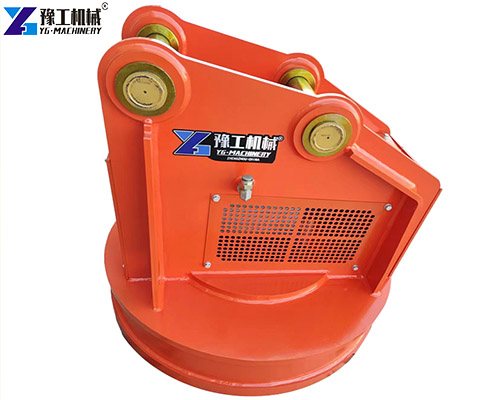
| The project requires a complete recycling line, not just a single machine | Need supporting magnetic separation, air separation, eddy current separation, etc. | The available material lists related equipment, including magnetic separators, air classifiers, eddy current separators, and gravity separators, which can be configured according to material and finished-product requirements |
Why not the YG-800 scrap metal crusher:
The YG-800 is for small metal items such as used beverage cans, oil filters, and milk powder cans. The main materials in this project are discarded paint buckets, color-coated steel sheets, and light iron sheet scrap. Their form and dimensions do not directly match the typical applications of the YG-800. Using the YG-800 for the main materials would require additional confirmation of feed size and actual throughput, increasing selection risk.
Why not the YG-1300 and larger models:
The YG-1300 is for frame material, light scrap, and motor rotors; the YG-1600 for used bicycles and motorcycles; the YG-1800 for scrap steel plates, scrap steel pipes, plastic-steel profiles, doors, and windows; and the YG-2000 for car shells and large scrap appliances. YG designs these models for larger or different material forms. This project mainly processes discarded paint buckets, color-coated steel sheets, and light iron sheet scrap. Selecting a larger model directly could create a mismatch between equipment capability and material, and increase site, transport, and investment requirements. Teams confirm the actual maximum feed size, material thickness, daily throughput and finished density requirements before deciding to upgrade to a larger model.
Find The Right Solution For Your Job

Scrap Metal Shredder Machine Expected Benefits
Under the premise of matching materials, confirmed configuration, and proper operation, this YG-1000 scrap metal crusher light-scrap crushing and separation line can bring the customer the following direct benefits:
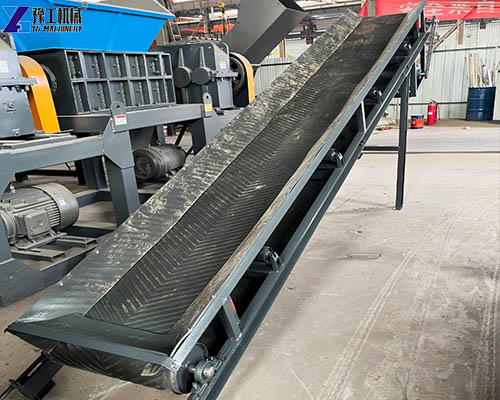
- Reduced scrap volume and lower storage/yard space requirements. After crushing, discarded paint buckets, color-coated steel sheets, and light iron sheet scrap take up less space, allowing more concentrated storage and reducing yard occupation.
- Fewer transport trips and lower handling costs. Crushing and baling raise the density of light scrap. This lets operators use every transport load more efficiently and cut haul trips and manual handling.
- Less manual sorting and fewer blockage-related stoppages. Manual sorting at the front end removes prohibited materials, and the crushed material connects to magnetic and air separation. This can reduce blockages and downtime caused by bulky, tangled, or impure material, and lower manual cleaning effort.
- A finished product that is easier for smelters to receive. After crushing, magnetic separation, air separation, and baling, the material has more stable density and purity, making it easier for downstream smelters to use and improving the delivery stability of recycled metal material.
Find The Right Solution For Your Job
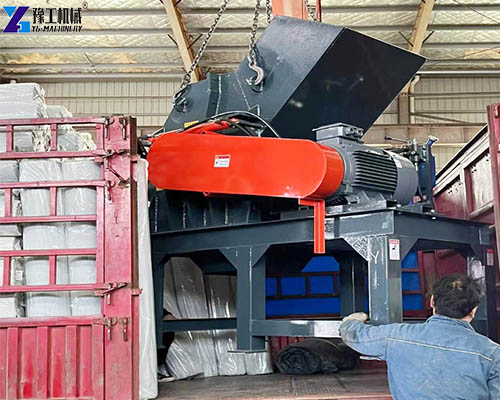
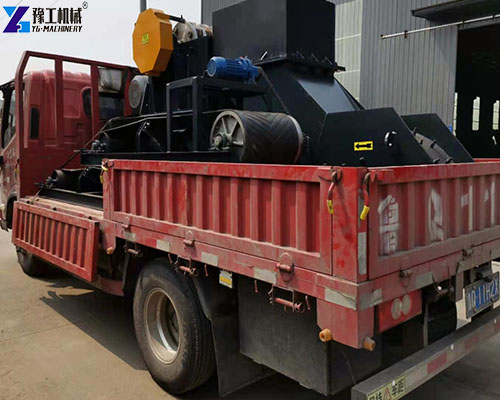
YG Scrap Metal Shredder Machine Product Parameters
| Model | Processing Capacity (kg/h) | Motor Power (kW) |
| YG-800 | 700–900 | 37–45 |
| YG-1000 | 1,500–2,000 | 55–75 |
| YG-1300 | 3,000–5,000 | 140 |
| YG-1600 | 8,000–10,000 | 260 |
| YG-1800 | 13,000–17,000 | 450 |
| YG-2000 | 20,000–25,000 | 450 |
Find The Right Solution For Your Job
Metal Shredder Machine for Sale
When planning a similar metal recycling project and uncertain whether YG-800, YG-1000 or a larger model suits your needs, avoid selecting the unit based on capacity only. Send us your material photos, typical dimensions, maximum feed thickness, daily processing target, required finished-product size and density, and site power supply. YG helps you compare suitable scrap metal crusher models, confirm screen settings, and verify whether to add magnetic separation, air separation, eddy current separation or baling equipment. With the right material information, we can help you avoid buying a machine that is too small for the workload or unnecessarily large for the actual requirement—and move your scrap metal recycling project forward with a configuration that matches your material and production targets.