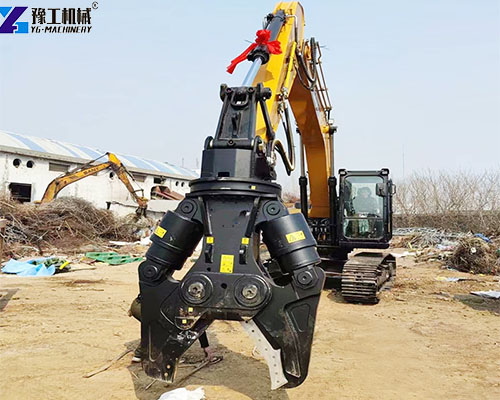
If you run a demolition crew or a scrap yard, you know the pain: cutting thick steel with a torch is slow, dangerous, and eats up labor hours. A hydraulic eagle shear changes that. It’s an attachment that turns your excavator into a powerful steel cutter. You can snip through rebar, I–beams, pipes, even whole car bodies – cleanly and quickly. But with so many models on the market, how do you pick the right one for your machine and your jobs? This article gives you straight answers. We’ll walk you through YG’s nine hydraulic eagle shear models (YG180RT to YG980RT), show you the specs that actually matter, explain how it works in plain English, and help you avoid common buying mistakes. By the end, you’ll know exactly which shear fits your excavator and your budget. Let’s get started.
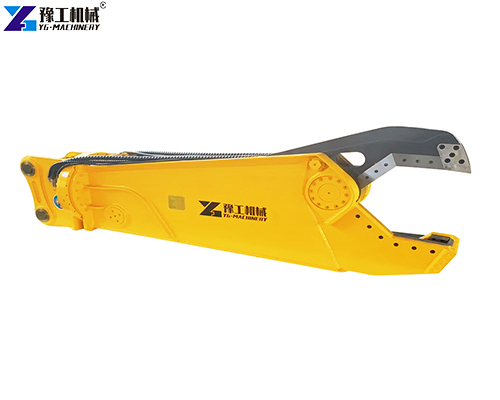
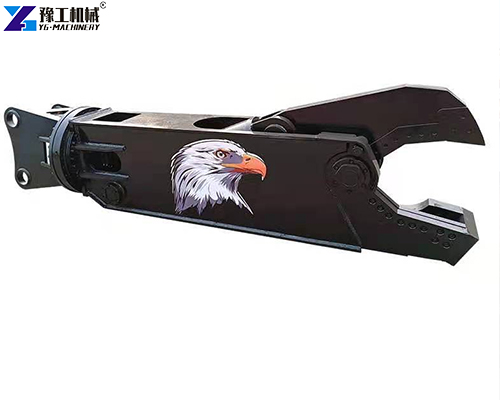
Hydraulic Eagle Shear Models
The first thing every buyer asks: “Will this shear work on my excavator?” Good news – YG makes nine sizes, covering machines from about 10 tons all the way up to 110 tons. Below is the full lineup. Don’t let the numbers scare you – focus on two things: your excavator’s weight and the size of steel you cut most often.
| Item/Model | Unit | YG180RT | YG280RT | YG330RT | YG380RT | YG430RT | YG480RT | YG580RT | YG780RT | YG980RT |
| Arm Installation | ton | 13–17 | 18–27 | 25–35 | 28–39 | 40–50 | 42–50 | 51–65 | 68–90 | 91–110 |
| Boom Installation | ton | 10–12 | 14–18 | 20–28 | 20–28 | 28–39 | 28–39 | 40–50 | 51–65 | 66–90 |
| Working Pressure | bar | 250–300 | 250–300 | 300–320 | 320–350 | 320–350 | 320–350 | 320–350 | 320–350 | 320–350 |
| Working Flow | lpm | 90–110 | 180–220 | 200–250 | 200–250 | 250–300 | 250–300 | 275–375 | 500–600 | 600–700 |
| Weight | kg | 1100 | 2100 | 3000 | 3500 | 4500 | 4600 | 5800 | 7800 | 9800 |
| Rotating Flow | lpm | 30–40 | 30–40 | 30–40 | 30–40 | 30–40 | 30–40 | 30–40 | 50–60 | 55–65 |
| Rotating Pressure | bar | 90–100 | 100–115 | 100–115 | 100–115 | 100–115 | 100–115 | 100–115 | 140–150 | 170–190 |
| Opening | mm | 375 | 485 | 595 | 620 | 700 | 740 | 780 | 860 | 950 |
| Cutting Depth | mm | 395 | 525 | 630 | 600 | 720 | 750 | 780 | 850 | 940 |
| Length | mm | 2100 | 2700 | 3200 | 3280 | 3700 | 3800 | 4000 | 4300 | 4600 |
How to read this table: The “arm installation” number means if your excavator’s arm (stick) weight class falls in that range, the shear is a match. The “boom installation” is for mounting directly on the boom. When in doubt, go with the arm installation column – that’s how most people use it.
Real-world tip: Don’t buy a shear that’s too heavy for your machine. An overloaded excavator tips over easily and wears out fast. Pick a model where your machine’s weight is in the middle of the range, not at the very top or bottom.
What Can You Cut With A Demolition Shear? (And What Not)
A demolition shear is not a magic tool. It excels at certain materials. Here’s what YG shears handle well:
- Rebar and reinforcing steel – up to 30–40mm thick, depending on model
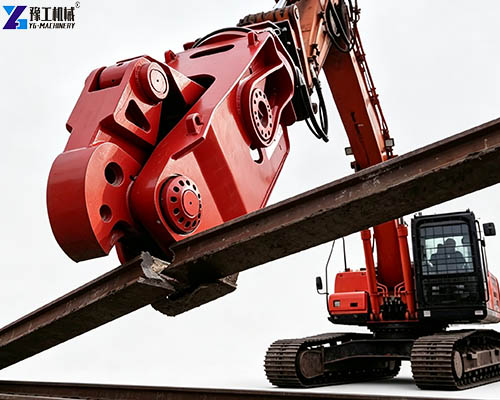
- Steel beams (I–beams, H–beams, channel steel) – the YG980RT with 950mm opening can bite through beams over 300mm tall
- Steel pipes and tubes – round or square
- Scrap cars – after removing the engine and fuel tank, a shear can chop a car into pieces for the shredder
- Light structural steel – mezzanines, guardrails, storage racks
- Concrete with rebar – the shear cuts the steel; you still need a crusher for concrete
What it’s NOT for: Hardened steel (like springs or axles – those need a different tool), stainless steel over 10mm thick (too tough), or cast iron (brittle, but can be cracked). For those jobs, ask about YG’s hydraulic crushers or pulverizers.
The key is matching the shear’s opening and cutting depth to your typical scrap. If you mostly cut rebar and thin pipes, a YG280RT is plenty. If you’re demolishing steel frame buildings, go for YG580RT or larger.
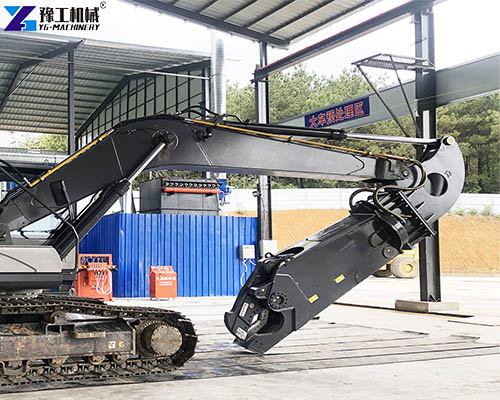
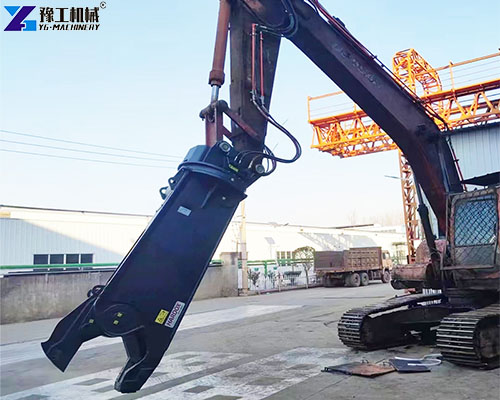
Why Choose A Hydraulic Eagle Shear?
Let’s skip the marketing fluff. Here are the real benefits that save you time and money.
- Speed – A hydraulic eagle shear closes and cuts in 2–4 seconds per cycle. Compare that to a torch: a torch needs setup, gas, a safety watch, and it leaves slag. A shear is grab, snip, drop, repeat.
- Safety – You stay inside the cab. No hot sparks, no oxygen bottles, no risk of starting a fire. The shear’s hoses have burst protection valves – if a hose blows, the jaws lock, not drop.
- Cleaner scrap – Torch–cut edges have slag and oxidation; recyclers pay less for that. Shear–cut edges are clean, which means higher resale value per ton.
- 360° rotation – All YG models can spin continuously. You don’t have to reposition the excavator to line up with an awkward beam. Just rotate the shear.
- Low maintenance – Blades are reversible (four edges each). When one edge dulls, flip it. No welding, no special tools. A set of spare blades costs a fraction of a new shear.
One contractor told us, “With a torch, two guys processed 10 tons of scrap in a shift. With the YG shear, one guy processes 25 tons.” That’s the real difference.
Core Components Of A Hydraulic Steel Cutter
You don’t need to be an engineer, but knowing the main parts helps you use it better.
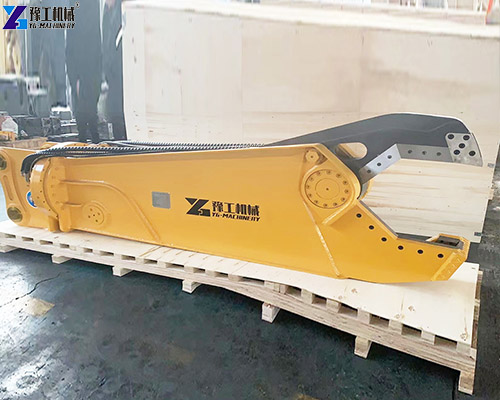
- Jaws (upper & lower) – Made of high–strength steel, shaped like an eagle’s beak to concentrate force. The lower jaw has a built-in anvil for clean shearing.
- Blades – Bolt–on, replaceable. Hardened to HRC 52-56. You’ll see four moving blades and one fixed blade on larger models.
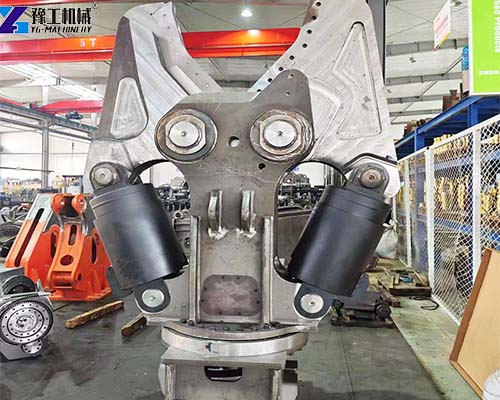
- Hydraulic cylinder – Does the actual pushing and pulling. Sealed to keep dirt out.
- Rotation motor & gearbox – Allows full spin. Requires its own oil flow (see the “rotating flow” column in the full parameter table).
- Mounting bracket – Connects to your excavator’s arm. We can make custom pins if your machine is an odd size.
- Hose burst valves – Safety feature. Stops the jaws from falling if a hose fails.
All pivot points have grease nipples. Give them a shot of grease every 8 hours of work – that’s the main maintenance.
Before You Buy, Ask Yourself
- What size is my excavator? (Check the arm installation weight in the table)
- What’s the thickest steel I need to cut? (Bigger opening = thicker material)
- Do I need a 360° rotation? (Yes, if you work in tight spaces. All YG models have it.)
- What’s my hydraulic flow? (Check your excavator’s specs – compare to the “working flow” column in the full table. If your flow is too low, the shear will move slowly.)
Still unsure? Send us your excavator model and photos of your typical scrap. We’ll recommend the exact model. No guesswork.
Ready to cut faster and safer? Contact YG Machinery – tell us your excavator size and what you cut. We’ll give you a quote and delivery time within 24 hours.