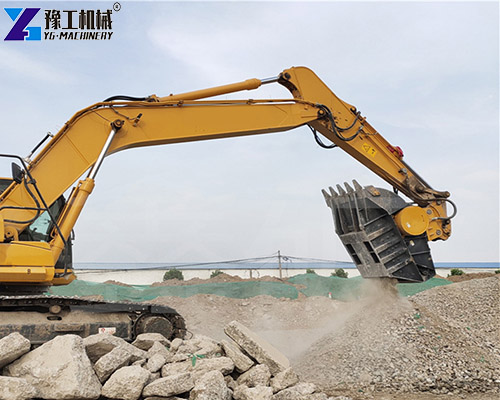
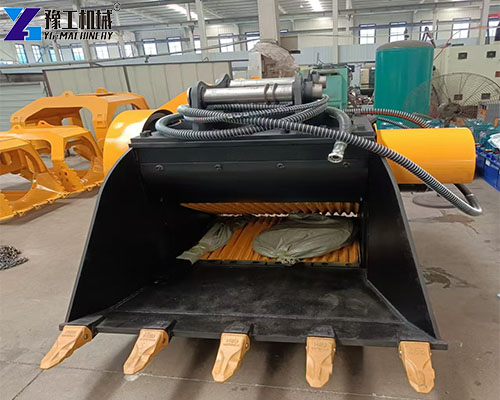
You have a pile of broken concrete, chunks of asphalt, or rocks from a demolition site. Hauling it away costs money – trucking, dumping fees, and buying new aggregate for backfill. What if you could crush that waste into usable material right where it sits, using the excavator you already own?
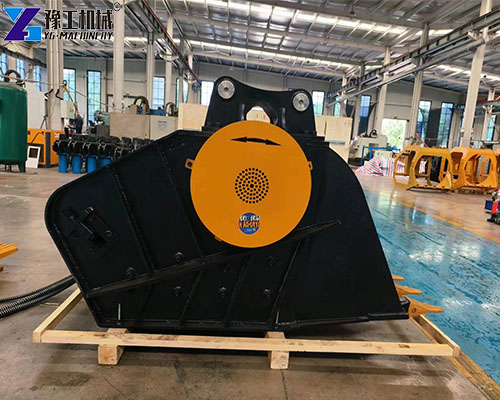
That is exactly what a crusher attachment for excavator does. It is a bucket that crushes. You scoop up the material, the built‑in jaw crusher breaks it down, and you dump out crushed aggregate ready for reuse as road base, fill, or drainage material. No separate crusher. No multiple machines. Just your excavator and this attachment.
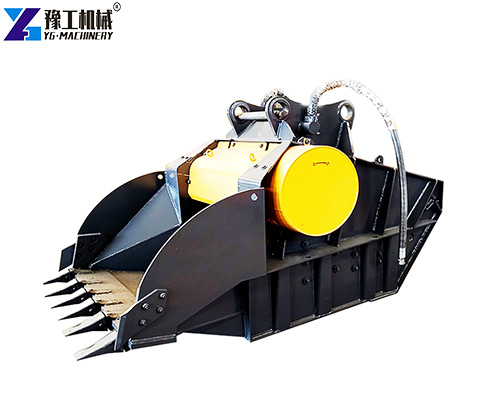
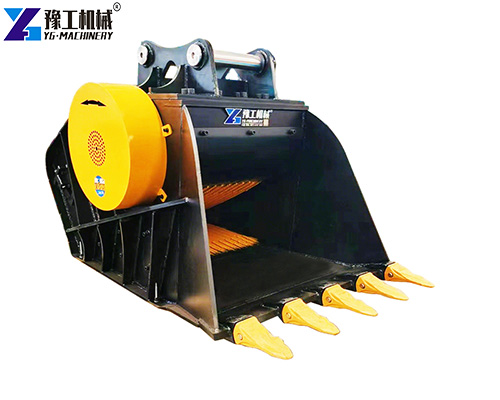
YG Crusher Attachment For Excavator – Complete Specifications
| SPECIFICATION | UNIT | YG-1 | YG-2 | YG-3 | YG-4 | YG-5 | YG-6 | YG-7 | YG-8 |
| Carrier Weight | Ton | 8-12 | 14-18 | 120-25 | 25-30 | 30-35 | 35-50 | 50-75 | ≥ 75 |
| Load Capacity | m³ | 0.15 | 0.55 | 0.66 | 0.70 | 0.90 | 1.30 | 1.60 | 2.30 |
| Opening Dimensions | mm | L540 H250 | L610 H510 | L740 H510 | L850 H510 | L910 H540 | L1205 H540 | L1300 H600 | L1450 H700 |
| Output Setting | mm | 15-60 | 15-60 | 15-130 | 15-135 | 15-140 | 15 – 145 | 40-150 | 100-200 |
| Length (A) | mm | 1240 | 1745 | 2000 | 2050 | 2185 | 2185 | 2930 | 3560 |
| Width (B) | mm | 1000 | 1000 | 1150 | 1300 | 1340 | 1620 | 1880 | 2090 |
| Height (C) | mm | 770 | 1100 | 1200 | 1400 | 1390 | 1390 | 170 | 2065 |
| Weight | Ton | 0.75 | 1.6 | 2.3 | 3 | 3.5a | 4.8 | 7.5 | 10.5 |
| Oil Flow | l/min | 90 | 98 | 140 | 160 | 180 | 210 | 320 | 380 |
| Pressure | bar | 200 | 220 | 220 | 220 | 220 | 220 | 250 | 230 |
| Counter | bar | 10 | 10 | 10 | 10 | 10 | 10 | 10 | 10 |
| Max. Production | m³/h | 10 | 23 | 31 | 34 | 42 | 53 | 88 | 120 |
How Does An Excavator Rock Crusher Bucket Work?
A crusher bucket works like a mobile jaw crusher – but it is attached to your excavator instead of sitting on a trailer.
Step 1 – Scoop. Use the excavator to scoop up material – concrete rubble, rock, asphalt, or demolition waste.
Step 2 – Crush. Inside the bucket, there are two crushing jaws. One jaw is fixed. The other jaw moves back and forth, powered by the excavator‘s hydraulic system. The moving jaw presses the material against the fixed jaw, breaking it into smaller pieces.
Step 3 – Size control. The gap between the jaws is adjustable. Set it to the output size you need – from 15mm fine aggregate up to 200mm coarse material. Material smaller than the gap falls through; larger pieces stay in the crushing chamber until they break down.
Step 4 – Dump. Once crushed, you dump the processed material directly where you need it – as backfill, road base, or stockpile.
The whole process happens on site, with one machine, one operator. No hauling waste away. No buying new aggregate.
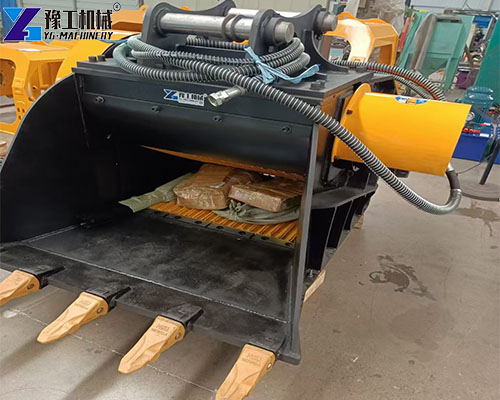
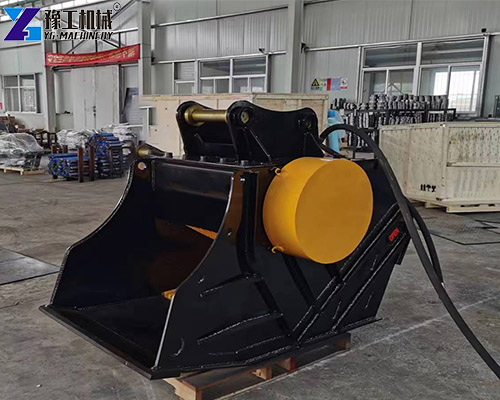
What Can You Crush With A Crusher Attachment For Excavator?
The YG crusher bucket handles a wide range of materials:
- Concrete – Demolition rubble, foundations, slabs, walls.
- Natural stone – Rock, granite, limestone, basalt.
- Asphalt – Road milling waste, broken pavement.
- Masonry – Bricks, blocks, tiles.
- Demolition waste – Mixed construction debris.
What it cannot crush: Steel rebar (though it can crush concrete around rebar, leaving the steel to be separated), wood, soil with large rocks (pre‑screen first), or materials harder than the crusher‘s capacity.
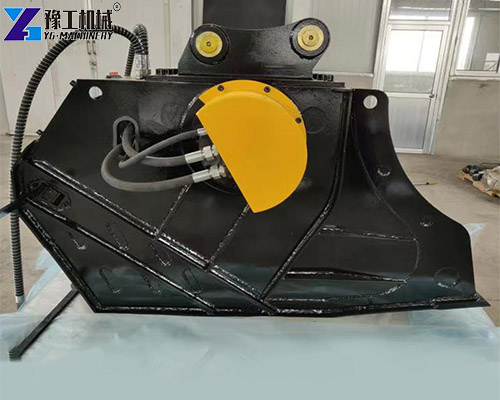
Core Applications – Where Do You Use A Crusher Bucket?
- Demolition sites – Crush concrete and brick rubble into reusable aggregate for backfill.
- Road construction – Process old asphalt and concrete for recycling into new road base.
- Excavation projects – Crush rock excavated from trenches or foundations.
- Landscaping – Produce decorative stone or gravel from natural rock.
- Tunnel construction – Process rock from tunnel boring.
- Mining and quarrying – Primary crushing of stone on site.
- Recycling yards – Process construction and demolition waste.
The key benefit: you turn waste into a valuable product without moving it off-site
Why Contractors Choose A Crusher Bucket?
Save on transport costs. Hauling demolition waste to a landfill and buying new aggregate for backfill is expensive. A crusher bucket eliminates both – you crush on site and reuse the material immediately.
Save on equipment. Instead of buying or renting a separate jaw crusher, you use the excavator you already own. One machine does two jobs.
Save time. No waiting for trucks to haul material away or bring new material in. Crush and use in the same shift.
Work in tight spaces. A crusher bucket fits where a full‑size crusher cannot go – inside buildings, on rooftops, in narrow urban sites.
Produce spec material. With adjustable output settings, you can produce aggregate that meets project specifications – from fine fill to road base.
Turn Waste Into Value With A YG Crusher Bucket
A crusher attachment for excavator is one of the most versatile tools you can add to your fleet. YG offers eight models covering excavators from 8 tons to over 75 tons. Load capacities range from 0.15 m³ to 2.30 m³. Output size is adjustable from 15mm to 200mm. Maximum production reaches 120 m³ per hour on the YG‑8. The bucket uses your excavator‘s hydraulic system – no external power source needed. It crushes concrete, rock, asphalt, and demolition waste directly on site, turning waste into reusable aggregate.
YG Machinery also offers other excavator attachments: breakers, grapples, shears, and quick couplers. Contact YG with your excavator make, model, and the material you need to crush. They will recommend the right excavator rock crusher bucket and provide a quote. Stop hauling waste – start crushing value.
Frequently Asked Questions
The smallest YG‑1 fits 8‑12-ton excavators. For smaller machines (under 8 tons), YG may have other models – ask.
Your excavator needs an auxiliary hydraulic circuit with the required flow and pressure. Most mid‑size and larger excavators have this. Check your machine‘s specs.
Regular greasing of pivot points. Check jaw wear plates periodically – they are replaceable. Inspect hydraulic hoses for leaks. The counter pressure is set to 10 bar – keep it at that level.
Yes. The crushing jaws are wear parts and are available from YG. Order spares with your bucket to avoid downtime.
No. The crusher bucket crushes concrete and rock, but steel rebar will not break. You need to remove rebar before crushing, or separate it afterward with a magnet or shear.