You have a job site with hard clay, frozen ground, or compacted rock. A bucket cannot penetrate. A breaker is too slow and loud. What if you could rip through tough material like a giant plow, using the excavator you already own?
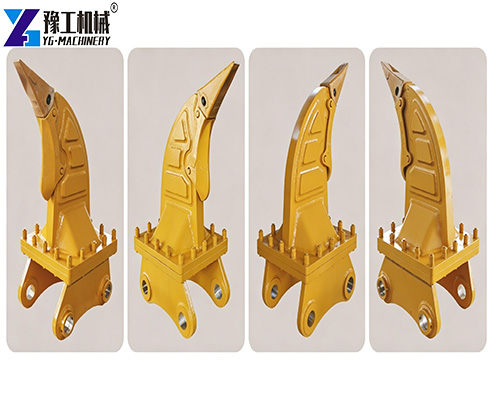
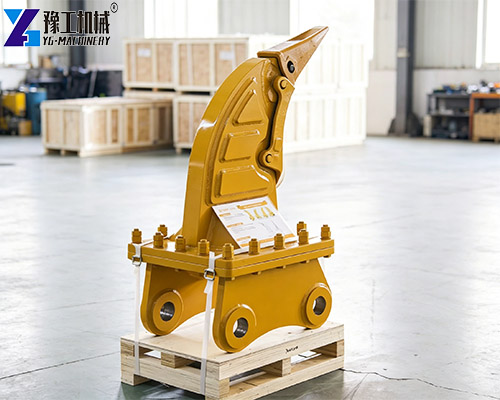
That is exactly what an excavator ripper attachment does. It is a single heavy-duty tooth (or multiple teeth) mounted on a strong steel shank. You lower it onto the ground, and the excavator’s weight and hydraulic force drive it into the material. As you drag it backward, it fractures and loosens the ground – ready for the bucket to scoop up. No blasting. No jackhammering. Just clean, efficient ripping.
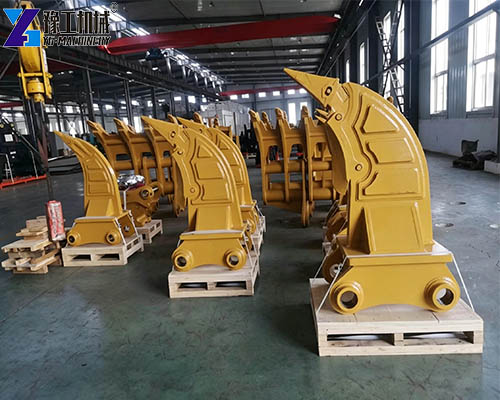
YG Machinery offers six models of excavator ripper attachments: YGR02, YGR04, YGR06, YGR08, YGR10, and YGR14. They fit excavators from 4 tons up to 39 tons. Weight ranges from 60 kg to 775 kg. Pin-to-pin distance from 265mm to 570mm. The rippers are built with heavy-duty steel plates and replaceable teeth.
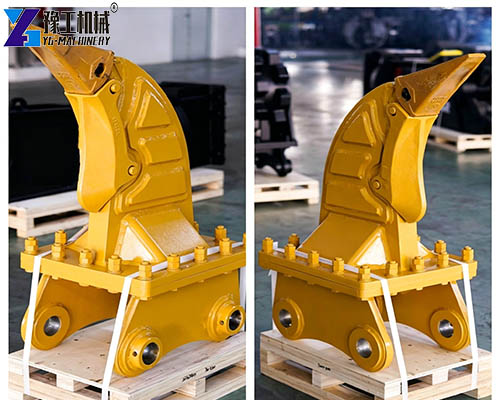
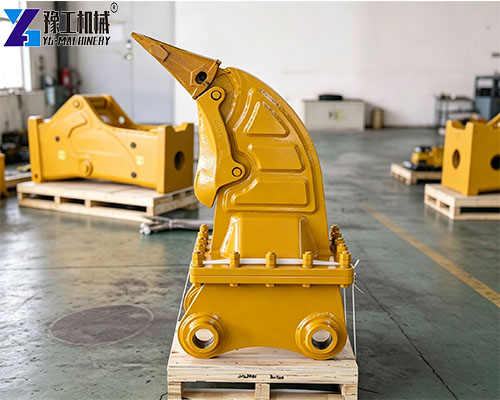
YG Excavator Ripper Attachment – Key Specifications
Here are the complete parameters for all six models. Choose based on your excavator size and the material you need to break.
| Model | YGR02 | YGR04 | YGR06 | YGR08 | YGR10 | YGR14 |
| suitable excavator | 4-6T | 5-9T | 9-16T | 16-23T | 23-30T | 30-39T |
| pin-to-pin distance | 265mm | 310mm | 390mm | 465mm | 520mm | 570mm |
| overall width | 375mm | 420mm | 570mm | 665mm | 740mm | 820mm |
| overall height | 390mm | 950mm | 1180mm | 1260mm | 1380mm | 1470mm |
| pin diameter | 40-50mm | 50-55mm | 60-70mm | 70-80mm | 80-90mm | 80-90mm |
| dipper width | 150-180mm | 180-200mm | 200-315mm | 300-350mm | 360-420mm | 360-420mm |
| plate thickness | 50mm | 55mm | 65mm | 80mm | 90mm | 90mm |
| teeth model | DH55type | DH150type | DH220type | D85Ctype | 4T5502-2type | 4T5502-2type |
| weight | 60kg | 160kg | 245kg | 420kg | 620kg | 775kg |
All YG rippers are built with high-strength steel (Q345 or similar). The teeth are replaceable – when they wear out, you change only the tooth, not the whole ripper.
What Is An Excavator Ripper Attachment Used For?
An excavator ripper attachment is designed for one job: breaking up hard, compacted, or frozen ground that a bucket cannot penetrate.
- Hard clay and compacted soil – Common in construction sites and road building.
- Frozen ground – Winter construction in cold climates. The ripper fractures the frozen layer.
- Soft to medium rock – Shale, sandstone, limestone. Ripping is faster than drilling and blasting.
- Pavement and asphalt – Breaking up old roads or parking lots.
- Mine overburden – Loosening the top layer of material before excavation.
- Agricultural land – Breaking up hardpan or compacted layers in fields.
The ripper works by using the excavator’s weight and hydraulic force to drive the tooth into the ground. As you drag it backward, it creates a fracture line, loosening the material for the bucket.
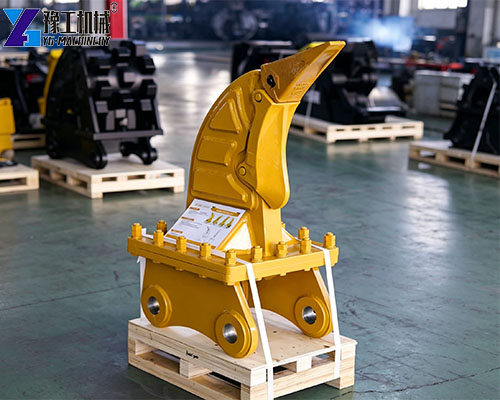
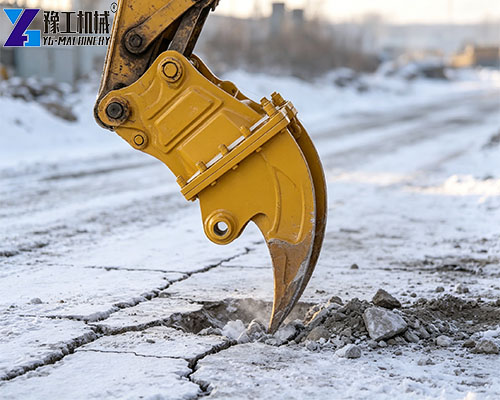
How Does A Hydraulic Ripper For Excavator Work?
Step 1 – Position. Lower the excavator arm so the ripper tooth is vertical or angled slightly backward. Position it at the edge of the area you want to rip.
Step 2 – Penetrate. Apply downward force using the excavator’s arm and stick cylinders. The weight of the excavator and the hydraulic force drive the tooth into the ground. For hard materials, you may need to lift and drop the ripper to gain penetration.
Step 3 – Rip. Once the tooth is embedded, retract the arm (pull toward the excavator). The tooth drags through the material, fracturing it along a line. The ground cracks and loosens. Repeat at intervals to cover the entire area.
After ripping, the material is loose enough for a bucket or loader to scoop up. The ripper does the heavy breaking, and the bucket does the moving.
Key Features Of YG Excavator Ripper Attachments
- Heavy-duty construction – Built with thick steel plates (50- 90 mm) to withstand extreme forces.
- Replaceable teeth – When the tooth wears out, you replace only the tooth – not the whole ripper. The teeth are standard models (DH55, DH150, DH220, D85C, 4T5502-2) – easy to source.
- Wide excavator compatibility – Six models cover 4-39 ton excavators. From mini excavators to large machines.
- Multiple pin sizes – Pin diameters range from 40- 90 mm. Fits most excavator brands.
- Easy mounting – Standard pin-on design. Mounts directly to the excavator arm and stick.
- Single or multi-tooth options – The document shows single-tooth models. Multi-tooth rippers are also available for some applications.

Real Benefits – Why Contractors Choose A Ripper?
Faster than a breaker. For ground that is hard but not solid rock, a ripper works much faster than a breaker. One pass rips a line; the bucket scoops the loose material.
Lower noise. Ripping is much quieter than breaking. Good for residential or urban sites.
Less vibration. The excavator experiences less shock. Less wear on the machine.
Lower cost. A ripper is simpler and cheaper to maintain than a breaker. No complex internal parts.
Versatile. Works in frozen ground, hard clay, soft rock, and asphalt. One attachment covers many conditions.
Break Ground Faster With YG
An excavator ripper attachment is a simple but powerful tool for breaking up hard ground. YG offers six models for 4-39 ton excavators. The rippers are built with heavy-duty steel plates (50- 90 mm) and replaceable teeth. Pin-to-pin distances from 265mm to 570mm. Weight from 60kg to 775kg. The teeth are standard models – easy to replace and source. Use the ripper for clay, frozen ground, soft rock, asphalt, and compacted soil. It is quieter, less vibrating, and often faster than a breaker for these materials.
YG Machinery also offers other excavator attachments: breakers, grapples, shears, and crusher buckets. Contact YG with your excavator make, model, and typical material. They will recommend the right hydraulic ripper for excavator and provide a quote. Stop struggling with hard ground – start ripping.
Phone / WhatsApp / WeChat: +86 159 3715 3321
Frequently Asked Questions
For hard rock like granite or basalt, a breaker is better. Rippers are best for clay, frozen ground, shale, sandstone, and asphalt. For very hard rock, consider a breaker or a larger ripper (YGR14) with heavy-duty teeth.
Yes. Rippers are excellent for breaking up old asphalt roads or parking lots. The tooth penetrates the asphalt layer and fractures it.
Yes. Rippers are used to break hardpan layers in fields, improving drainage and root penetration.