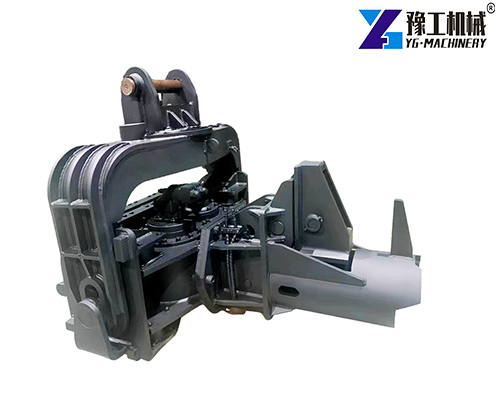
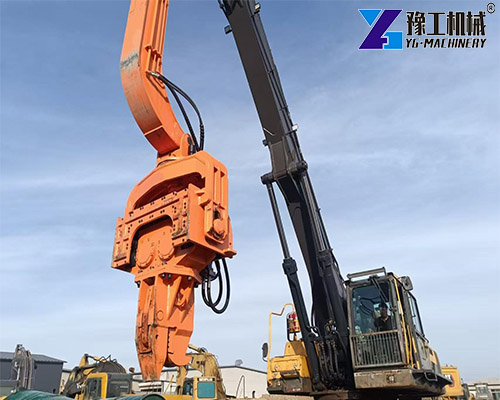
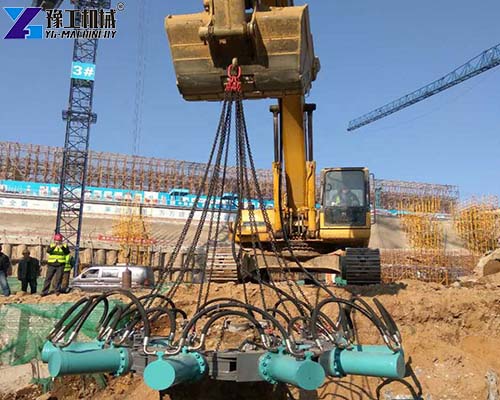
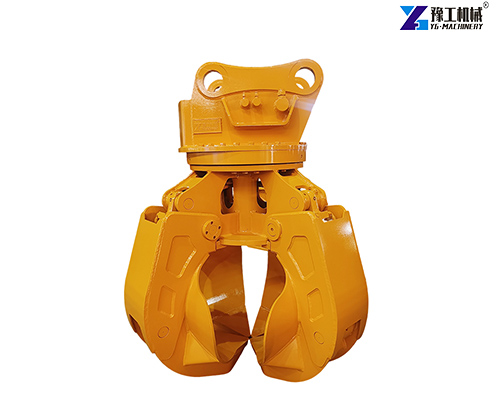
You need to drive sheet piles for a foundation, steel pipes for a retaining wall, or concrete piles for a bridge. A big pile driving rig costs a fortune and takes weeks to mobilize. What if your excavator could do the job? An excavator pile driver attaches to your existing excavator’s arm. It uses hydraulic power to spin two eccentric shafts at high speed (2600 rpm). The vibration shakes the pile down into the ground—or pulls it out—no separate carrier, no extra transport.
YG Machinery offers five models: YG150D, YG250D, YG350D, YG400D, and YG450D. Excitation force ranges from 24 tons to 81 tons. They fit excavators from 8 tons to 55 tons. This article explains the specs, how vibration pile driving works, which model matches your machine, and where to use this attachment.
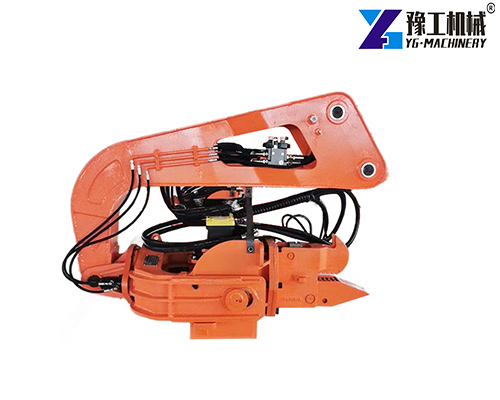
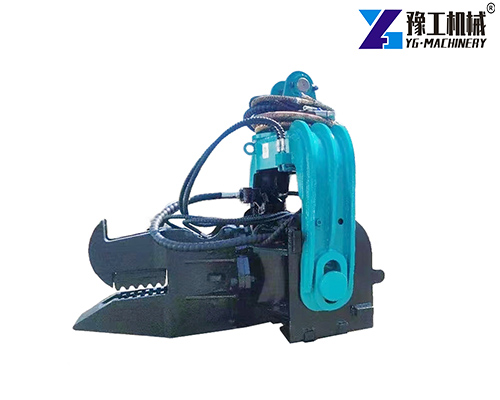
YG Excavator Pile Driver Attachment – Key Parameters
Here are the complete specifications for all five models. Choose based on your excavator size and the piles you drive.
| Model | YG150D | YG250D | YG350D | YG400D | YG450D |
| Eccentric moment(kg*m) | 3.2 | 5.1/5.7 | 7.1 | 9.2 | 11 |
| Speed(rpm) | 2600 | 2600 | 2600 | 2600 | 2600 |
| Excitation force(t) | 24 | 38/42 | 52 | 68 | 81 |
| Operating pressure of oil system(bar) | 200 | 300 | 320 | 330 | 330 |
| Flow demand for hydraulic oil system(lpm) | 100 | 163 | 220 | 260 | 300 |
| Weight(t) | 1.2 | 1.6 | 2.4 | 2.5 | 2.6 |
| Excavator(t) | 8-12 | 20-25 | 25-35 | 35-45 | 40-55 |
How Does An Excavator Hydraulic Post Driver Work?
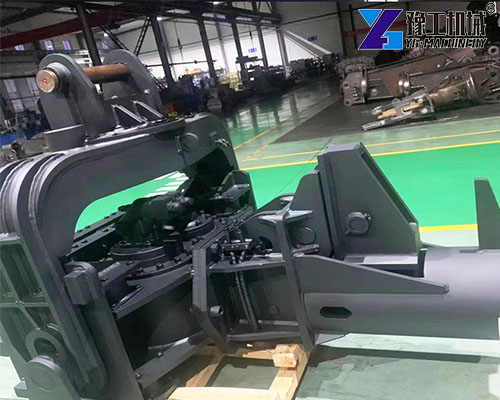
Inside the pile driver: There are two eccentric shafts. A hydraulic motor spins them in opposite directions at very high speed (2600 rpm). Because they rotate opposite, the horizontal forces cancel out, but the vertical forces add together. This creates a powerful up‑and‑down vibration.
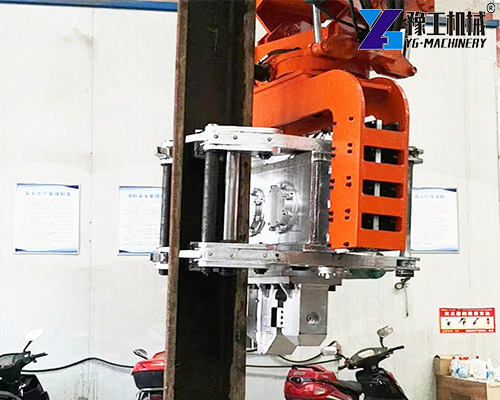
How the vibration helps: The vibrator is bolted to the top of the pile (steel sheet pile, pipe pile, concrete pile). The vibration shakes the pile. The surrounding soil temporarily turns into a liquid‑like state (soil liquefaction). Friction on the pile sides drops dramatically. The weight of the pile and the vibration force pull it down into the ground.
What if the pile gets stuck? The excavator arm can push down (apply downforce) or lift the pile and drop it again. This “re‑strike” action helps penetrate hard layers.
Pulling piles out: The same vibration works in reverse. The excavator lifts while the vibrator shakes. The pile slides out easily.
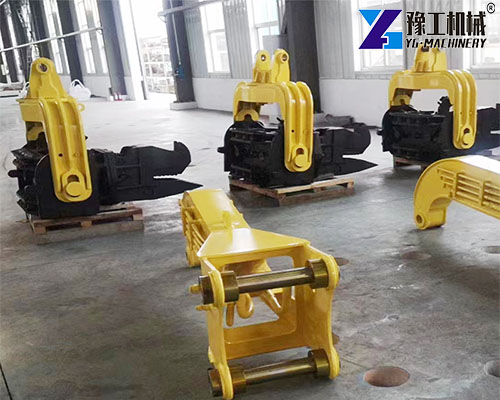
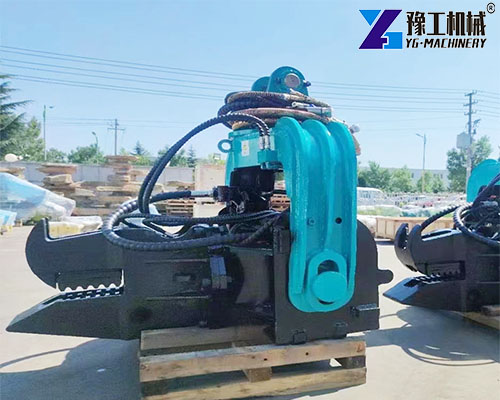
Why Choose An Excavator Pile Driver Over A Conventional Piling Rig?
| Feature | Excavator Pile Driver | Conventional Piling Rig |
| Cost | Much lower – you already own the excavator | High – dedicated machine |
| Mobility | Your excavator moves freely around site | Limited mobility |
| Transport | One machine to haul | Requires low bed trailer |
| Versatility | Remove driver, use bucket or breaker | Single purpose |
| Space | Works in tight areas | Needs more room |
For contractors who already own an excavator, a hydraulic post driver for an excavator is a no‑brainer. You spend a fraction of the cost of a dedicated rig, and you can switch back to digging in minutes.
What Types Of Piles Can You Drive?
- U‑type sheet piles – Common for retaining walls and cofferdams.
- I‑type (H‑beam) steel piles – For foundation supports.
- Steel pipe piles – For bridge foundations or deep excavations.
- Concrete piles – Precast concrete piles for building foundations.
The excavator pile driver is particularly effective for piles up to 10m in length. Longer piles may require a leader (guide frame) to keep them straight – not mentioned in the document, but typical for excavator‑mounted drivers.
Smart Features Of The YG Series Pile Driver
- High speed – Creates effective soil liquefaction for easy penetration.
- Adjustable frequency – The optional combined flow output lets you tune the vibration to soil conditions. Soft soil? Lower frequency. Hard clay? Higher frequency.
- Compaction assist – The excavator arm can apply downforce or lift and drop the pile for extra penetration.
- Vibration isolation – Rubber blocks protect your excavator’s hydraulic system and pins.
- Wide excavator fit – From 8‑ton mini excavators up to 55‑ton large machines.
The required excitation force depends on soil type, water content, and pile type. For sandy, wet soil, a lower force works. For dense, dry clay, you need a higher force.
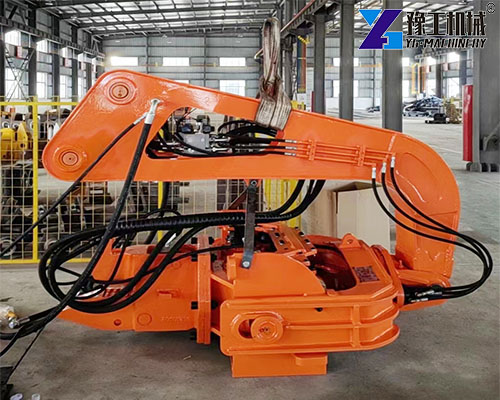
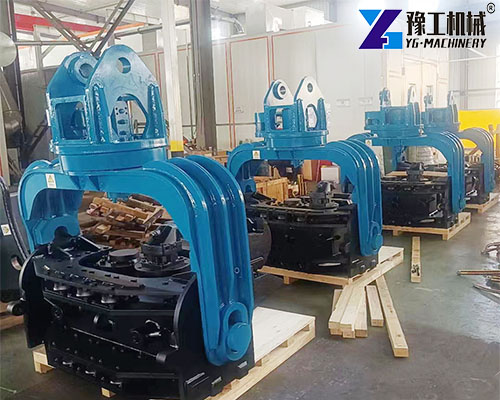
Real Workflow – How To Drive A Pile?
- Attach the driver to your excavator arm. Connect hydraulic hoses.
- Clamp the pile – Use the hydraulic clamp to grip the top of the pile.
- Position – Move the excavator to align the pile over the target spot.
- Start vibration – Engage the hydraulic motor. The eccentric shafts spin to 2600 rpm.
- Lower – The pile sinks under its own weight plus the vibration force. If it slows, use the excavator arm to push down.
- Stop – When the pile reaches the required depth, stop the vibration.
- Release – Unclamp, move to the next pile.
To extract a pile: clamp, vibrate, and lift with the excavator arm. The vibration reduces friction, and the pile slides out.
Turn Your Excavator Into A Pile Driving Machine
An excavator pile driver is a smart attachment for any contractor who installs sheet piles, steel pipes, or concrete piles. YG offers five models covering excavators from 8 to 55 tons. The attachment is simple: two eccentric shafts, a hydraulic motor, rubber isolators, and a pile clamp. No complex electronics.
Contact YG with your excavator make and model, typical pile type, and soil conditions. They will recommend the right excavator mounted pile driver attachment and provide a quote. Stop renting dedicated rigs – use the machine you already own.
Frequently Asked Questions
Vibration works best in granular soils (sand, gravel) and cohesive soils (clay) with high water content. For dry, hard clay or rock, you may need more force or a different method (press‑in or impact hammer). The YG450D with 81 tons of force is the strongest.
Regular greasing of eccentric shaft bearings. Check hydraulic hoses for leaks. The rubber isolation blocks wear over time – replace when cracked.
Two years. We provide installation guidance videos or instructions.
If you work in varied soil conditions, yes. Being able to change vibration frequency optimizes penetration and saves fuel.