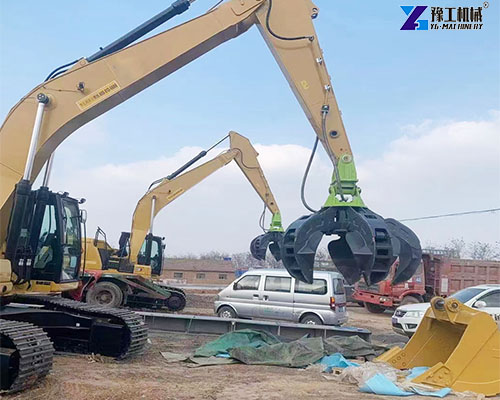
You have a timber yard full of logs. Or a demolition site with piles of wooden beams. Picking them up by hand is slow and dangerous. A bucket cannot grab irregular shapes. A grapple with hoses, tangles and breaks. What is the simple solution?
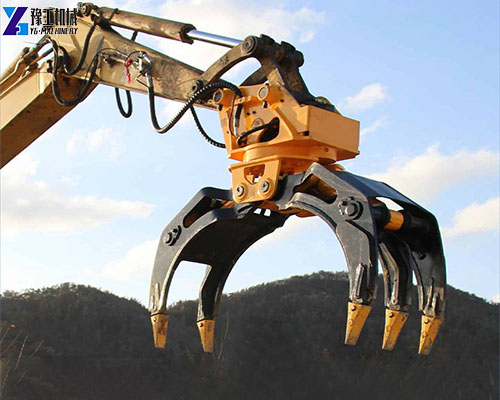
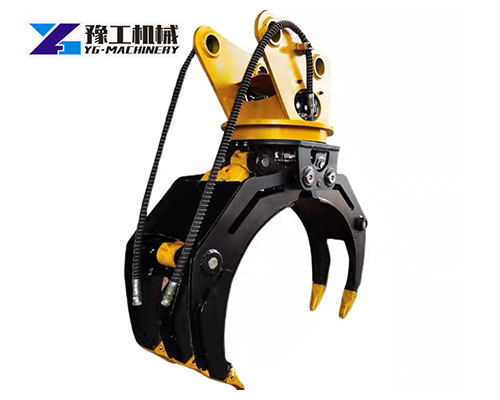
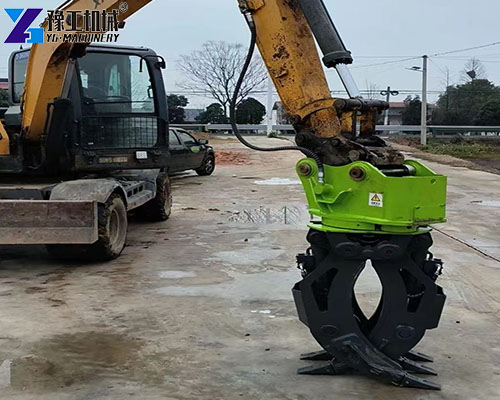
An excavator log grab. It is a hydraulic attachment that clamps onto logs, timbers, or any long material. The jaws open wide – up to 2800mm (over 9 feet) on the largest model. You squeeze the material, lift it, and move it. No chains. No straps. No manual handling.
YG Machinery offers seven models: 02, 04, 06, 08, 10, 14, and 20. They fit excavators from 4 tons up to 50 tons. Weight ranges from 360 kg to 2800 kg. The jaws are powered by dual hydraulic cylinders. Working pressure up to 250 kg/cm².
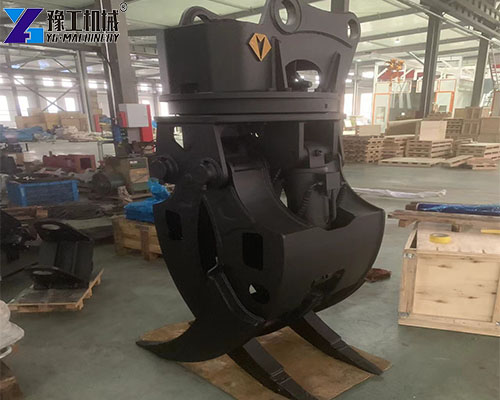
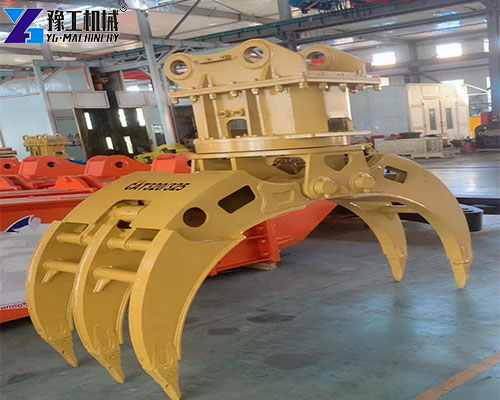
YG Excavator Log Grab – Key Specifications By Model
Here are the complete parameters for all seven models. Choose based on your excavator size and the material you handle.
| Model | Unit | 02 | 04 | 06 | 08 | 10 | 14 | 20 |
| Weight | Kg | 360 | 440 | 900 | 1680 | 2130 | 2600 | 2800 |
| Max jaw opening | M/m | 1200 | 1400 | 1600 | 2100 | 2500 | 2800 | 2800 |
| Oil pressure | Kg/crrt2 | 160 | 160 | 180 | 180 | 180 | 180 | 200 |
| Set up pressure | Kg/cm1 | 170 | 180 | 190 | 200 | 210 | 250 | 250 |
| Operating flux | L/min | 30-55 | 50-100 | 90-110 | 100-140 | 130-170 | 80-120 | 80-120 |
| Cylinder Volume | Ton | 4.0×2 | 4.5×2 | 8.0×2 | 9.7×2 | 12×2 | 12×2 | 14×2 |
| Suitable excavator | Ton | 4-6 | 7-11 | 12-16 | 17-23 | 24-30 | 31-40 | 41-50 |
What Can You Use An Excavator Log Grab For?
The name says “log grab”, but the attachment is useful for many materials:
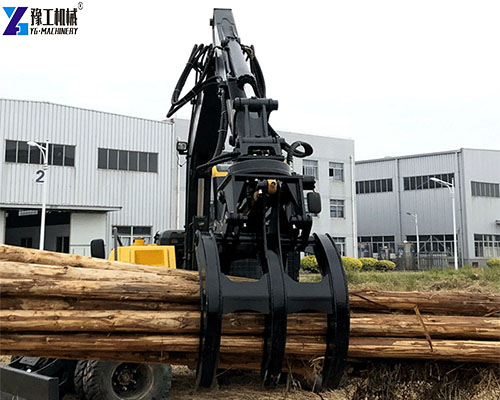
- Log handling – Picking, stacking, and loading timber at sawmills or forestry sites.
- Demolition wood – Grabbing wooden beams, rafters, and studs from torn‑down buildings.
- Pallets and lumber – Moving stacked lumber or broken pallets.
- Scrap metal (light) – Some customers use it for loose scrap, but a dedicated grapple is better for metal.
- Brush and debris – Cleaning up tree branches, roots, and land clearing waste.
- Pipe and cable reels – Grabbing round objects that a bucket cannot hold.
The wide jaw opening (up to 2800mm) means you can grab multiple small logs at once or one very large log.
How Does An Excavator Timber Grab Work?
Step 1 – Mount it. Pin the log grab to your excavator arm. Connect the two hydraulic hoses to your auxiliary circuit (usually for a breaker or thumb). The excavator‘s oil flow powers the cylinders.
Step 2 – Open the jaws. In the cab, you activate the auxiliary circuit (usually a button or pedal). Oil flows to the cylinder‘s rod side, retracting the piston and opening the jaws.
Step 3 – Close and lift. Position the open jaws around the log. Reverse the oil flow. The cylinders push the pistons out, closing the jaws around the material. The clamping force holds the log securely. Lift and move to the pile. Reverse again to release.
The grab can also rotate (if equipped with a rotation motor), so you can align the jaws with the log without moving the excavator.
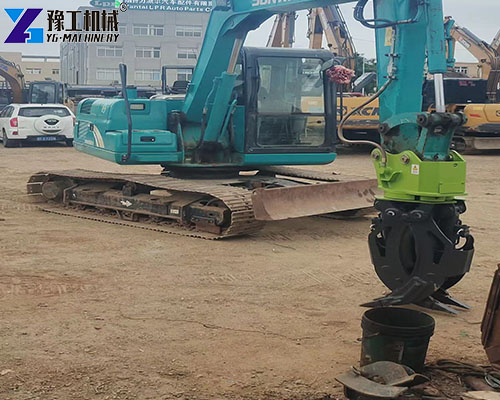
Why Choose A YG Log Grab Over Other Handling Methods?
| Method | Problems |
| Manual chains or straps | Slow, dangerous, requires worker on the ground |
| Bucket | Cannot grip round logs – they roll off |
| Forklift | Cannot reach into uneven terrain |
| Rope grapple | Tangles, hoses break, limited clamping force |
A hydraulic excavator log grab solves everything:
- No ground crew – Operator does everything from the cab.
- Positive grip – Hydraulic cylinders clamp with tons of force. Logs will not slip.
- Works on uneven ground – The excavator‘s tracks handle mud, slopes, or debris.
- Fast cycle times – Open, grab, lift, close. Repeat in seconds.
For a timber yard or demolition contractor, this attachment pays for itself in labour savings within months.
How To Choose The Right Model – Simple Guide
- Check your excavator weight – Use the “Suitable excavator” column. A 5‑ton mini excavator needs model 02. A 25‑ton excavator needs model 10. If your excavator is between sizes, round up to the next model.
- Measure your typical log diameter – The jaw opening should be at least 1.5 times the log diameter. For 800mm logs, choose 1200mm opening (model 02). For 1.5m logs, choose 2100mm (model 08).
- Consider your hydraulic flow – Your excavator must supply the “Operating flow” range. For model 10, you need 130-170 L/min. Check your machine‘s auxiliary flow.
- Ask about rotation – Rotating grabs are more expensive but much more versatile. If you handle logs in random orientations, get rotation.
Real Applications – Who Buys This?
- Sawmills – Loading logs from stockpile to conveyor.
- Tree service companies – Loading cut sections into trucks.
- Demolition contractors – Sorting wooden beams from rubble.
- Land clearing crews – Piling brush and logs for burning or chipping.
- Biomass power plants – Handling wood chips and logs.
- Pallet recyclers – Grabbing broken pallets for shredding.
Make Your Excavator A Log Handling Machine
An excavator log grab is a simple but powerful attachment. YG offers seven models covering 4‑50 ton excavators, with jaw openings from 1200mm to 2800mm. Dual hydraulic cylinders provide clamping force from 8 to 28 tons. The attachment is easy to mount, easy to control, and requires minimal maintenance. Whether you are logging, demolishing, or clearing land, a timber grab for a digger will save you hours of manual labour and reduce workplace injuries.
Contact YG with your excavator make, model, and material type. They will recommend the right timber grab for the digger model, provide a quote, and advise on optional rotation. Stop picking up logs by hand – let your excavator do the work.
Frequently Asked Questions
Grease the pivot pins daily. Check hydraulic hoses for leaks. Replace worn teeth (if equipped). Keep the cylinders clean.
Yes, if the loader has auxiliary hydraulics and a pin‑on or quick‑coupler mounting plate. YG can custom‑make brackets.
Speed depends on oil flow. At maximum flow (e.g., 170 L/min on model 10), the jaws cycle in about 2‑3 seconds.