You have a concrete building to demolish. A breaker smashes it into chunks – but you still have rebar sticking out of every piece. You need to separate the steel from the concrete for recycling. What tool does both jobs – crushing the concrete and cutting the rebar – in one go?
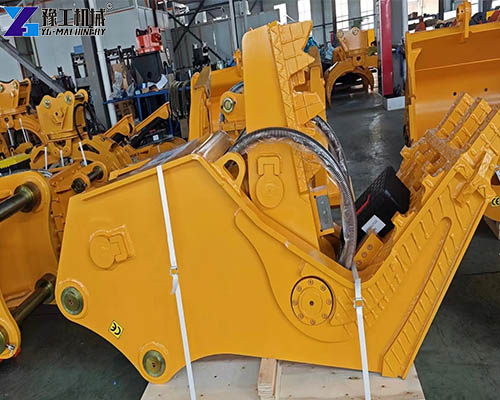
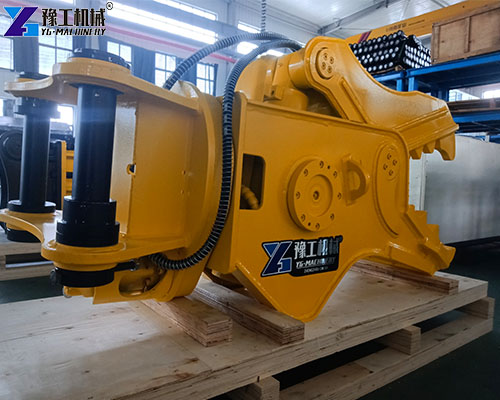
An excavator pulverizer. It is a hydraulic attachment with two powerful jaws that close together like a giant nutcracker. The jaws crush concrete into rubble. The sharp blades cut through rebar like scissors. You get clean, recyclable concrete and separated steel scrap. No second machine needed.
YG Excavator Pulverizer – Key Specifications
Here are the complete parameters for all five models. Choose based on your excavator size and the material you need to process.
| Model | Unit | YG400 | YG600 | YG800 | YG1000 | YG1700 |
| Total length | mm | 1642 | 1895 | 2168 | 2218 | 3150 |
| Total width | mm | 1006 | 1275 | 1376 | 1598 | 2100 |
| Blade length | mm | 120 | 150 | 180 | 200 | 240 |
| Max Opening Height | mm | 587 | 718 | 890 | 1029 | 1400 |
| Upper Jaw Width | mm | 215 | 280 | 290 | 380 | 400 |
| Lower Jaw Width | mm | 458 | 586 | 588 | 720 | 812 |
| Max Shear Force | kn | 380 | 650 | 1650 | 2250 | 2503 |
| Working Pressure | Bar | 280 | 320 | 320 | 320 | 320 |
| Weight | kg | 670 | 1350 | 1750 | 2750 | 4709 |
| For Excavator Weight | ton | 6-9 | 10-15 | 18-26 | 26-30 | 50-80 |
What Is An Excavator Pulverizer Used For?
Here are the specific applications:
- Concrete structure demolition – Bridges, buildings, foundations, walls, columns.
- Concrete crushing – Breaking concrete into smaller pieces for recycling.
- Rebar separation – Cutting steel reinforcement bars and separating them from the concrete.
- Secondary demolition – Processing the rubble left by a breaker or other primary demolition tool.
The key advantage: it does two jobs at once. Crushing and rebar cutting happen in the same operation. No need for a separate shear or torch.
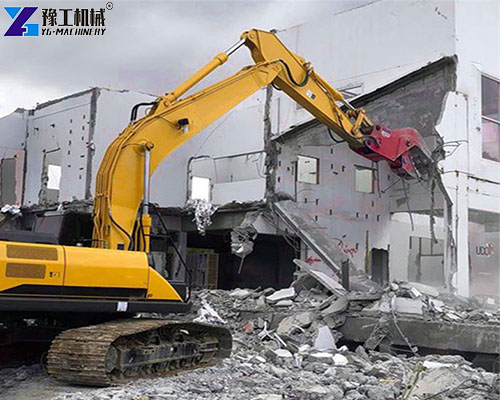

How Does An Excavator Pulverizer Work?
The pulverizer looks like a giant pair of jaws. Here is how it works.
The mechanism: Hydraulic oil from your excavator flows into the pulverizer‘s cylinders. The cylinders push the jaws together. The jaws are designed with two distinct zones:
- The crushing zone at the back (near the pivot) has large flat surfaces that crush concrete into smaller pieces.
- The cutting zone at the front has sharp blades that shear through rebar.
The operation: Position the open jaws around a concrete beam or column. Activate the hydraulic circuit to close the jaws. The jaws grip the concrete and crush it. As the jaws close further, the blades cut through any rebar inside. Open the jaws, let the crushed material drop, and move to the next piece.
One pass crushes the concrete and cuts the steel. You are left with clean rubble and separated rebar ready for recycling.
Pulverizer vs Breaker – Which Should You Use?
| Feature | Excavator Pulverizer | Hydraulic Breaker |
| Primary job | Crushing and separating | Breaking and demolishing |
| Rebar handling | Cuts rebar during crushing | Leaves rebar embedded in chunks |
| Finished material | Crushed, rebar free rubble | Mixed concrete and rebar – needs further processing |
| Noise | Lower (crushing, not impacting) | Very loud (impacting) |
| Vibration | Low | High – shakes excavator and nearby ground |
| Best for | Secondary demolition, recycling, separation | Primary demolition, breaking slabs, hard rock |
Most demolition projects use a breaker for the initial knock‑down, then a pulverizer for processing the rubble and separating the steel. If you can only have one attachment, a pulverizer is more versatile for recycling.
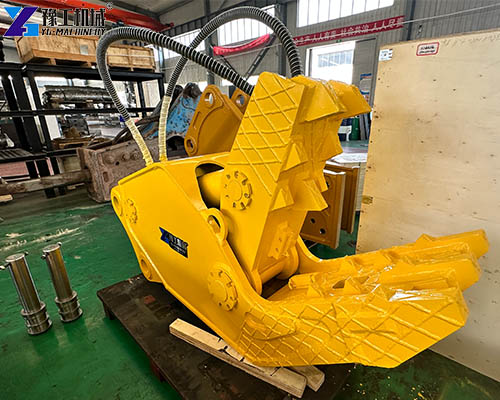
Core Components – What Is Inside An Excavator Pulverizer?
Based on typical design and YG quality standards:
- Two strong jaws – Fabricated from high‑strength steel. The upper jaw and lower jaw pivot on heavy‑duty pins.
- Crushing plates – Replaceable wear plates at the rear of the jaws. These do the crushing.
- Cutting blades – Replaceable blades at the front of the jaws. These cut the rebar.
- Hydraulic cylinders – Provide the closing force. The number and size depend on the model.
- Pivot pin – Connects the jaws to the mount.
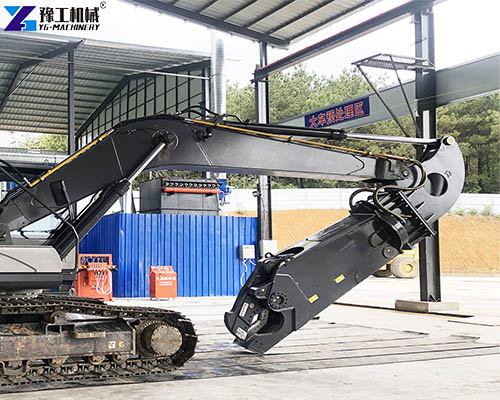
- Mounting bracket – Pins to your excavator arm. Fits standard quick couplers or direct pin.
- Hose kit – High‑pressure hoses for hydraulic oil supply and return.
All wear parts (blades and crushing plates) are replaceable – no need to buy a new pulverizer when they wear out.

Why Choose A YG Pulverizer Attachment?
- Dual function – Crushes concrete and cuts rebar in one operation.
- High cutting force – Up to 2503 kN shear force on the YG1700 – enough for heavy rebar.
- Wide range – Five models cover excavators from 6 tons to 80 tons.
- Replaceable wear parts – Blades and crushing plates can be changed, extending the life of the attachment.
- Low noise – Crushing is much quieter than breaking. Good for urban or residential sites.
- High productivity – Processes large volumes of demolition waste quickly. Saves time compared to separate crushing and cutting operations.
- Versatile – Works on concrete, reinforced concrete, and masonry.
Frequently Asked Questions
Yes, the blades are designed to cut through steel rebar. The YG1700 has a 240mm blade length and 2503 kN shear force – it can handle heavy rebar bundles.
A pulverizer has a wide jaw with crushing plates – it crushes and cuts. A demolition shear has a narrower jaw with sharp blades – it cuts steel only, with less crushing ability. Pulverizers are better for concrete processing.
Depends on the material and usage. For regular concrete demolition, blades can last several hundred hours. Reversible or replaceable – order spares.
Yes, as long as the coupler is rated for the pulverizer‘s weight and the excavator‘s size. The mount is standard.
Grease pivot pins regularly. Check blades and crushing plates for wear – replace when dull or worn. Inspect hydraulic hoses for leaks.
Real Benefits – Why Contractors Choose A Pulverizer?
Efficiency. One tool does crushing and rebar cutting in one pass. No switching attachments.
Quality of recycled material. The crushed concrete is clean, with minimal steel contamination. Ready for use as road base, aggregate, or backfill.
Safety. No need for workers to torch‑cut rebar. The pulverizer does it from the cab.
Profitability. Selling clean recycled concrete aggregate and scrap steel is profitable. The pulverizer makes both products.
Sustainability. Recycled concrete aggregate reduces landfill waste and the need for virgin aggregate. Good for green building certifications.


Crush, Cut, Recycle With YG Pulverizer
Excavator pulverizer is one of the most efficient demolition tools you can own. It crushes concrete into reusable aggregate and cuts rebar for scrap – all in one operation. YG offers five models for excavators from 6 tons to 80 tons. The YG400 is a compact, lightweight option for small excavators. The YG1700 is a heavy‑duty beast for large demolition projects. Max shear force ranges from 380 kN to 2503 kN. Blade length from 120mm to 240mm.
Recycled concrete aggregate is in high demand. Scrap steel has value. A pulverizer attachment for an excavator turns demolition waste into two saleable products. No second machine. No extra labor. Just clean, efficient processing.
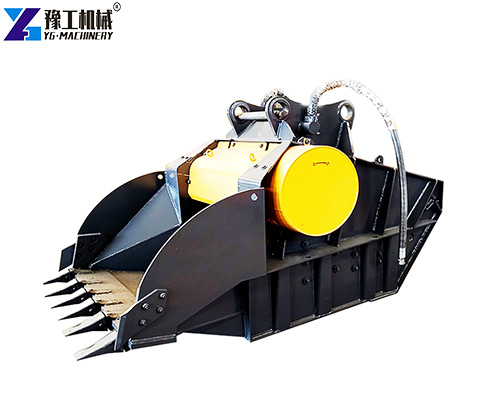
YG Machinery also offers shears, grapples, crusher buckets, and other excavator attachments. Contact YG with your excavator make, model, and typical material thickness. They will recommend the right pulverizer attachment for excavator and provide a quote. Start recycling – start profiting.