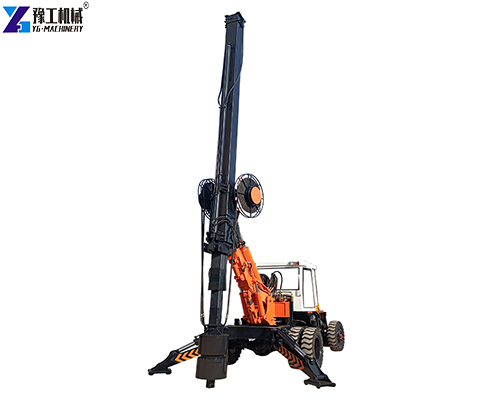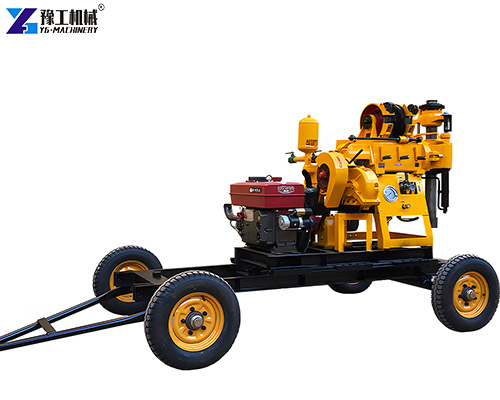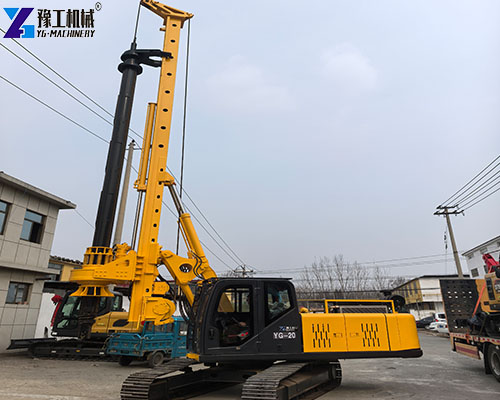
Choosing a rotary drilling machine is not simply about selecting the largest model available. The right equipment should match the required drilling diameter, depth, geological conditions, and project type.
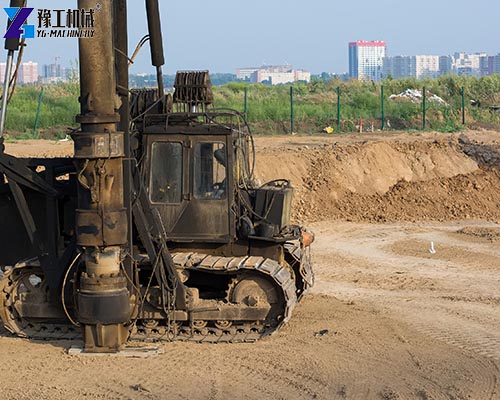
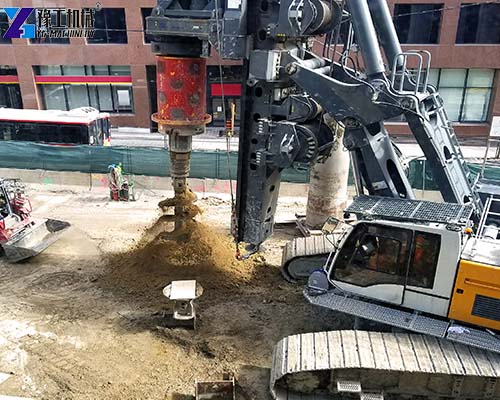
A rotary rig machine is an engineering machine that uses a hydraulic power system to drive the drill rod and drilling tool. The rotating tool cuts the soil or rock, while the drilling bucket collects the excavated material and removes it from the hole. This process is repeated until the designed pile depth is reached.
But which model is suitable for your project?
This guide explains the key specifications, machine types, geological considerations, and drilling tool options you should evaluate before making a selection.
Rotary Rig Machine Technical Parameters
The first step is to check the basic drilling parameters. For the YG13, YG15, YG16, and YG20 compact series, the main specifications are:
| Model | YG13 | YG15 | YG16 | YG20 |
| Max.Drilling Diameter | 1000mm | 1600mm | 1500mm | 1600mm |
| Max.Drilling Depth | 13m | 15m | 16m | 20m |
| Max. Rotary torque | 50KN.m | 45kN .m | 46KN.m | 36KN.m |
| Rotary angle | 360° | 180° | 180° | 360° |
| Rotary speed | 10-45r/min | 17-45r/min | 20-46r/min | 22-43r/min |
| Dimension(m) | 3.1×1.92×3.5m | 6.8×2.27×3.2m | 10 x 2.3x 3.2 m | 9.5×2.6×3.5m |
| Weight | 9ton | 13 ton | 11 ton | 17.8 ton |
These specifications show why model selection should be based on the project rather than machine size alone. A deeper drilling requirement, for example, may make drilling depth more important than maximum diameter.
Receive Detailed Parameter List
Rotary Drilling Rig Machine Types and Their Differences
There is no single configuration for every piling project. The product information identifies several types, including wheeled and crawler models, small, medium, and large rigs, CFA rigs, interlocking rod rigs, and square rod rigs.
1. Small Rotary Rigs
Small rigs are designed for smaller pile projects. The provided product information describes small models with torque of approximately 100-120 kN.m, engine power of 100-170 kW, drilling diameters of 0.5-1.5 m, and drilling depths of 40-45 m.
Typical applications include slope protection piles and small-diameter municipal piles.
2. Medium Rotary Rigs
Medium models are described with approximately 180 kN.m torque, 200 kW engine power, drilling diameters of 0.8-1.8 m, and drilling depths up to 60 m.
They are suitable for applications such as highway bridge piles and load-bearing piles for large buildings.
3. Large Rotary Rigs
Large models provide 240 kN.m or more torque, approximately 300 kW engine power, drilling diameters of 1-2.5 m, and drilling depths up to 80 m.
They are intended for large bridge piles and foundation piles for special structures.

Find The Right Solution For Your Job
Rotary Pile Drilling Rig Selection by Project Type
When selecting a rotary pile drilling rig, start with the pile foundation requirements.
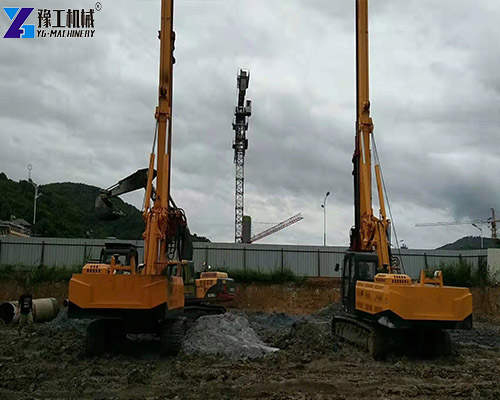
For small municipal projects, a compact model may be more practical. Large bridges and major buildings require greater drilling depth, diameter, and torque.
Typical application areas include:
- Cross-river and cross-sea bridges
- Urban transportation projects
- High-speed railways
- Large buildings and venues
- Commercial and residential buildings
- Transportation hubs
- Power tower foundations
- Photovoltaic foundations
- Coal mining projects
The project type provides the starting point, but geological conditions determine whether the selected configuration can actually perform the required work.

Get Your Project‑Specific Quote
Rotary Rig Machine Selection by Geological Conditions
Geology is one of the most important factors in choosing a rotary rig machine.
Different soil and rock conditions affect drilling stability, tool wear, and the required machine performance.
1. Clay
Clay has strong plasticity and can cause the drilling bucket to become sticky.
A suitable drilling tool should therefore be selected according to the soil characteristics.
2. Silt and Muddy Soil
Silty soil has high water content and may create problems such as hole diameter reduction.
3. Sand and Gravel
Loose sand can be prone to collapse, while gravel has larger particles that may increase drilling tool wear.
4. Moderately and Slightly Weathered Rock
Hard rock requires higher machine torque and power.
This is where choosing equipment according to geological conditions becomes especially important.
Find The Right Solution For Your Job
Rotary Piling Rig and Drilling Tool Selection
A rotary piling rig should be matched with the correct drilling tool.
The product information recommends different tools for different formations:
| Geological Condition | Recommended Drilling Tool |
| Clay, silt, sand | Spiral drilling bucket |
| Clay, muddy soil, sand | Rotary drilling bucket |
| Moderately or slightly weathered rock | Core drilling bucket |
| Loose sand and gravel | Sand dredging bucket |
Spiral drilling buckets with cutting teeth are suitable for softer formations such as clay, silt, and sand. Rotary drilling buckets can be used for clay, muddy soil, and sand.
For weathered rock, core drilling buckets equipped with cutting teeth or roller bits are recommended. Sand dredging buckets are suitable for loose sand and gravel formations where collapse may occur.
This means that choosing the machine alone is not enough. The drilling tool should also match the ground conditions.

Find The Right Solution For Your Job
Rotary Rig Machine: Square Rod or Interlocking Rod?
Another important choice is the drill rod configuration.
Square Rod Rotary Rig
Square rod rigs use a square drill rod without a locking mechanism. Torque is transferred mainly through friction.
They are suitable for softer formations and relatively shallow drilling. The provided information describes wheeled square-rod rigs as suitable for smaller projects, soil, weathered rock, gravel, and clay, with drilling heights below 25 m.
Interlocking Rod Rotary Rig
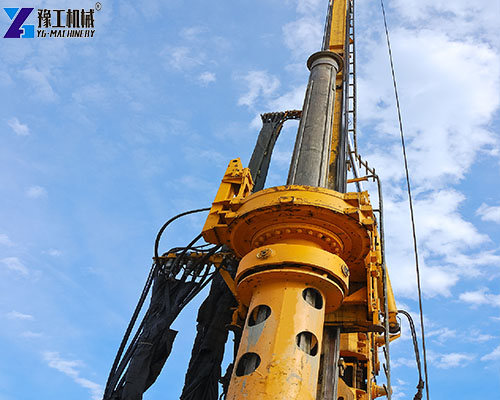
Interlocking rod rigs use a locking mechanism to transfer higher torque.
They are better suited to harder geological conditions and deeper drilling. The provided information describes crawler interlocking-rod rigs for harder formations and drilling depths of approximately 15-70 m.
Pro Tip: If the project involves hard formations and deep holes, do not choose a drill rod only by machine price or overall size. Check the rod structure and torque transmission method first.

Get Your Project‑Specific Quote
Rotary Drilling Rig Machine Working Process
The basic working process is straightforward.
- Position the rig over the planned pile location.
- The power head rotates the drill rod and drilling tool.
- The tool cuts the soil or rock.
- Excavated material enters the drilling bucket.
- The bucket is lifted and emptied.
- The drilling cycle is repeated until the required depth is reached.
This repeated drilling and soil-removal process allows the machine to form pile foundation holes according to the project design.
Rotary Rig Machine Selection Checklist
Before choosing a rotary rig machine, check these factors in order:
1. What drilling depth is required?
Compare the project depth with the machine’s maximum drilling depth.
2. What pile diameter is required?
Make sure the maximum drilling diameter covers the designed pile size.
3. What is the geological condition?
Identify whether the project involves clay, silt, sand, gravel, weathered rock, or harder formations.
4. What torque is required?
Harder formations generally require greater torque and power.
5. Which drilling tool is suitable?
Match the bucket or drilling tool with the actual geological conditions.
6. Which rod configuration is better?
Consider square rods for suitable shallow and softer ground applications and interlocking rods for harder and deeper drilling conditions.
Get Your Project‑Specific Quote
Rotary Pile Drilling Rig Final Buying Guide
A good rotary rig machine selection starts with the project, not the machine catalog.
First determine the required pile diameter and depth. Then evaluate the geological conditions, required torque, hydraulic and power requirements, drill rod configuration, and drilling tools.
For smaller municipal projects, compact models can provide a suitable solution. For bridge foundations, large buildings, deep piles, and harder formations, larger configurations may be more appropriate.
The YG series provides different machine sizes and configurations, including models designed for different drilling diameters, depths, torque levels, and excavator classes.
If you are unsure which configuration fits your project, provide the required pile diameter, drilling depth, geological conditions, and project type. These details can be used to determine a more suitable drilling rig and drilling tool combination.