Case summary at a glance:
| Item | Details |
| Destination Country | Indonesia |
| Client Type | Large Infrastructure Contractor |
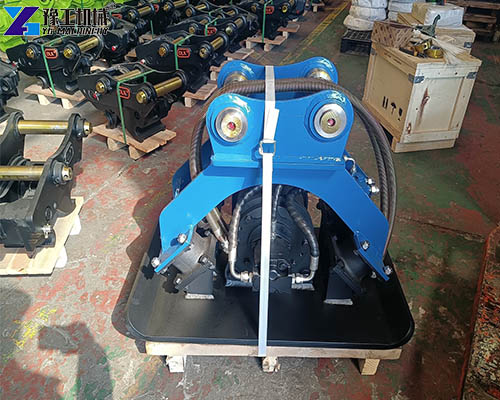
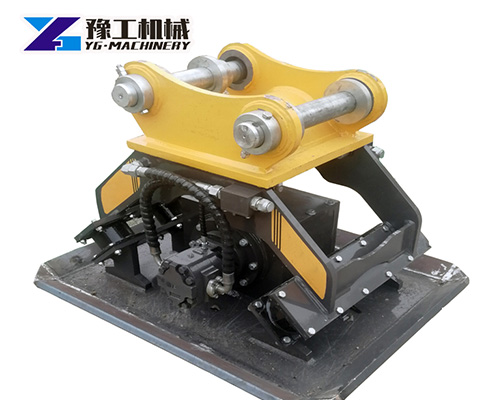
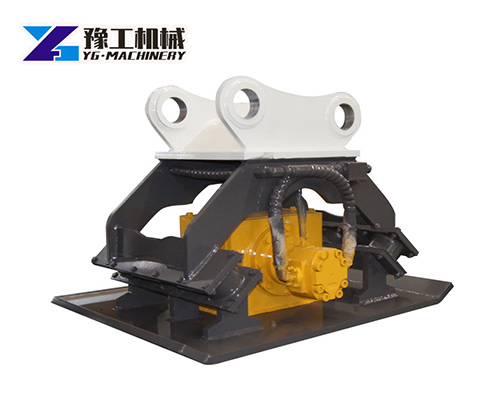
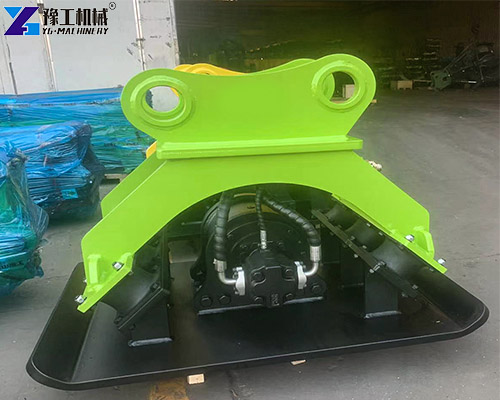
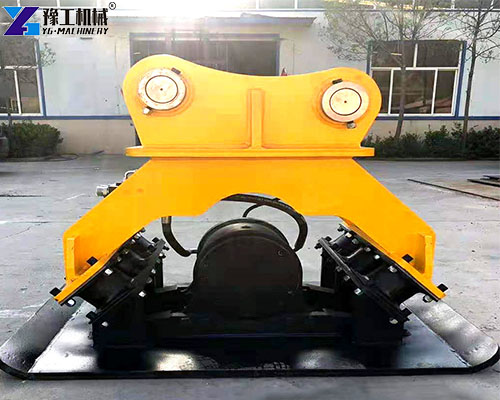
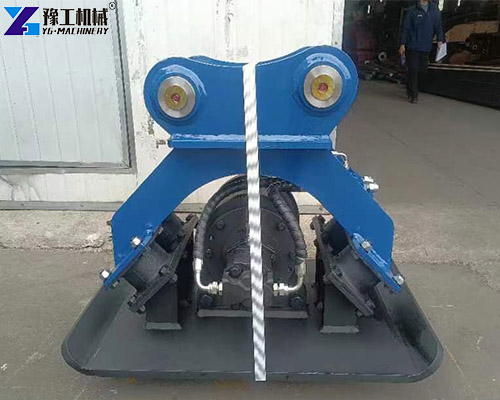
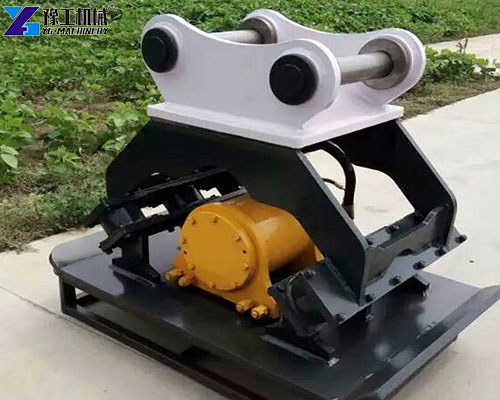
| Equipment Model | YG-80 Hydraulic Plate Compactor (Standard Type) |
| Quantity | 4 Units |
| Delivery Time | Q2 2025 |
| Core Working Condition | Volcanic soil and weathered rock backfill, road base compaction on a new toll road project in a tropical high-rainfall region |
| Project Core Challenge | Previous compaction equipment could not achieve required density on mixed volcanic ash and clay soils; roller compactors were unable to access narrow trench and shoulder areas |
| Key Performance Outcome | Compaction pass count reduced from 8 to 4; achieved 98% modified Proctor density consistently |
| Benchmark Applicability | Toll road subbase compaction, pipeline trench backfilling, foundation pad preparation, and slope shoulder work using 20–27 ton excavators |
This case is directly applicable to infrastructure contractors operating in tropical volcanic soil conditions across Southeast Asia, particularly for road construction and pipeline projects.
Project Background & Site Conditions
The client is a major civil engineering contractor based in Indonesia, engaged in a high-priority toll road development project on the island of Java. The project spans over 150 kilometers of new highway construction through varied terrain, including volcanic highlands and riverine floodplains. The scope includes extensive earthworks, subbase preparation, and structural backfill compaction.
Project Type: Toll road construction – subbase and backfill compaction
Site Conditions: The project traverses areas with high annual rainfall exceeding 3,000mm per year. Sites are frequently waterlogged during the wet season, with soil moisture content varying significantly across different sections. Many work areas are located in remote regions with limited access to electrical power, making hydraulic-driven equipment the preferred choice. Trench sections and bridge abutment backfill areas are too narrow for conventional ride-on rollers.
Soil Conditions: The primary materials requiring compaction include:
- Volcanic ash-derived silty clays (high plasticity, sticky when wet)
- Weathered andesite rock fill (angular particles up to 100mm)
- Sandy clay blends used for subbase layers
- Imported granular fill for structural backfill behind retaining walls
Client’s Previous Pain Points:
- Narrow access limitations: Conventional 10-ton vibratory rollers could not access trench widths under 2 meters, leaving shoulders and abutment backfill poorly compacted
- Inconsistent density results: Hand-operated plate compactors were used, but could not achieve the required depth of influence (only 200–300mm effective depth)
- Slow production rates: Achieving 95% modified Proctor density required 6–8 passes with existing equipment
- High labor dependency: Manual compaction required multiple operators and support staff, increasing site safety risks
- Weather vulnerability: Rain frequently halted compaction work, and drying time for wet soils created cascading project delays
- Equipment breakdowns: Small gasoline-powered plate compactors suffered frequent engine failures in hot, dusty conditions
Client Procurement Requirements:
- Effective compaction depth exceeding 500mm in cohesive and granular soils
- Attachment compatibility with the existing 20–27 ton excavator fleet
- Reliable operation in high-temperature (above 35°C) and high-humidity environments
- Capability to work on slopes up to 20 degrees
- Low-maintenance design with readily available consumable parts
- Quick coupling system for fast attachment changes between excavator tasks
- Proven export capability with after-sales support in Southeast Asia
Equipment Selection & Configuration
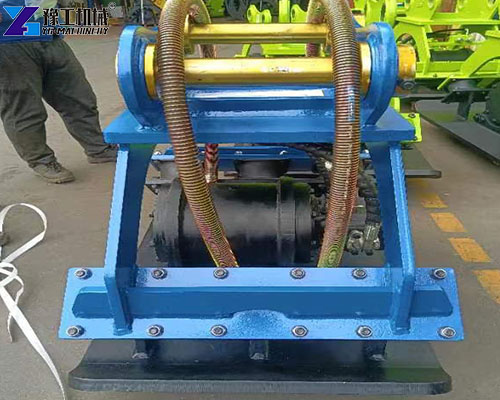
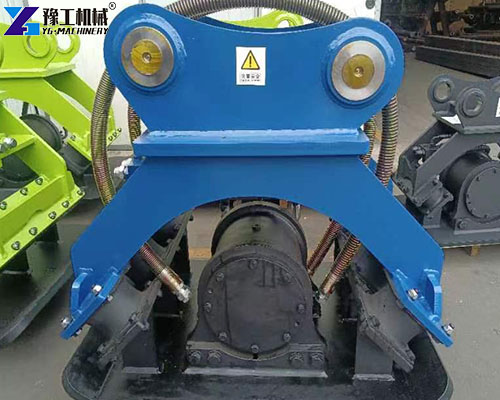
After comprehensive site evaluation and compaction trials, the YG-80 hydraulic plate compactor was selected as the optimal solution. The selection process involved analyzing the client’s excavator specifications, soil types, required compaction depths, and production targets.
Primary Equipment Model: YG-80 Hydraulic Plate Compactor
| Specification | YG-80 Value |
| Vibration Force | 110 KN |
| Excitation Frequency | ≥2200 RPM |
| Working Pressure | 15 MPa |
| Maximum Flow | 160 L/min |
| Suitable Excavators | 20–27 Tons |
| Machine Weight | 920 KG |
| Dimensions (L/W/H) | 1350 × 900 × 1000 mm |
| Impact Area | 1350 × 900 mm |
Why YG-80 Was Selected:
- Excavator match: The client’s primary excavator fleet consists of 22–25 ton machines, placing the YG-80 squarely within the recommended 20–27 ton range
- Compaction force: At 110 KN vibration force and 2200 RPM excitation frequency, the YG-80 delivers effective compaction depth exceeding 600mm in cohesive soils – sufficient for the project’s subbase requirements
- Coverage efficiency: The 1350 × 900 mm impact area (1.215 m² per pass) allows rapid coverage of wide subbase areas while remaining compact enough for trench work
- Proven plate size: The 920 kg machine weight provides optimal ground pressure without overloading the excavator’s hydraulic system
Customization for Indonesian Conditions:
- High-capacity cooling system: Upgraded hydraulic oil cooler to maintain operating temperature below 70°C in tropical ambient conditions
- Corrosion-resistant coating: Epoxy-based anti-rust treatment applied to all exposed surfaces to withstand high humidity and frequent rain exposure
- Reinforced baseplate edge: Hardox steel edge inserts added to resist wear from abrasive volcanic rock fill
- Slope operation kit: Additional hydraulic flow control valve for consistent vibration on inclines up to 25 degrees
- Quick coupler adapter: Custom mounting bracket designed for the client’s existing excavator quick coupler system, reducing changeover time to under 5 minutes
Selection Rationale:
The YG-50 model (65 KN vibration force, 700 × 1160 mm impact area) was considered but deemed insufficient for the required compaction depth and production speed on thicker subbase lifts. The YG-107 model (150 KN vibration force) would have exceeded the hydraulic capacity of the client’s 22–25 ton excavators. The YG-80 represented the optimal balance of compaction power, excavator compatibility, and operational efficiency for this specific application.
Project Outcomes
- Compaction production rate increased from approximately 80 m²/hour (manual plates + occasional roller) to over 250 m²/hour – a 212% improvement
- Labor requirement reduced by 70% as hand-operated compactor operators were reassigned to other tasks
- Density testing pass rate improved from 78% to 98% on first testing, virtually eliminating rework
- Weather-related delays reduced by 40% due to the attachment’s ability to compact wetter materials effectively
- Fuel consumption per cubic meter compacted reduced by approximately 35% compared to the combined roller + manual method
Complete Export & Delivery Process
The export of these vibratory plate compactor attachments to Indonesia followed a structured process designed to ensure smooth customs clearance, safe transport, and successful on-site commissioning.
Application Analysis: The client’s site conditions, soil test results, excavator specifications, and production targets were analyzed using borehole data, site photographs, and detailed questionnaires. A customized compaction plan was developed.
Free Selection Consultation: Based on the analysis, the YG-80 was recommended. The client received detailed comparison data against the YG-50 and YG-107 models to validate the selection.
Parameter Fine-Tuning: The hydraulic flow and pressure settings were adjusted to match the client’s specific excavator hydraulic system, ensuring optimal vibration output upon arrival.
Manufacturing: All four units were manufactured to order with the Indonesia-specific customizations.
Packaging:
- Anti-rust treatment applied to all exposed steel surfaces
- Heavy-duty plywood crates with internal steel bracing
- Desiccant packs and VCI paper were installed to prevent moisture damage during ocean transit
- Baseplate protected with heavy-duty plastic wrap to prevent edge damage
Installation Guidance: Remote video installation support was provided to the client’s maintenance team. The YG-80 units were mounted on the excavators within 3 hours of arrival.
Operator Training: A comprehensive training session was conducted via video conference, covering:
- Safe operating procedures for the excavator-mounted vibratory plate compactor
- Optimal compaction patterns for different soil types
- Daily maintenance checklist
- Wear part inspection and replacement procedures
- Troubleshooting common vibration and hydraulic issues
Client Feedback & Real Evaluation
Three months after commissioning, the client’s Site Manager provided the following evaluation:
“We initially brought in one YG-80 as a trial, thinking we might just use it for trench backfill. After the first week, we immediately ordered three more. The compaction speed on our subbase is incredible – our density testing team can barely keep up. The volcanic clay on this project has always been difficult – it’s sticky when wet and hard when dry – but this hydraulic plate compactor for excavator handles it consistently. We cut our compaction passes from 8 to 4, and the depth of compaction is visibly better. We are cutting through the wet season with far fewer weather delays. The only issue we had was with a worn hydraulic hose fitting after heavy use – but the support team identified it on a video call and arranged a replacement within days.”
— Site Manager, Toll Road Project, Java, Indonesia
Case Summary & Applicability Guide
Core Value Delivered
This Indonesian case demonstrates that the YG-80 hydraulic plate compactor delivers:
- Measurable productivity gains – over 212% improvement in compaction coverage rate compared to traditional methods
- Superior compaction quality – consistent 98% modified Proctor density with only 3–4 passes
- Proven reliability – zero major failures in 500+ operating hours under demanding tropical volcanic soil conditions
- Operational flexibility – effective in trenches, slopes, and wide subbase areas with a single attachment
- Complete export capability – seamless delivery and commissioning in Indonesia with full documentation
Recommended Excavator Match
- Optimal: 22–25 ton excavators with hydraulic flow of 150–170 L/min
- Acceptable: 20–27 ton excavators (as per YG-80 specification)
- Not Recommended: Excavators below 20 tons (insufficient hydraulic flow to reach 110 KN vibration force) or above 27 tons (unnecessary, and may risk over-stressing the attachment)
Comparable Projects
This case is directly applicable to:
- Tropical road construction projects in Southeast Asia
- Pipeline and utility projects requiring trench backfill compaction
- Foundation preparation for industrial and commercial developments
- Slope stabilization and embankment construction
- Large-scale earthworks in volcanic or lateritic soil regions
For more information about this vibratory plate compactor for excavator or to discuss your specific application, please contact our sales team with your excavator specifications and soil conditions.
Phone / WhatsApp / WeChat: +86 159 3715 3321
Email: admin@chinayugongmachinery.com