You know the moment.
The trench is backfilled. The pipe is laid. Now comes the part nobody likes — compacting the soil. You send a crew in with hand-held plate compactors. They spend hours walking back and forth, sweating through their shirts, trying to get the ground solid enough to pass inspection.
Meanwhile, your excavator sits idle. The machine that dug the trench in 20 minutes is now parked, watching workers do by hand what it could do in five.
One foreman in Australia faced this exact problem on a pipeline project. He had 2 kilometers of trench to backfill and compact. Hand compactors were going to take weeks. Then he put a hydraulic plate compactor on his excavator.
The job finished in three days. His crew went home on time. And the inspector signed off without a single rework.

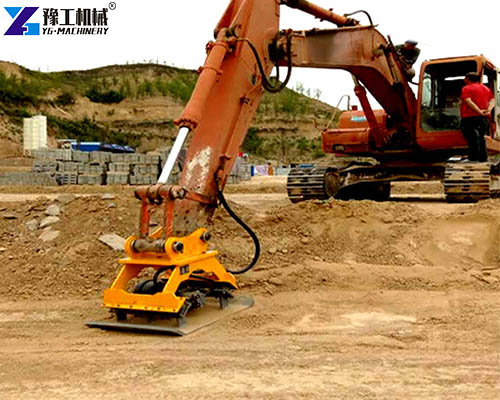
What Does A Hydraulic Plate Compactor Actually Do?
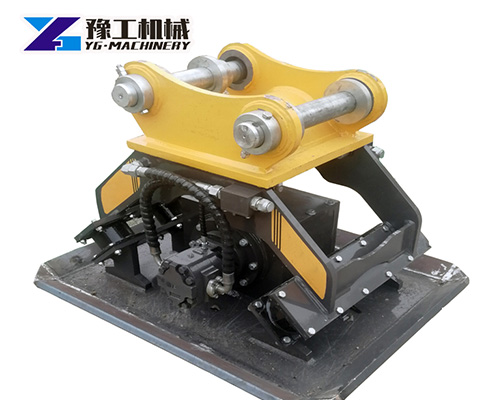
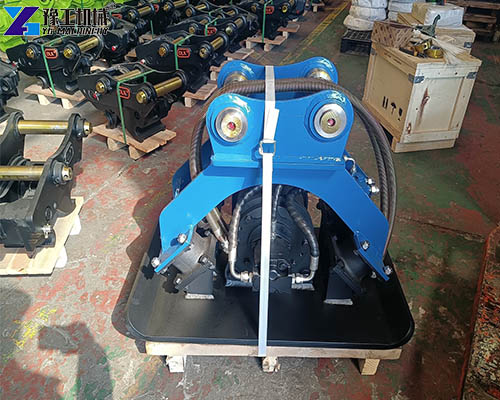
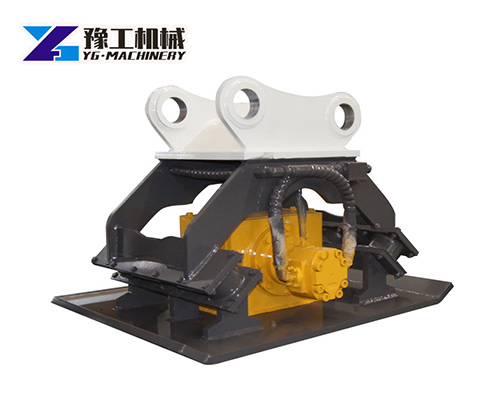
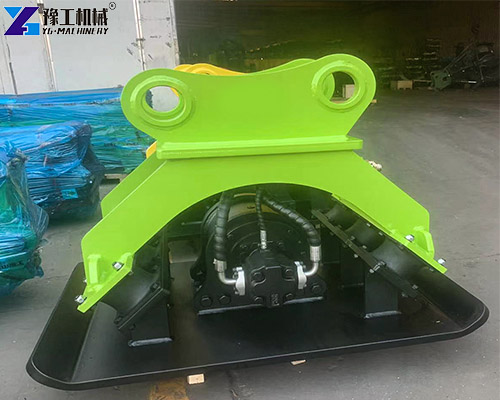
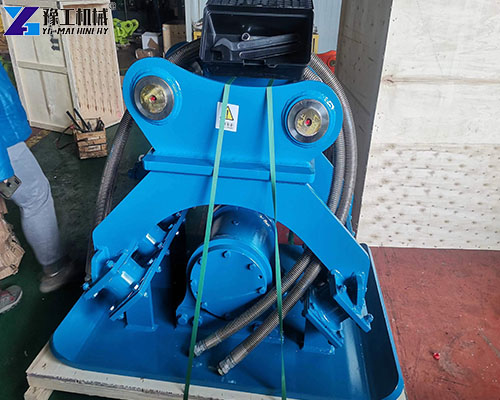
A hydraulic plate compactor is a large vibrating plate that mounts directly onto your excavator’s arm. Instead of swinging a heavy weight or relying on a crew with hand tools, your excavator uses its existing hydraulic system to drive a high-frequency vibrating plate.
The plate pounds the ground with thousands of vibrations per minute. Each impact pushes air out of the soil, compacts the particles together, and creates a dense, stable surface. It’s the same principle as a hand-held plate compactor — but with the power and reach of your excavator behind it.
The result? Consistent, uniform compaction across large areas. No weak spots. No soft patches. No inspector telling you to do it again.
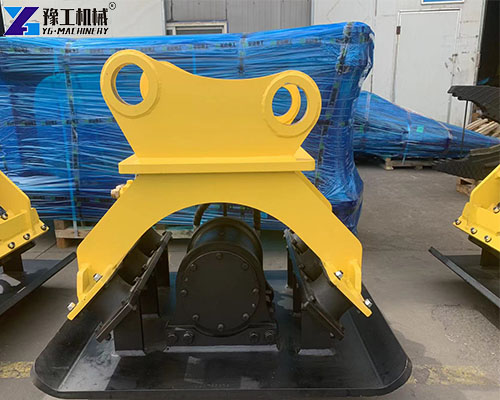
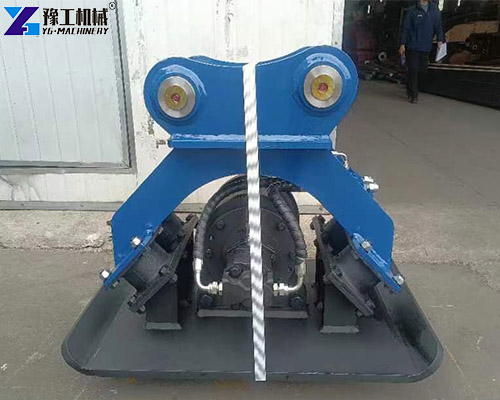
Where Does An Excavator Vibrating Plate Compactor Actually Work?
Here’s where a hydraulic compactor for excavator makes the biggest difference:
- Trench backfilling. You dug the trench with your excavator. Now backfill it and compact it with the same machine — no waiting for a separate compactor or a hand crew.
- Pipeline and utility work. Compacting soil around pipes and cables. The plate can work right next to the pipe without damaging it, thanks to precise excavator control.
- Slope and embankment compaction. Steep slopes that are dangerous for hand crews are no problem for an excavator with a hydraulic plate compactor.
- Foundation and bridge abutment work. Compacting soil around foundations, culverts, and bridge supports.
- Concrete patching and road repair. Compacting the subgrade before pouring new concrete.
- Landfill and waste compaction. Compacting materials in confined spaces.
- Post and formwork driving. Some compactors can also be used to drive or extract posts and formwork.
- Confined spaces. Areas where a full-size roller cannot reach — corners, narrow trenches, and around obstacles.
The Numbers That Matter
Not all plate compactors are the same. The table below shows our YG series — four models, each matched to a different excavator size.
| Model | YG-32 | YG-50 | YG-80 | YG-107 |
| Vibration force(KN) | 40 | 65 | 110 | 150 |
| Excitation frequency(RPM) | ≥2000 | ≥2000 | ≥2200 | ≥2200 |
| Working pressure(MPA) | 15 | 15 | 15 | 15 |
| Maximum flow(L/min) | 60 | 100 | 160 | 160 |
| Suitable excavators(T) | 4-9 | 10-18 | 20-27 | 30-40 |
| Length/width/height(mm) | 900*550*750 | 1160*700*930 | 1350*900*1000 | 1350*900*1050 |
| Machine weight(KG) | 380 | 550 | 920 | 1050 |
| Hit area(mm) | 900*550 | 1160*700 | 1350*900 | 1350*900 |
Why Does A Hydraulic Compactor For Excavator Beat Hand Compaction Every Time?
Hand-held plate compactors have their place. For small jobs, they’re fine. But for any job bigger than a backyard patio, they’re a bottleneck.
- Speed. A crew with hand compactors might cover 50-100 square meters per hour. An excavator-mounted hydraulic plate compactor can cover 500-1000 square meters per hour, ten times faster.
- Consistency. Hand compaction depends on the operator. Fatigue sets in. Coverage gets uneven. An excavator compactor delivers the same force, every pass, every time.
- Safety. No crew members walking on unstable ground. No one is operating heavy vibrating equipment by hand. The operator stays in the cab, safe and protected.
- Versatility. One excavator, one attachment, one operator — digging, backfilling, and compacting. No waiting for a separate machine. No coordinating with a separate crew.
- Cost. One machine and one operator do the work of a crew of five or six. Labor costs drop. Project timelines shrink. The attachment pays for itself in weeks, not months.
The Real Question: Which Hydraulic Plate Compactor Fits Your Excavator?
Here’s a quick checklist:
Step 1 — Check your excavator’s weight. The YG-32 fits 4-9-ton excavators. YG-50 fits 10-18 tons. YG-80 fits 20-27 tons. YG-107 fits 30-40 tons. Match the model to your machine.
Step 2 — Check your hydraulic flow. The YG-32 needs 60 L/min. The YG-50 needs 100 L/min. The YG-80 and YG-107 need 160 L/min. If your excavator doesn’t deliver enough flow, the compactor won’t reach full power.
Step 3 — Consider your material. Loose sand and gravel need less force than compacted clay or heavy soil. For most trench backfill applications, the YG-50 (65 KN) is sufficient. For heavy clay or large-scale projects, the YG-80 or YG-107 (110-150 KN) gives you the power you need.
Step 4 — Think about your workspace. Narrow trenches need a smaller plate. The YG-32 (900×550mm) fits in tight spaces where larger plates can’t reach. Open areas benefit from the larger plates (1350×900mm) that cover more ground per pass.
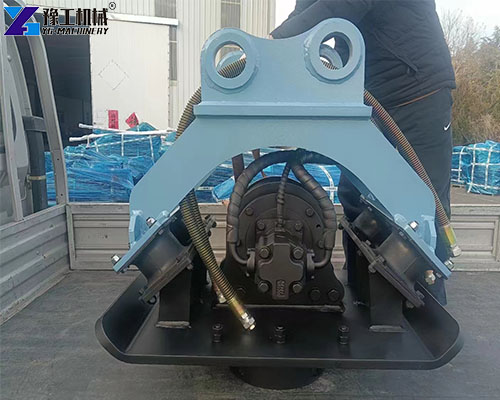
One Customer’s Math
A civil contractor in New Zealand was compacting backfill for a stormwater drainage project. He had 1.5 kilometers of trench, 1.2 meters wide, 2 meters deep. His crew of four was using hand-held compactors. After two weeks, they had covered less than half the distance. The project was falling behind schedule.
He switched to a YG-50 hydraulic plate compactor on his 14-ton excavator. One operator. One machine. The trench was fully compacted in four days. The project finished two weeks ahead of schedule. The contractor told us, “I should have bought this before the project started. I would have saved two weeks of labor costs.”
Your Next Step
Look at your excavator. What size is it? What are you compiling next week? Next month?
If you’re tired of watching crews struggle with hand compactors while your excavator sits idle, a hydraulic plate compactor changes the math. Faster compaction. Consistent results. Safer job sites.
Send us your excavator model and weight. Tell us what you’re compacting. We’ll recommend the right model — YG-32, YG-50, YG-80, or YG-107 — for your work.
Phone / WhatsApp / WeChat: +86 159 3715 3321
Then start compacting. Start saving. Start finishing jobs ahead of schedule.