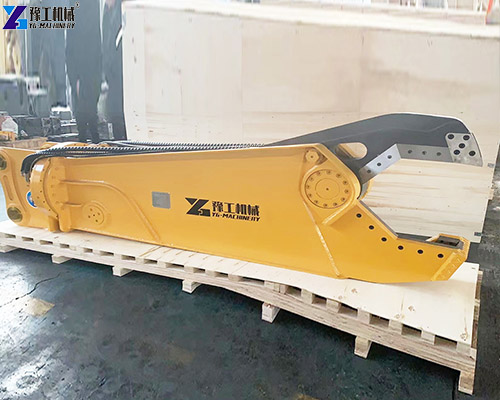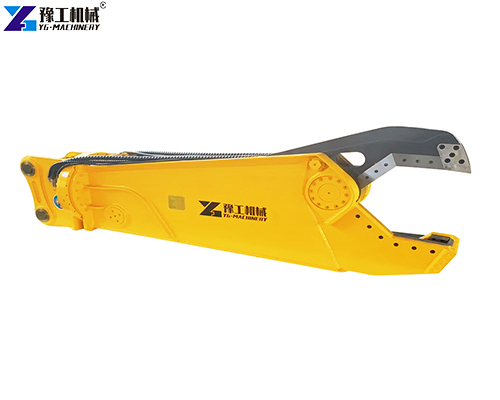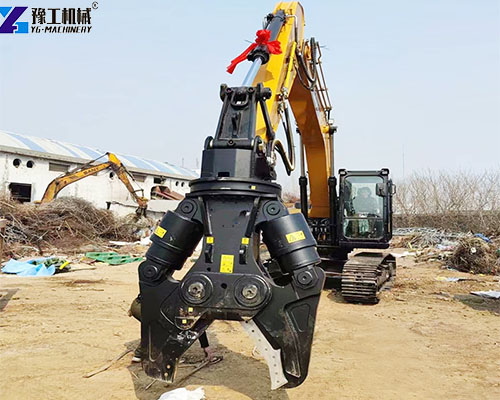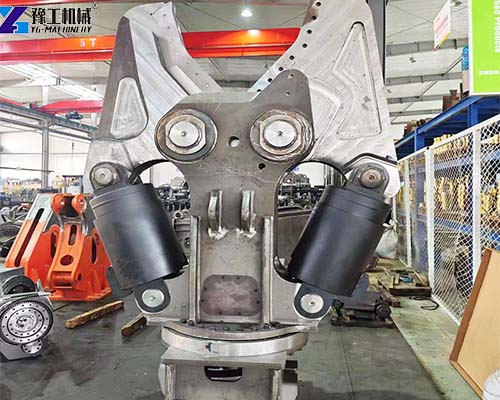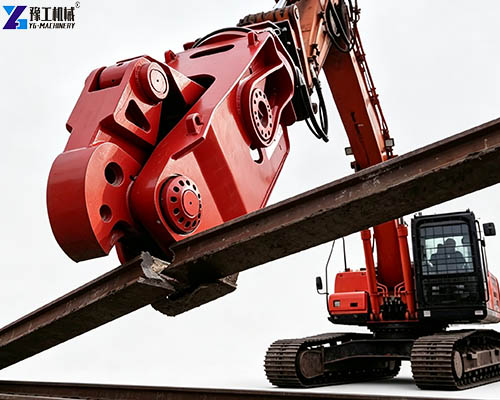

Rail shear is a hydraulic attachment designed specifically for cutting railway tracks. It mounts on an excavator’s arm and uses hydraulic power to close two massive jaws, shearing through steel rail with tremendous force.
Unlike a torch, which slowly melts through the rail and leaves slag, a steel rail track is shear-cut cleanly. Unlike a saw, which wears out blades quickly, a steel rail track shear uses durable steel blades that can be sharpened or replaced.
The YG JSRS350 is purpose‑built for heavy rail — the kind used on mainline railways, where rail weight is 60kg per meter. It is used in track removal, railway demolition, scrap recycling, and maintenance projects.
YG Rail Track Shear – Key Specifications
Here are the complete parameters for the JSRS350 steel rail track shear.
| Item/Model | Unit | JSRS350 |
| Suitable Excavator | T | 30-38 (Short Arm) / 20-38 (Long Arm) |
| Carrier Weight | kg | 3800 (Short Arm) / 4200 (Long Arm) |
| Opening | mm | 211 |
| Cutting Depth | mm | 195 |
| Height | mm | 2675 |
| Width | mm | 810 |
| Driving Pressure | kgf/cm² | 320-350 |
| Cutting Force | ton | 1350 |
| Max Cutting Material Size | kg/m | 60kg/m Heavy Railway Rail |
How Does a Steel Rail Track Shear Work?
- Step 1 – Position. The excavator operator positions the shear over the rail. The jaws open wide enough to fit around the rail head.
- Step 2 – Grip and cut. The operator activates the auxiliary hydraulic circuit. Oil flows to the cylinder, closing the jaws. The moving jaw presses against the fixed jaw with 1350 tons of force. The rail shears cleanly.
- Step 3 – Release and move. The operator opens the jaws, drops the cut piece, and moves to the next cut. Cycle time: seconds per cut.
The whole process is fast, clean, and safe. No sparks. No fumes. No risk of fire. The operator stays in the cab.
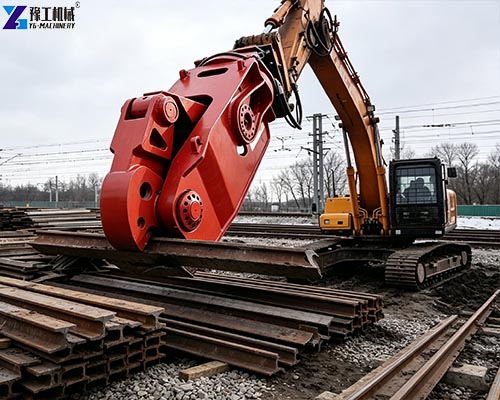
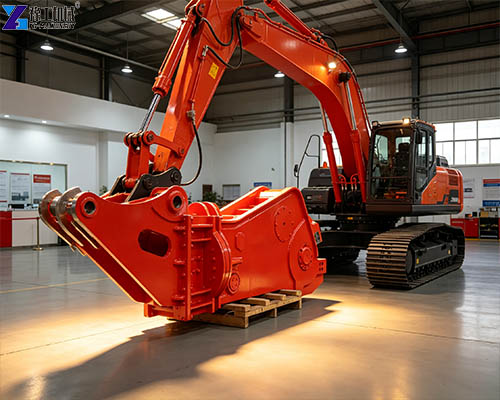
Where Can You Use a Rail Shear?
The YG JSRS350 rail shear is suitable for:
- Railway track removal – Cutting old rails into manageable lengths for recycling or disposal.
- Railway demolition – Removing tracks during rail yard or station demolition.
- Scrap recycling – Processing heavy rail into scrap for steel mills.
- Maintenance and repair – Cutting damaged rail sections for replacement.
- Industrial plant track removal – Removing crane rails or industrial track systems.
The shear cuts 60kg/m heavy rail – the standard for most mainline railways worldwide.
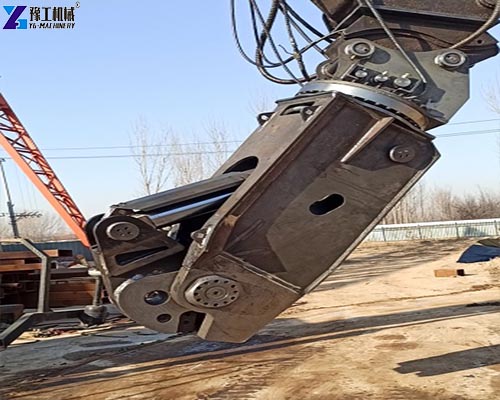

7 Key Advantages of the YG Rail Shear
- Massive cutting force. 1350 tons of cutting force. It cuts through 60kg/m rail like butter.
- Clean cuts. No slag. No grinding needed. The cut ends are ready for loading or further processing.
- Fast cycle time. Seconds per cut. Compare that to minutes with a torch or saw.
- Safety. No fire risk. No flying sparks. The operator stays in the cab.
- Durable. Built for heavy‑duty use in rail yards and demolition sites. Blades are replaceable.
- Versatile excavator fit. Works with short arm (30‑38 tons) or long arm (20‑38 tons). Covers a wide range of machines.
- Low operating cost. No gas, no oxygen, no expensive blades. Just hydraulic power.
Cut Rail Faster and Safer with YG
A rail shear is the most efficient tool for cutting railway tracks. YG offers the JSRS350 model, designed for 20‑38-ton excavators with long arms or 30‑38-ton excavators with short arms. It delivers 1350 tons of cutting force, has a 211mm opening, and cuts 195mm deep. It handles 60kg/m heavy railway rail – the standard for mainline tracks. No torch. No saw. Just clean, fast cuts.
YG Machinery also offers other demolition and recycling attachments. Contact YG with your excavator make, model, and typical rail size. They will recommend the right steel rail track shear and provide a quote. Start cutting – start saving.
Phone / WhatsApp / WeChat: +86 159 3715 3321
Frequently Asked Questions
It is a hydraulic attachment for excavators that cuts railway tracks cleanly and quickly. It replaces torches and saws.
Depends on the rail condition. Blades last hundreds of cuts. Replace when dull.
Yes. Standard hydraulic hoses with fittings are included.
Grease pivot points regularly. Check hydraulic hoses and cylinders for leaks. Replace blades when worn.
Yes. The JSRS350 is used by scrap yards, demolition contractors, and railway maintenance crews.