Old Zhou is a plasterer. More precisely, he’s a wall rendering worker — the kind of man who applies cement mortar to brick walls and makes them smooth and flat. He has been in this trade for twenty years. The calluses on his hands are thicker than the soles of his shoes. His lower back is worn out. So are his knees.
He once told me: “I’m not afraid of hard work. I’m afraid that after I finish plastering today, the wall will crack tomorrow and the client will ask me to do it all over again.”
Later, he switched to an automatic wall plastering machine. That was the first time he smiled at quitting time.
Why Manual Plastering Always Ends Up As “Go
od Enough” But Never Quite Right?
You have seen an old master plaster a wall.
One scoop of mortar, one trowel, one smooth swipe. Looks simple. But whether the wall ends up flat depends on touch, experience, and the mood of the day. The same worker in the morning versus the afternoon — different results. Sunny day versus rainy day — different results. A wall two meters high versus four meters high — completely different results.
In the end, the client holds a straight edge against it — a gap over 3 mm? “Redo it.”
What does redoing mean? New materials, new labor, a new schedule. Add them up, and it costs more than the first job.
A wall rendering machine doesn’t get tired. Its hands don’t shake. It doesn’t have bad days. You set the thickness, and it applies exactly that thickness. From 2 mm to 30 mm, adjustable to whatever you need. The margin of error is tighter than a straight edge.

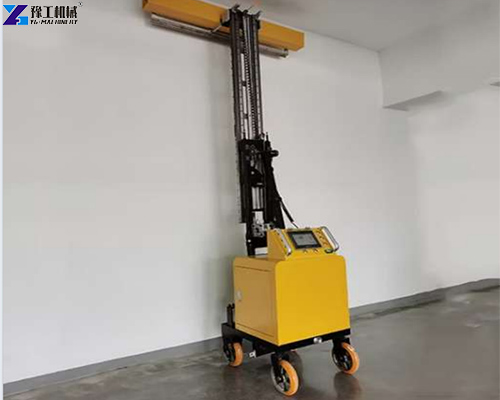
How Does It Actually Work? You Don’t Need To Understand The Mechanics — Just See It Once.
Don’t overthink it.
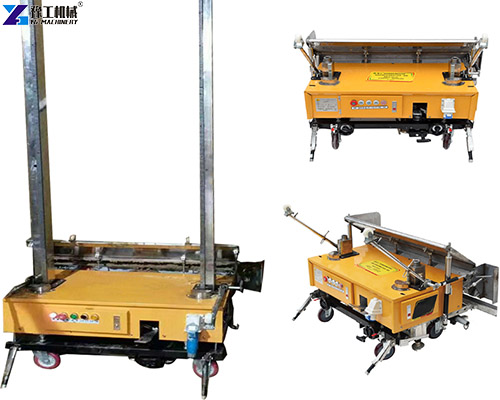
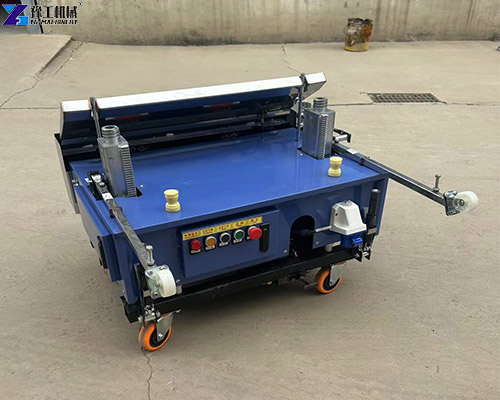
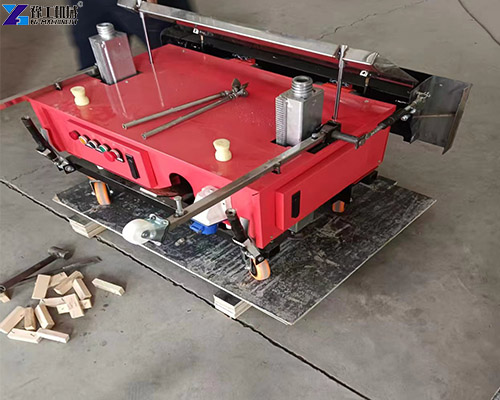
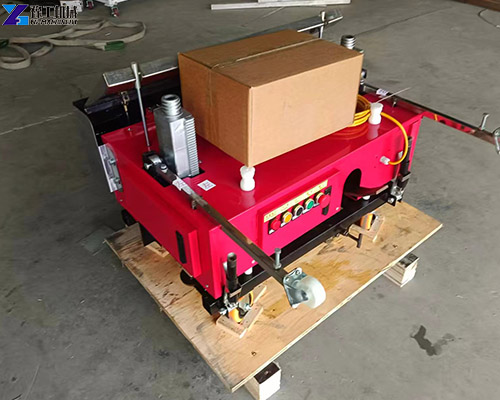
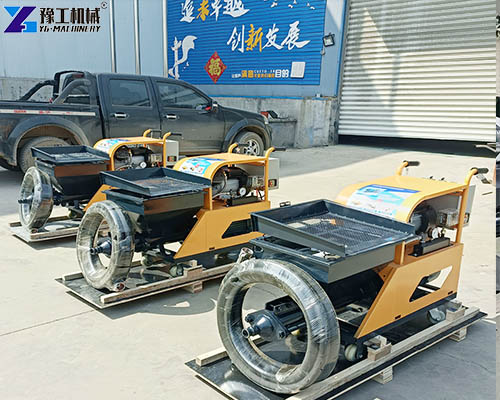
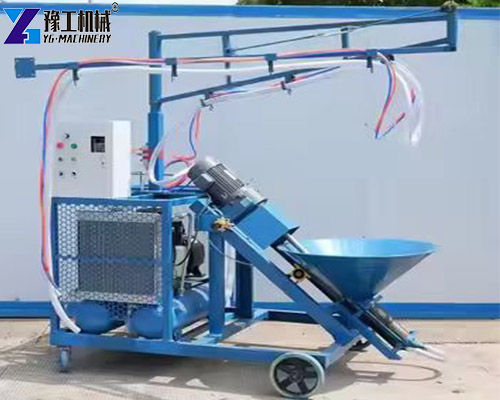
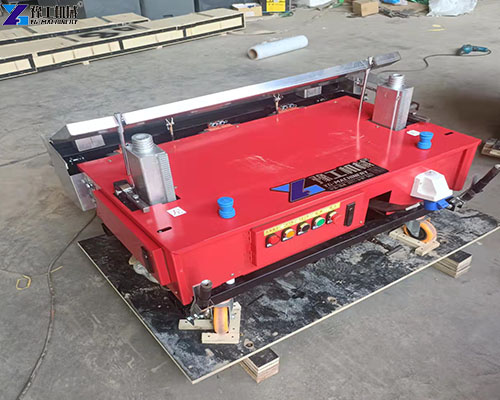
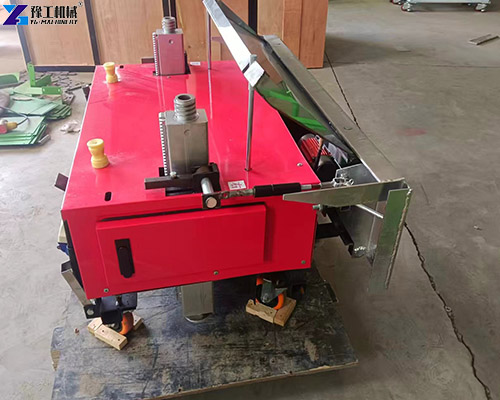
It’s a machine that stands in front of you. You pour cement mortar into it. The machine uses a screw conveyor and extrusion system to evenly “smooth” the mortar onto the wall. It moves up by itself and down by itself. You just guide it, and it makes a wall flat for you.
How high can it reach? Under 4 meters with the YG-800, under 5 meters with the YG-1000.
Simple as that.
Check Your Wall Height First, Then Pick The Right Automatic Wall Plastering Machine
You don’t need to memorize numbers — just find your wall height:
| Model | YG-800 | YG-1000 |
| Plastering height | Below 4 meters | Below 5 meters |
| Weight | 270 kg | 290 kg |
| Plastering thickness | 2~30 mm | 2~30 mm |
| Power | 1.5 KW | 1.5 KW |
| Plastering efficiency | 500 CBM/8H | 550 CBM/8H |
| Voltage | 220 v/380 v optional | 220 v/380 v optional |
If your floor height is under 3 meters → YG-800 is enough.
If your floor height is over 4 meters, or you often take on large jobs like factories, shopping malls, or schools → YG-1000 is better. One more meter of reach, and an extra 50 square meters per day.
Both machines use a 1.5 KW motor. For reference, that’s just slightly more than a hair dryer. Low power consumption. Truly low power consumption.
A Few Things You Might Care About — We’ll Answer Them Directly
Is it heavy? 270 kg and 290 kg. Yes, they are not light. But the machine has wheels, and two people can push it around easily. More importantly, you don’t lift it up and down — it stays on the ground and climbs up the wall by itself.
How do I connect the power? Both 220V and 380V options are available. Whatever voltage you have on site, we’ll match the motor. No circuit modifications needed.
How much area can it cover in a day? YG-800 covers 500 square meters in 8 hours; YG-1000 covers 550 square meters. A skilled worker manually plasters about 30-50 square meters per day. In other words, one wall rendering machine does in one day what ten skilled workers could do in a day.
How thick or thin can it plaster? Adjustable from 2 mm to 30 mm. For thin layers, you can apply multiple coats. For thicker layers, one pass is enough. Insulation layers, leveling layers, finishing layers — it handles all of them.
What Kind Of Job Sites Already Use It?
- Interior renovation companies — for plastering indoor walls. Fast and flat, no need to wait for drying before sanding.
- Schools, hospitals, shopping malls — large wall areas, tight deadlines, strict quality requirements.
- Old building renovations — uneven walls that need to be re‑leveled.
- Factories, warehouses, underground garages — high walls, large surface areas, manual plastering is too slow.
Some people say: “Our workers here are all old masters with years of experience.”
Our reply: “Old masters need rest too. Machines don’t.”

You Might Worry About Quality — We Worry About It Even More
If the machine doesn’t work well, you can return it. But if a wall is plastered poorly, it cannot be undone.
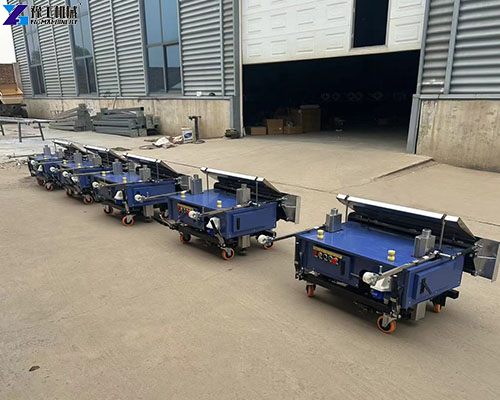
That is why every automatic wall plastering machine is tested before leaving our factory. We check the plastered surface with a straight edge. Flatness and verticality — all meet national standards.
If your wall has a problem, we will take responsibility. But the first step is — you have to buy the machine and give it a try.
Your Next Step
Look at your upcoming jobs.
How high is the next wall? Is it over 4 meters? Do you have power on site? How many square meters do you need to plaster each day? If you use manual labor, how many workers and how many days will it take?
Think through these questions. Then tell me your wall height.
I will tell you whether you need the YG-800 or the YG-1000.
The rest is simple — finish work earlier than others, make walls flatter than others, and earn more than others.