You have a 2‑ton AC unit that needs to go onto a rooftop.
The only access is a narrow hallway and a freight elevator.
A truck crane? Too big.
A forklift? Can’t climb stairs.
Manual lifting? Dangerous and slow.
There’s a machine that walks through a standard double door frame, sets up on uneven ground, and lifts 5 tons exactly where you need it.
It’s called a 5 ton capacity spider crane. And it’s changing how contractors work in tight spaces.
What Is A Spider Crane Anyway?
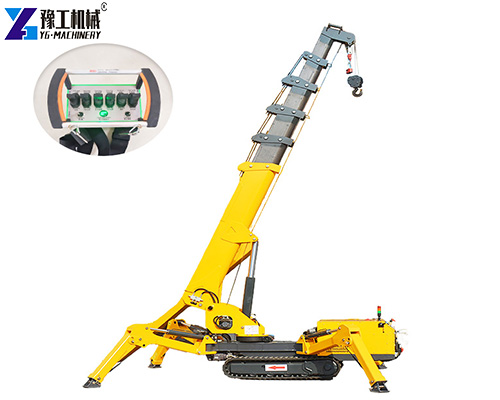
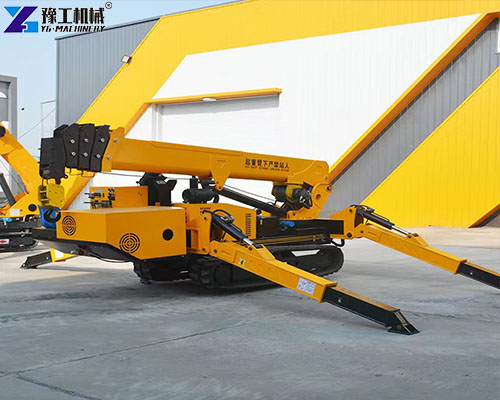
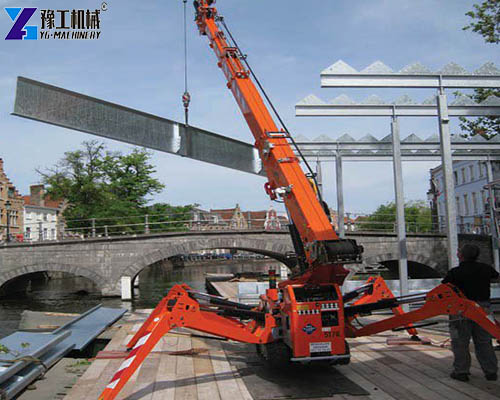
Imagine a mini excavator, but instead of a digging arm, it has a telescopic boom with a hook.
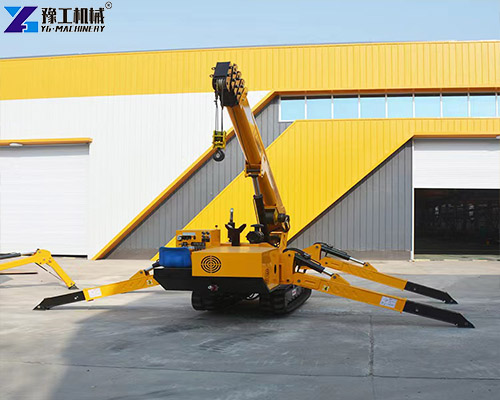
It runs on rubber tracks, so it doesn’t damage floors.
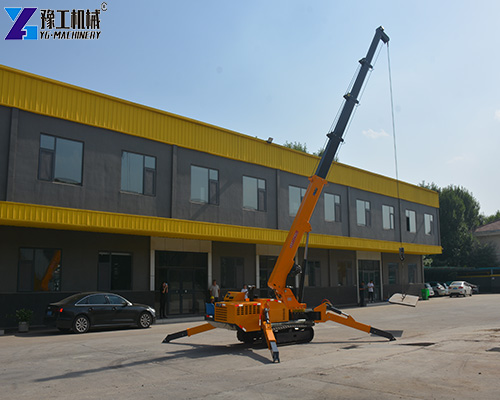
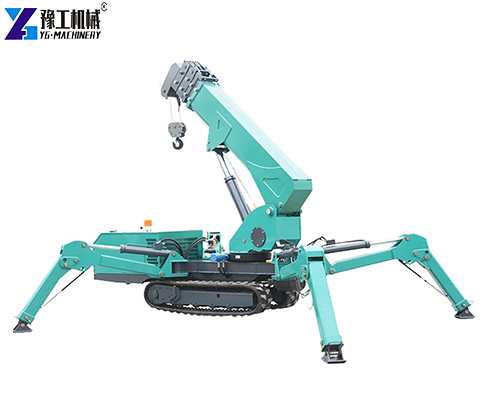
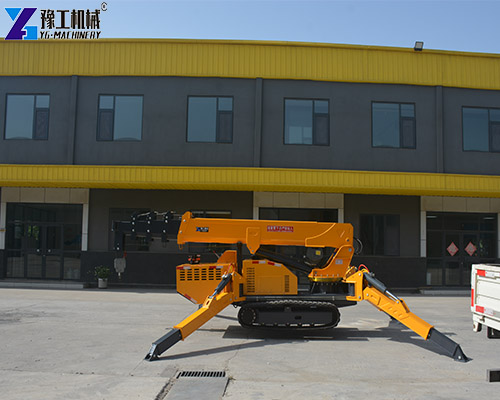
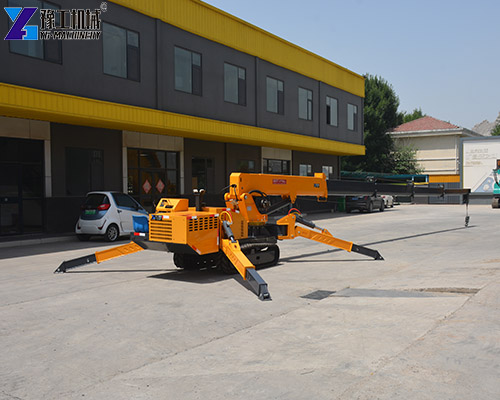
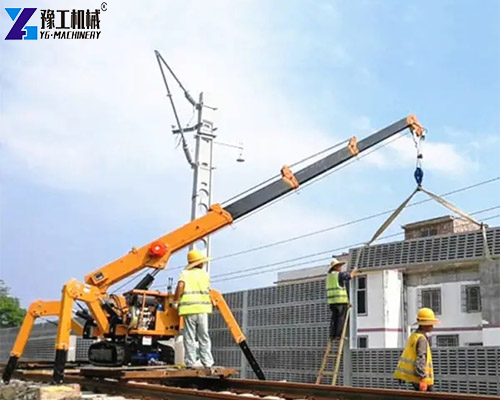
Four hydraulic legs (outriggers) spread out to make it rock‑solid.
One person controls it with a wireless remote – no cab, no blind spots.
That’s a spider crane.
It’s called “spider” because the outriggers look like legs.
The 5 ton spider tracked crane sits right in the middle of the range.
Who Actually Needs A 5 Ton Capacity Spider Crane?
Let me give you real examples from our customers.
1. Glass installers for high‑rise buildings
They need to lift glass panels from street level up to the 10th floor.
A tower crane is too expensive. A human crew is too slow.
The spider crane sits on the balcony or inside the unfinished floor, extends its boom out the window, and lifts the glass into place.
One installer in Chicago told us, “We used to need 8 guys to handle a 400 kg panel. Now we need 2 guys and the spider crane.”
2. HVAC companies replacing rooftop units
The old unit is on the roof. No crane access. The only way is to take it apart or use a helicopter (crazy expensive).
The spider crane goes up the service elevator (it fits – width 1.5m, length 5m), rolls across the roof, and lifts the old unit down, then the new unit up.
3. Factory machine installation
A new press needs to be placed on a mezzanine. The ceiling is low. The aisles are narrow.
A forklift can’t turn. A regular crane can’t enter.
The spider crane crawls in, outriggers hug the machine, and it places the load with millimetre precision.
4. Bridge repair and maintenance
Working under a bridge? No ground access?
The spider crane sits on the bridge deck, reaches over the railing, and lifts tools and materials down to the workers underneath.
5. Solar panel installation on flat roofs
Heavy glass panels, limited roof access.
The spider crane distributes its weight through the tracks and outriggers – no damage to the roof membrane.
What Makes A Spider Crane Better Than A Mini Excavator With A Hook?
Good question. A mini excavator can lift, but it’s not designed for precision lifting.
Spider cranes have:
- Much longer boom – up to 16.5 metres. That’s 5 storeys high.
- Outriggers – they make the machine stable even when the boom is fully extended sideways.
- Hook on a rope (wire rope winch) – you can lift straight up, not just in an arc.
- Remote control – you stand where you can see the load, not inside a cab.
The 5 ton spider tracked crane combines all these. It’s a real crane, just small.
Where Can You Use A 5 Ton Spider Tracked Crane? Almost Anywhere.
Unlike a truck crane, you don’t need a concrete pad.
The outriggers have pads that spread the load. You can set up on:
- Asphalt parking lots
- Gravel
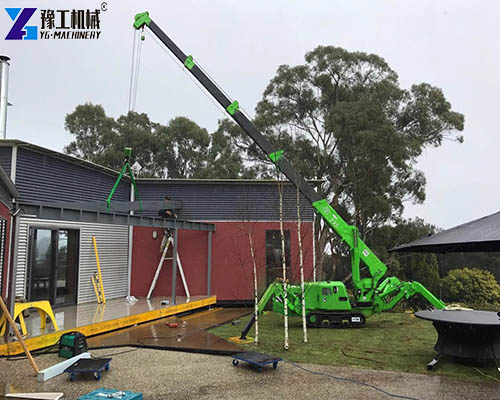
- Grass (use plywood under the pads)
- Concrete floors (even polished – the tracks have rubber pads)
- Roofs (distribute the weight)
Indoors:
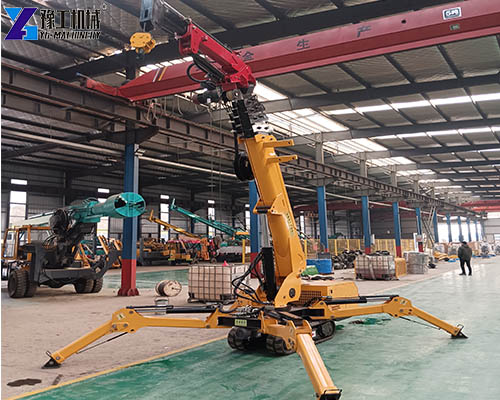
- Factories with narrow aisles
- Shopping malls under renovation (quiet electric option)
- Atriums (you can lift materials to upper levels from inside)
Outdoors:
- Mountain slopes (outriggers adjust to uneven ground)
- Muddy construction sites (tracks don’t sink)
- Beach or riverbank (spider cranes are used for boat lifts)
One customer in Australia uses his 5 ton capacity spider crane to lift broken concrete blocks out of backyards. He said, “No truck crane can get back there. I crawl through the side gate, set up in the garden, and lift 2‑ton blocks over the fence.”
What Questions Should You Ask Before Buying A Spider Crane?
Ask yourself (or ask us) these:
- What is the heaviest thing I will lift?
If it’s under 5 tons, this model works. If it’s 6 tons, go up to the 8 ton model. - What is the highest point I need to reach?
16.8 metres is plenty for most projects. Need 20 metres? We have a longer boom option. - Will I use it indoors or outdoors?
Indoors: choose an electric motor (zero emissions, quiet). Outdoors: Diesel is fine. We also offer a hybrid. - Do I need a remote control?
Yes, you do. It is optional. You can stand where you see the load best. - Do I need a load indicator?
For inexperienced operators, yes. It’s an option.
How Does It Compare To A Mini Crawler Crane?
A mini crawler crane is similar, but usually smaller (under 3 tons).
The 5 ton spider tracked crane sits in the “mid‑size” category – big enough for serious construction, yet small enough for indoor work.
Key difference: spider cranes have longer booms and more outrigger spread. That gives you better reach and stability.
If you’re choosing between a 3 ton and a 5 ton, go for 5 tons unless you absolutely need to save weight. The 5 ton can do everything the 3 ton can do, plus more.
Try A 5 Ton Capacity Spider Crane For 30 Days – No Risk
You’re thinking: “What if it doesn’t fit through my door? What if the outriggers can’t reach the ground on a slope?”
We’ll ship you the crane. You use it on your toughest jobs for 30 days.
If you can’t fit it into your workspace, or if it doesn’t lift what you need, or if you just don’t like the controls – return it. Full refund. We pay return shipping.
This offer is for the first 5 units worldwide.
Contact Us
Your competitors are already using them for glass installation, rooftop HVAC, and factory maintenance.
The only question is: are you still moving heavy stuff by hand?
👉 Email admin@chinayugongmachinery.com now. Tell me:
- Your typical lift weight and height
- Indoor or outdoor use?
- Diesel, electric, or hybrid?
I’ll reply within 24 hours with:
- A recommendation (3t, 5t, or 8t)
- A video of the 5 ton spider tracked crane in action
- A delivered price to your port
Appendix – Key Specifications (for reference)
| Specification | Value |
| Max lifting capacity | 5 t (close range) |
| Max working radius | 14 m × 0.5 t |
| Max lifting height (above ground) | 16.8 m |
| Hoist speed (4 ropes) | 12 m/min |
| Wire rope | Φ11 mm × 80 m |
| Boom type | 5-section, U-shaped |
| Boom length range | 4.7 m – 16.5 m |
| Boom extension time | 12.3 m / 54 sec |
| Boom angle range / time | 0-78° / 13 sec |
| Slewing (rotation) | 360° continuous / 38 sec |
| Outrigger type | Manual swing + hydraulic extension + auto level (two-stage legs) |
| Max outrigger spread (L/R, F/B) | Left/right: 7800 mm; Front/back: 3600 mm |
| Travel drive | Hydraulic motor |
| Travel speed | 0 – 2.5 km/h |
| Gradeability | 25° (36%) |
| Engine | Yunnei 490 (China Stage II) |
| Start method | Electric start |
| Operating temperature range | -5°C to 40°C |
| Fuel | Diesel |
| Battery | 12V 45Ah |
| Control system | Manual (boom/outriggers) + manual travel (remote optional) |
| Overall dimensions (L×W×H) | 5000 × 1500 × 1900 mm |
| Self weight | 6200 kg |
| Track size (L×W) | 2600 × 400 mm |
| Optional | Torque limiter |