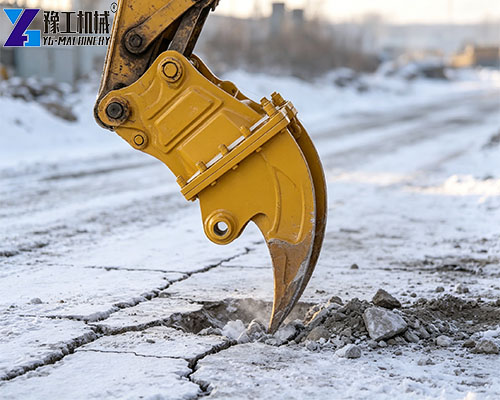
Case summary at a glance:
| Item | Details |
| Destination Country | Australia |
| Client Type | Civil Earthworks & Mining Support Contractor |
| Equipment Model | YGR10 Ripper Attachment |
| Quantity | 2 Units |
| Delivery Time | Q2 2026 |
| Core Working Condition | Hard-weathered rock and calcrete layers in a large-scale land development project in Western Australia; high-temperature, dusty operating environment |
| Project Core Challenge | Conventional buckets could not penetrate the 300–600mm hard calcrete and ironstone layers beneath the topsoil, requiring slow, expensive blasting or heavy ripping with large dozers |
| Key Performance Outcome | Ripping penetration achieved on first pass; production rate tripled compared to blasting and loading method; excavator cycle time reduced by 60% |
| Benchmark Applicability | Land clearing and bulk earthworks, mine site development, pipeline trenching, and road construction in hard ground conditions across Australia using 23–30-ton excavators |
This case is directly applicable to civil contractors, mining support operators, and earthmoving companies across Australia’s hard-rock regions.
Project Background & Site Conditions
The client is a medium-sized civil earthworks contractor based in Western Australia, specializing in land clearing, bulk excavation, and site preparation for commercial and mining infrastructure projects. The company operates primarily in the Pilbara and Goldfields regions, where hard ground conditions are the norm rather than the exception.
Project Type: Large-scale commercial land development – bulk earthworks and site levelling
Site Conditions: The project site spans approximately 40 hectares of previously undeveloped land characterized by a thin layer of topsoil (100–200mm) overlying a continuous layer of calcrete and weathered ironstone. The calcrete layer ranges from 300mm to 600mm in thickness and is highly abrasive, with compressive strengths exceeding 30 MPa in places. Site temperatures during the working day regularly exceed 40°C in summer, with high dust levels from the dry, arid environment. The site has no access to permanent power infrastructure, making hydraulic-driven excavator attachments the only practical solution.
Ground Conditions:
- Topsoil: thin, dry, and loose
- Subsurface layer: calcrete (cemented calcium carbonate), extremely hard and brittle
- Below calcrete: weathered ironstone with occasional quartz intrusions
- Occasional buried boulders up to 500mm diameter
Client’s Previous Pain Points:
- Blasting dependency: The calcrete layer was previously loosened using explosives, incurring high permitting costs, safety risks, and community complaints
- Excavator bucket ineffectiveness: Standard digging buckets could not penetrate the hard layer – teeth snapped, bucket edges curled, and penetration was minimal
- Slow production: With blasting followed by load and haul, the cycle time averaged 6–8 hours to prepare one hectare for subsequent grading
- High equipment wear: Abrasive calcrete caused rapid wear on bucket teeth and cutting edges, requiring replacement every 80–100 hours
- Schedule delays: Blasting requires regulatory approvals and weather-safe windows, frequently delaying the project timeline
- Cost overruns: Blasting contractor fees, permit costs, and downtime combined to exceed budget projections by over 30%
Client Procurement Requirements:
- Excavator attachment capable of penetrating and fracturing calcrete and ironstone up to 40 MPa
- Compatibility with existing 23–30 ton excavator fleet
- Robust design to withstand abrasive Western Australian ground conditions
- Minimal maintenance requirements in remote, dusty environments
- Quick mounting capability for rapid attachment changes
- Proven performance in hard rock conditions with documented field data
- Reliable supply of replacement teeth and wear parts
Equipment Selection & Configuration
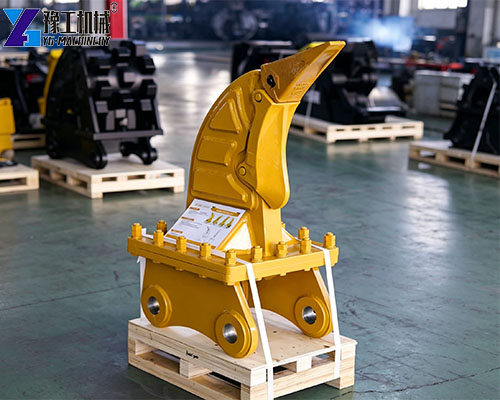
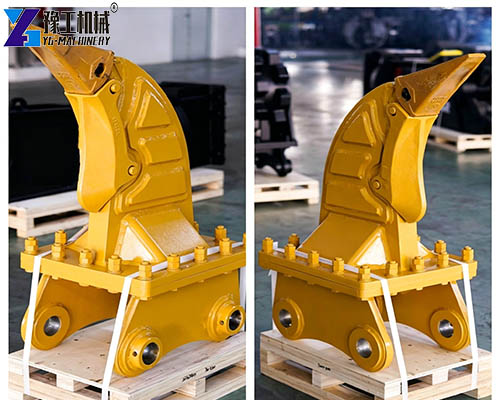
After comprehensive ground analysis, hardness testing, and excavator fleet evaluation, the YGR10 ripper attachment was selected as the optimal solution. The selection process involved analyzing the client’s excavator specifications, ground conditions, required ripping depth, and production targets.
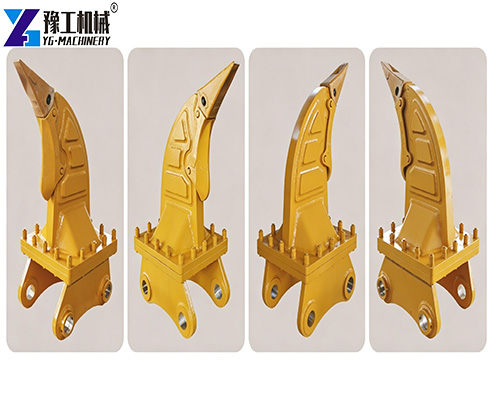
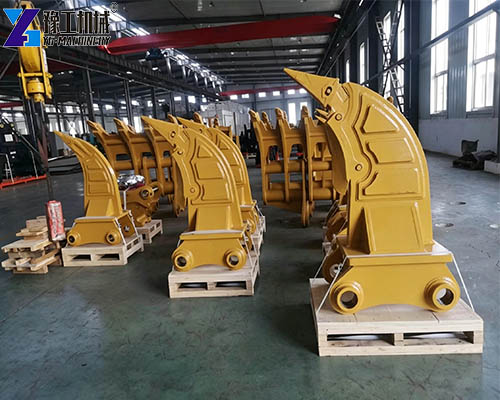
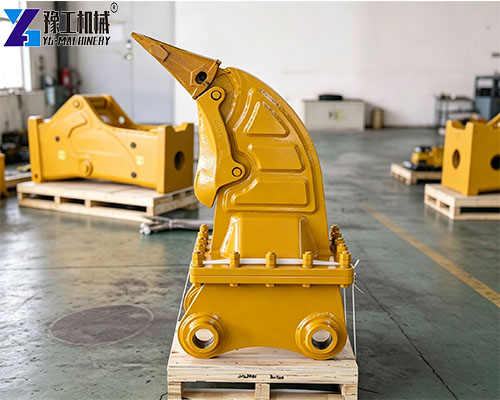
Primary Equipment Model: YGR10 Ripper Attachment
| Specification | YGR10 Value |
| Suitable Excavator | 23–30 Tons |
| Pin to Pin Distance | 520 mm |
| Overall Width | 740 mm |
| Overall Height | 1380 mm |
| Pin Diameter | 80–90 mm |
| Dipper Width | 360–420 mm |
| Plate Thickness | 90 mm |
| Teeth Model | 4T5502-2type |
| Machine Weight | 620 kg |
Why YGR10 Was Selected:
- Excavator match: The client’s primary excavator fleet consists of 25–28 ton machines, placing the YGR10 squarely within the recommended 23–30 ton range
- Ripping force capability: The 520mm pin-to-pin distance and 1380mm overall height provide optimal leverage and penetration force for calcrete and ironstone layers
- Robust construction: 90mm plate thickness and heavy-duty pin diameter (80–90mm) ensure structural integrity under extreme shock loads common in hard rock ripping
- Tooth durability: The 4T5502-2type teeth are specifically designed for abrasive hard rock conditions, offering extended wear life compared to standard teeth
- Dipper compatibility: 360–420mm dipper width matches the client’s existing quick coupler system, allowing rapid attachment changes
- Weight balance: At 620kg, the YGR10 provides sufficient mass for effective ripping while remaining within the excavator’s hydraulic and structural capacity
Customization for Australian Conditions:
- Reinforced tooth mounting: Upgraded tooth holders with additional weld reinforcement to withstand the high impact loads of calcrete ripping
- Wear-resistant hardfacing: Factory-applied hardfacing on the shank and leading edges to extend service life in abrasive ground conditions
- High-temperature seals: Upgraded pin seals rated for continuous operation above 40°C ambient
- Heavy-duty bushings: Bronze-lined bushings with grease retention features for extended service intervals in dusty environments
- Australian-standard pin sizing: Pin diameters machined precisely to match the client’s excavator linkage specifications
Selection Rationale:
The YGR08 (16–23-ton range) was considered but deemed insufficient for the required ripping force in 30–40 MPa calcrete. The YGR10 represented the optimal balance of ripping power, excavator compatibility, and operational efficiency. The YGR14 (30–39-ton range) would have required a larger excavator than the client’s existing fleet.

Project Outcomes
- Site preparation time reduced from 6–8 hours per hectare to under 2.5 hours – a 68% improvement
- Blasting eliminated – saving approximately 30% of total earthworks cost
- Equipment wear reduced compared to bucket-only excavation – teeth life extended by 300% compared to bucket teeth in the same conditions
- Fuel consumption per hectare reduced by approximately 45% compared to the blasting + load method
- Safety incidents reduced – blasting was the highest-risk activity on site; its elimination removed the primary safety hazard
- Schedule certainty improved – no weather-related delays for blasting permits
Complete Export & Delivery Process
The export of these ripper machines for excavator units to Australia followed a structured process designed to ensure smooth customs clearance, safe transport, and successful on-site commissioning.
Application Analysis: The client’s ground conditions, excavator specifications, and production targets were analyzed using borehole data, site photographs, and detailed questionnaires. A customized ripping plan was developed.
Free Selection Consultation: Based on the analysis, the YGR10 was recommended over the YGR08 and YGR14 alternatives. The client received detailed comparison data to validate the selection.
Parameter Fine-Tuning: The pin sizes and dipper width specifications were verified against the client’s excavator linkage measurements.
Manufacturing: Both units were manufactured to order with the Australia-specific customizations (hardfacing, high-temperature seals, heavy-duty bushings, Australian-standard pin sizing).
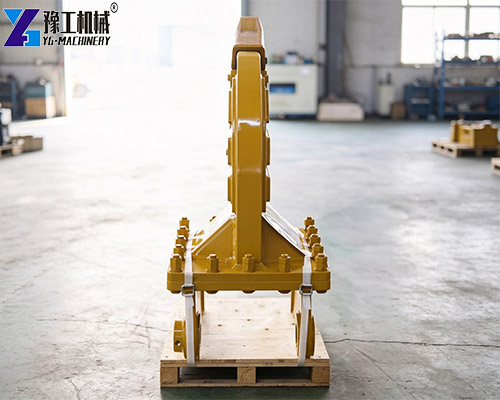
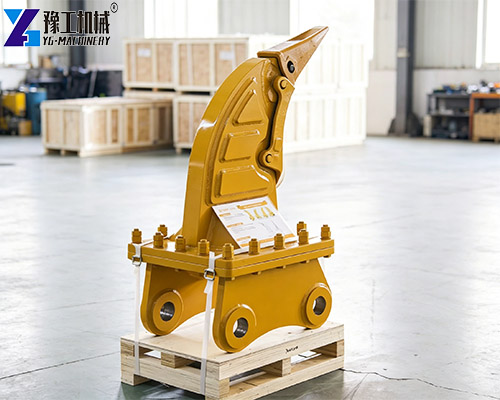
Packaging:
- Anti-rust treatment applied to all exposed steel surfaces
- Heavy-duty wooden crating with internal bracing
- Shank protected with reinforced edge guards
- Desiccant packs installed to prevent moisture damage
Installation Guidance: Remote video installation support was provided to the client’s maintenance team. Both units were mounted on the excavators within 2 hours of arrival.
Remote Debugging: Using a live video feed, our technicians guided the client through:
- Pin and bushing fit verification
- Tooth orientation confirmation
- Hydraulic system pressure check (within excavator specifications)
- Safety system verification
Operator Training: A comprehensive training session was conducted via video conference, covering:
- Safe operating procedures for the excavator ripper for sale
- Optimal ripping techniques for calcrete and ironstone
- Tooth wear inspection and replacement procedures
- Daily maintenance checklist (greasing, visual inspection)
- Troubleshooting common issues (tooth loss, structural cracks)
Client Feedback & Real Evaluation
Three months after commissioning, the client’s Site Superintendent provided the following evaluation:
“We had almost given up on using excavators for this calcrete site – we were resigned to blasting everything. The YGR10 changed that completely. In the first week, we ripped and excavated 15 hectares – the same area that had taken us two months with blasting and bucket work before. The tooth wear is surprisingly low – we’re still on the original set after 150 hours, which is remarkable for this abrasive material. We’ve eliminated blasting entirely, which has reduced our schedule risk and safety exposure. The only minor issue was a grease fitting that sheared off during heavy ripping – we replaced it with a heavy-duty fitting and haven’t had another problem. We are now specifying this ripper attachment for our other projects.”
— Site Superintendent, Civil Earthworks Contractor, Western Australia
After-Sales Support & Long-Term Service
Understanding the challenges of equipment maintenance in remote Australian mining regions, a comprehensive support framework has been established:
Warranty Coverage:
- 12-month standard warranty on the complete unit
- 6-month warranty on teeth (against manufacturing defects)
- 24-month warranty on structural components (main shank, plate)
Parts Supply:
- Emergency parts dispatch within 48 hours for critical components (teeth, pins, bushings)
- Recommended spare parts kit provided with each unit (includes tooth set, pin kit, bushing set, and grease fittings)
Technical Support:
- 24/7 remote technical support via video call and messaging platforms
- On-site technician dispatch available for major service requirements
- Comprehensive digital maintenance library including video tutorials
Preventive Maintenance Guidance:
- Daily: Tooth inspection (wear and tightness), visual crack inspection, grease all pivot points
- Weekly: Pin and bushing wear check, torque verification on mounting bolts
- Monthly: Full structural inspection, hardfacing condition check
- Quarterly: Professional service recommended (bushing replacement, structural weld inspection)
Ongoing Optimization:
- Continuous performance monitoring via client-provided operating logs
- Recommendations for tooth angle adjustments based on ground condition changes
- Free consultation for additional equipment needs as the client’s operation expands
Case Summary & Applicability Guide
This Australian case demonstrates that the YGR10 ripper attachment delivers:
- Substantial productivity gains – 68% reduction in site preparation time compared to the blasting method
- Operational cost reduction – blasting eliminated, fuel consumption reduced by 45%
- Proven durability – robust construction withstands extreme shock loads and abrasive calcrete conditions
- Schedule certainty – no blasting permits or weather-related delays
- Versatile application – effective in calcrete, ironstone, boulder, and compacted fill conditions
- Complete export capability – seamless delivery and commissioning in Australia with full documentation
Recommended Excavator Match
- Optimal: 25–28 ton excavators with sufficient hydraulic flow and breakout force
- Acceptable: 23–30 ton excavators (as per YGR10 specification)
- Not Recommended: Excavators below 23 tons (insufficient breakout force for hard material) or above 30 tons (may overstress the attachment)
Comparable Projects
This case is directly applicable to:
- Commercial and industrial land development in Western Australia’s hard ground regions
- Mine site infrastructure and road construction
- Pipeline and utility projects requiring trenching through hard strata
- Large-scale earthworks where blasting is undesirable or restricted
For more information about this ripper machine for excavator or to discuss your specific ground conditions, please contact our sales team with your excavator specifications and site information.
Phone / WhatsApp / WeChat: +86 159 3715 3321