You’re on a dredging job. A river needs cleaning. A pond needs deepening. A tailings pond needs moving.
Your excavator can dig – but the material is too wet, too loose. It slides right off the bucket.
You could bring in a separate dredge pump – but that means another machine, another operator, another set of headaches.
There’s a tool that turns your excavator into a dredging machine. It’s called an excavator dredge pump. And it pumps sand, slurry, and sludge straight from the water – no second machine required.
What Is An Excavator Dredge Pump Attachment Exactly?
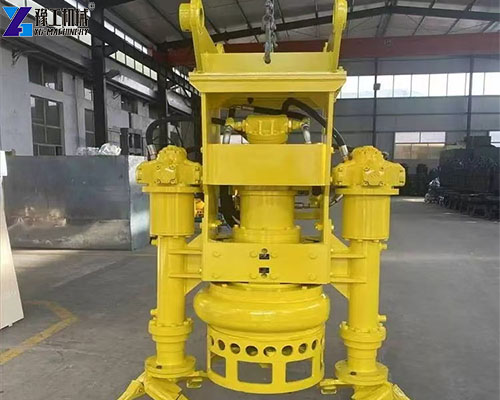
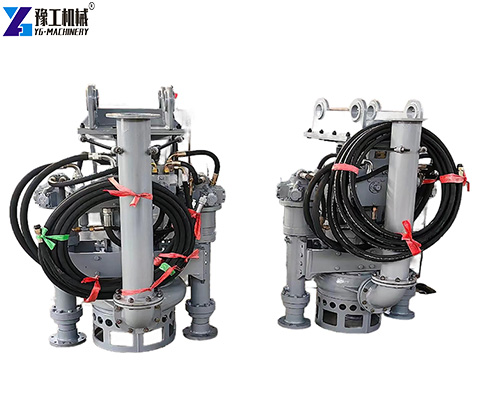
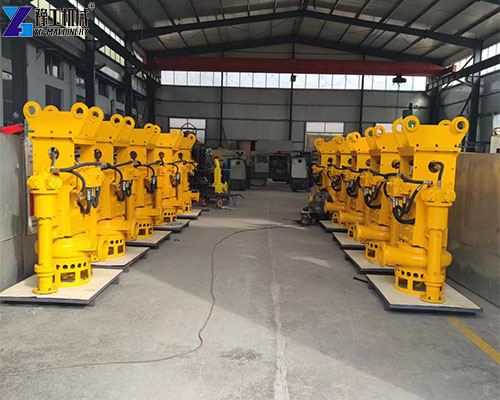
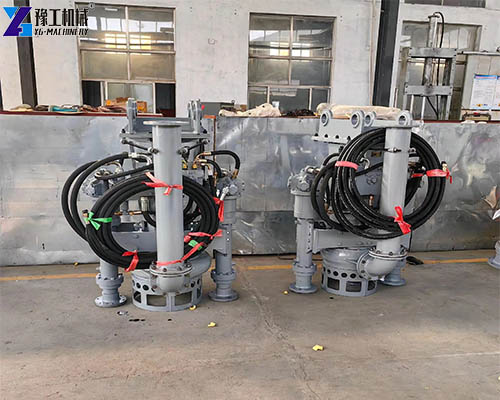
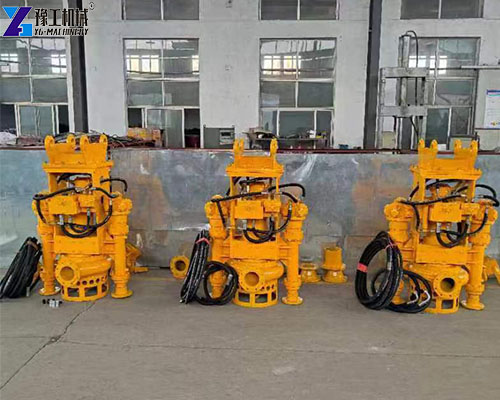
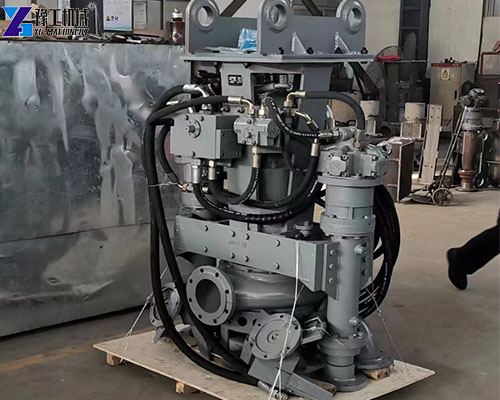
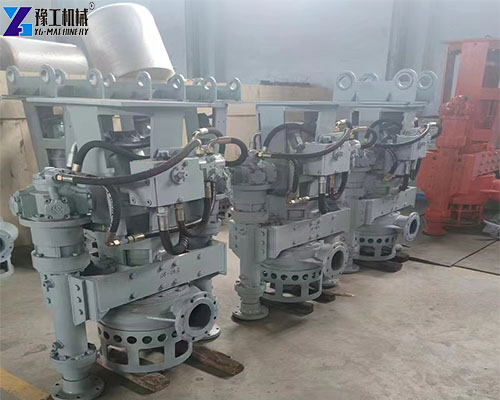
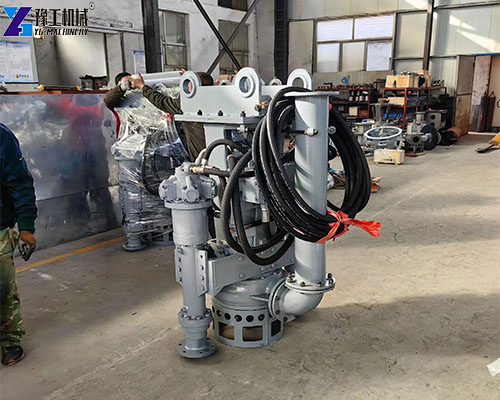
It’s a hydraulic pump that mounts on your excavator arm – right where your bucket normally goes.
Instead of scooping, you lower the pump into the water, mud, or slurry. The pump’s impeller spins, sucks up the material, and pushes it through a discharge pipe to wherever you need it – a barge, a settling pond, or a truck.
The excavator dredge pump attachment is powered entirely by your excavator’s hydraulic system. No external generator. No separate engine. Just plug into your auxiliary hydraulics and start pumping.
One contractor in Vietnam told us: “We had to clean out a 2‑kilometre irrigation canal. The water was too deep for a bulldozer, and the mud was too wet for a bucket. We mounted the excavator dredge pump on our 20‑ton excavator and pumped 200 m³ per hour. The canal was clean in two weeks – and we didn’t need a second machine.”
Who Actually Buys An Excavator Dredge Pump?
From our real customer list:
River and canal dredging contractors – removing silt, sand, and debris from waterways. The pump works in shallow water where dredging barges can’t go.
Port and harbour maintenance crews – keeping shipping channels clear of sediment. The pump can be deployed from the shore or a small barge.
Mining and tailings operations – moving slurry, tailings, and mineral sands. The pump handles up to 50 mm solids – gravel, rocks, and ore fragments.
Construction and foundation crews – dewatering excavations, pumping out slurry from pile driving, or removing mud from bridge footings.
Municipal and utility workers – cleaning stormwater ponds, sewer lagoons, and wastewater treatment basins.
Disaster response teams – pumping floodwater and mud after hurricanes or tsunamis.
One customer in Australia used his excavator dredge pump attachment to clean out a gold mine’s tailings dam. He said: “We pumped 500 m³ of slurry per hour, 400 metres across the dam. The excavator moved along the bank while the pump did the work. We saved three weeks of trucking.”
How Does An Excavator Dredge Pump Work?
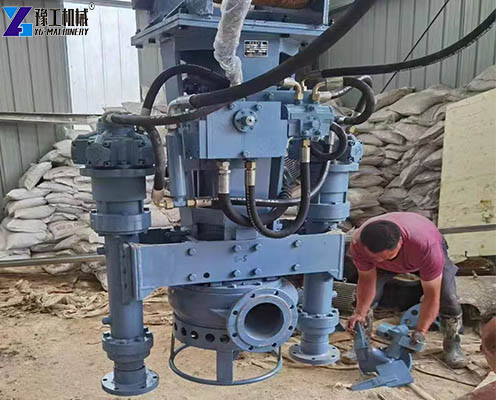
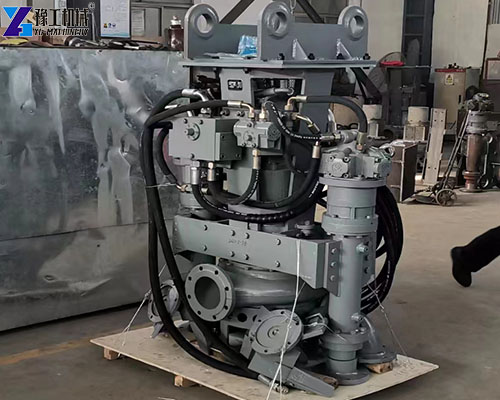
Your excavator’s hydraulic system sends high‑pressure oil to a hydraulic motor inside the pump. The motor spins the impeller – the spinning part that moves the water.
The impeller creates suction at the pump inlet. Water, sand, and slurry are pulled in, accelerated by the impeller, and pushed out through the discharge pipe.
The pump also has a stirrer (an agitator) at the bottom. It stirs up settled solids, turning them into a pumpable slurry. Some models also come with side cutters or augers that chop through compacted material and prevent clogging.
The result: You can pump material with up to 70% solid content – that’s almost solid mud, sand, or gravel.
The Numbers You Actually Care About
| Serial No. | Model | Flow m3/h | Lift(m) | Matching Agitator | Stirrer Torque | Excavator Tonnage |
| 1 | YG200-15 | 200 | 15 | 5.5KW | 1556 | 10T-20T |
| 2 | YG150-30 | 150 | 30 | |||
| 3 | YG300-20 | 300 | 20 | |||
| 4 | YG400-10 | 400 | 10 | 7.5KW | 1946 | 20T-30T |
| 5 | YG500-15 | 500 | 15 | |||
| 6 | YG250-35 | 250 | 35 | |||
| 7 | YG300-30 | 300 | 30 | 15KW | 2433 | 30T-40T |
| 8 | YG400-30 | 400 | 30 | |||
| 9 | YG400-40 | 400 | 40 |
What Can You Pump With An Excavator Dredge Pump Attachment?
- Sand and gravel – river dredging, beach replenishment
- Slurry and tailings – mines, mineral processing
- Mud and silt – canals, ponds, harbours
- Sewage and sludge – wastewater treatment, lagoon cleaning
- Floodwater and debris – disaster response
- Cement slurry and grout – construction and tunnelling
The pump handles solid concentrations up to 70% – that’s almost solid material. And it can pump over long distances – up to several hundred metres depending on the lift and pipe diameter.
What About Wear And Tear?
The pump’s internal parts – the casing, impeller, and wear plates – are made of high‑chromium alloy. This is the same material used in heavy‑duty mining pumps. It resists abrasion from sand, gravel, and sharp particles.
For extremely abrasive materials (like quartz sand or granite dust), we can also supply pumps with customised wear materials – rubber‑lined or ceramic‑coated options.
Seal design: The pump uses a unique mechanical seal that doesn’t need frequent replacement. No more stopping every shift to change seals.
One customer in Indonesia pumped 10,000 m³ of abrasive river sand with his excavator dredge pump. After the job, the wear parts were still within tolerance. He said, “I expected to replace the impeller after every job. This one lasted three jobs.”
How To Choose The Right Excavator Dredge Pump Attachment?
- Excavator size – match your machine to the “Excavator Tonnage” column. Don’t put a pump designed for 40 tons on a 10‑ton machine – the hydraulics won’t keep up.
- Pumping distance and height – if you need to pump uphill or over a long distance, choose a model with higher lift (e.g., YG250-35 or YG400-40). For flat pumping over short distances, high‑flow models like YG500-15 are better.
- Material type – sand and gravel- needs high flow. Thick sludge and tailings need high lift and strong agitator power.
- Solid size – all models handle up to 50 mm solids. If your material has larger rocks, you’ll need to pre‑screen or use a different pump.
- Do you need side cutters? – For compacted material or debris, add the optional auger or cutter head. It prevents clogging and increases pumping efficiency.
Still not sure? Email us your excavator model, pumping distance, and material type. We’ll recommend the right model.
Phone / WhatsApp / WeChat: +86 159 3715 3321
Email: admin@chinayugongmachinery.com
Safety And Maintenance Tips
Daily:
- Check hydraulic hoses for leaks or chafing
- Inspect the impeller and wear plates for wear
- Grease the agitator bearings
Weekly:
- Check the hydraulic oil level in your excavator
- Clean the pump inlet of debris
Monthly:
- Inspect the mechanical seal – replace if leaking
- Check bolt tightness (vibration loosens them)
Never run the pump dry – the mechanical seal will overheat and fail. Always submerge the pump before starting.
Never pump material larger than 50 mm – it will jam the impeller and damage the pump.
Try An Excavator Dredge Pump Attachment For 30 Days – No Risk
You’re thinking: “What if the pump doesn’t have enough lift for my site? What if it clogs on my material?”
We’ll ship you the pump based on your excavator specs and job requirements. You mount it. You pump your toughest material for 30 days.
If it doesn’t perform – too slow, not enough lift, or if you simply don’t like it – return it. Full refund. We pay return shipping.
This offer is for the first 8 units worldwide.
Contact Us
An excavator dredge pump attachment moves material continuously – no stopping, no spilling, no second machine.
It’s the smartest way to turn your excavator into a dredging machine.
Stop scooping water. Start pumping profit.
👉 Email admin@chinayugongmachinery.com now. Tell me:
- Your excavator brand, model, and weight
- What you need to pump (sand, slurry, mud, etc.)
- Pumping distance and height
I’ll reply within 24 hours with:
- The exact model for your job
- A video of that pump in action
- A delivered price to your port
Scoop less. Pump more.