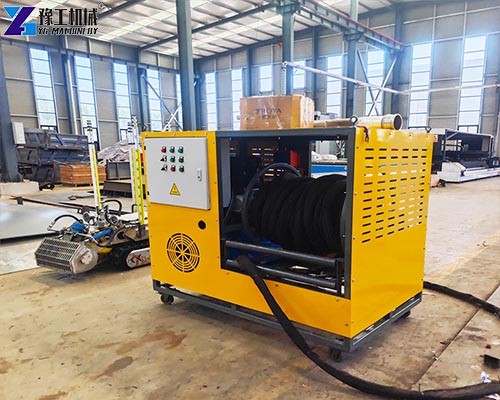
You’ve got sludge to remove. A tank that’s filled with sediment. A pond that hasn’t been cleaned in years. A tailings pond that’s reaching capacity. Or an industrial oil tank that needs internal cleaning without sending workers inside.
Manual cleaning is dangerous. Pumping alone doesn’t stir up settled solids. Draining the tank or pond takes days and creates disposal headaches. A sludge cleaning robot changes that—it goes into the water or sludge, stirs up settled material, and pumps it out continuously. No workers inside hazardous spaces. No draining needed.
But these robots come in different sizes, different dredging widths, and different pump capacities. Pick one that’s too small, and you’ll spend forever on each job. Pick the oversized one, and you’re wasting power and budget on features you don’t need.
This article cuts through the noise. Real selection logic based on your application—tanks, ponds, lagoons, or industrial basins.
What Is a Sludge Cleaning Robot?
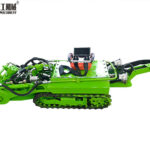
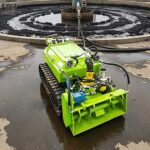
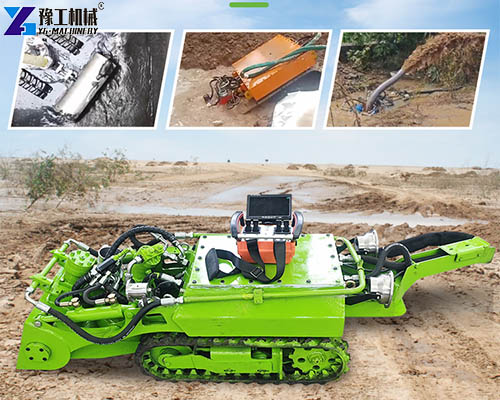
Think of it as a remote-controlled submersible dredge. It crawls along the bottom of a tank or pond on tracks. Its pump draws in slurry—water mixed with sand, silt, sludge, or fine solids—and pumps it to a disposal area via a floating discharge hose.
What makes it different from a regular pump?
- It moves. The robot drives itself across the floor, covering the entire area systematically.
- It stirs. Built-in agitation loosens settled solids so the pump can pull them up.
- It operates remotely. Wireless control from the bank or the edge of the tank. No workers in confined spaces.
- It works underwater. Submersible design, LED lights, and sealed components.
A sand dredging machine is the broader category. It includes both tracked and floating dredges. Our tracked sand dredging machine is the most versatile—it works in shallow ponds, deep tanks, oily sludge, and sediment-laden water.


Why Does a Sludge Cleaning Robot Beat Manual Dredging?
This comparison is worth making. Because many operators still clean tanks the old way.
Manual cleaning: Workers enter the tank with shovels and pumps. Confined space. Toxic gases. Physical labor. Slow progress. High insurance costs.
Pump-only: A stationary pump sits in the tank and sucks up whatever slurry flows to it. But it doesn’t stir up settled material. You leave a layer of sludge on the bottom.
Sand dredging machine: Remote operation. No confined entry. Continuous agitation and pumping. Covers the entire floor. Consistent slurry concentration. Faster job completion.
The sand dredging machine is safer, faster, and leaves a cleaner tank.
What to Look For in a Sludge Cleaning Robot?
This is where the quality difference shows up. Two robots might have similar specs, but their reliability is completely different.
What to Avoid in Cheap Robots
Weak pump impeller. Sludge is abrasive. Cheap impellers wear down fast, reducing flow and requiring early replacement.
Poor track durability. The robot crawls on contaminated floors. Cheap track material degrades in oily or chemical sludge.
Unreliable hydraulic components. Seals fail. Hoses leak. The robot stops mid-job, and you’re left to retrieve it from the bottom.
Flaky wireless control. The signal drops or lags. You can’t steer the robot precisely, leaving uncleaned patches.
No camera or poor lighting. Without good visibility, you’re operating blind. You can’t see where the robot is or what it’s picking up.
Quality Indicators
Abrasion-resistant pump components. Hardened materials that withstand sand, grit, and sludge without rapid wear.
Reinforced tracks. Designed for oily, abrasive, and muddy conditions. Long service life.
Reliable hydraulic motor and seals. Proven components, tested for continuous operation. No sudden failures.
Stable wireless control. Consistent signal at range. You steer with confidence.
Good underwater visibility. Bright LED lights and a clear camera feed. You see everything the robot sees.
Common Mistakes Buyers Make
Avoid these errors, and you’ll get the right robot the first time.
Mistake 1: Ignoring the Access Point
The robot must fit through the entry. If your tank has a 700 mm manhole and you buy a 960 mm wide robot, it’s not going in.
Measure your access. Not just the tank floor. The opening.
Mistake 2: Underestimating the Dredging Width vs. Tank Shape
A wide robot covers large areas quickly. But in a narrow rectangular tank, a robot that’s too wide can’t turn around or reach corners.
Match dredging width to tank geometry. Wide-open ponds need wide robots. Narrow channels need narrow robots.
Mistake 3: Overlooking Pump Flow vs. Sludge Type
Thick sludge needs more pump power than thin sediment. If your material is high-viscosity and you choose a low-flow pump, the robot will struggle.
Know your sludge consistency. Then choose the flow rate accordingly.
Mistake 4: Forgetting About Sludge Disposal
The robot pumps sludge somewhere. If the discharge line can’t handle the flow, the job backs up.
Check your disposal route. Pipe size, distance, and elevation all affect pump performance.
Mistake 5: Buying from a Supplier Without Field Support
This is especially critical for overseas buyers. A sludge cleaning robot has many components—pump, motor, hydraulic, control, camera. When something goes wrong, you need support.
Ask about spare parts. Impellers, tracks, seals, camera components—stocked and ready.

Our Sludge Cleaning Robot Line
We manufacture a complete range of sand dredging machines for all applications.
| Model | YG-500 | YG-600 | YG-700 | YG-800 | YG-900 | YG-1200 | |
| Robot dimensions | 1500*500*650mm | 1500*600*650mm | 1600*700*650mm | 1600*850*700mm | 1650*960*750mm | 1900*1200*750mm | |
| Dredging width | 500mm | 600mm | 700mm | 800mm | 900mm | 1200mm | |
| Track travel speed | 3-15m/s | 3-15m/s | 3-15m/s | 3-15m/s | 3-15m/s | 3-15m/s | |
| Robot weight | 320kg | 350kg | 380kg | 400kg | 420kg | 500kg | |
| Pump output diameter | 3inch | 3inch | 4inch | 4inch | 4inch | 4inch | |
| Pump flow rate(cubic meters/ hour) | 100 m³ | 100m³ | 200m³ | 200m³ | 200m³ | 200m³ | |
| Pump head | 0-30m | 0-30m | 0-30m | 0-30m | 0-30m | 0-25m | |
| Hydraulic station dimensions(mm) | 2200*1200*1700 | 2200*1200*1700 | 2200*1200*1700 | 2200*1200*1700 | 2200*1200*1700 | 2120*1240*1200 | |
| Main motor power | 22kw | 22kw | 30kw | 30kw | 30kw | 45kw | |
| Hydraulic system pressure | 0-16Mpa | 0-16Mpa | |||||
| Particle size | 15mm | 15mm | 38mm | 38mm | 38mm | 60mm | |
| Reeling system speed | 0-10r/min | 0-10r/min | |||||
| Hydraulic hoses | 50m (Standard configuration) | 50m (Standard configuration) | |||||
| Control system | Wireless remote control | Wireless remote control | |||||
| Lighting system | Underwater LED lights *2 | Underwater LED lights *2 | |||||
All models include:
- Remote wireless control
- Underwater camera with LED lighting
- 50-meter hydraulic hose kit
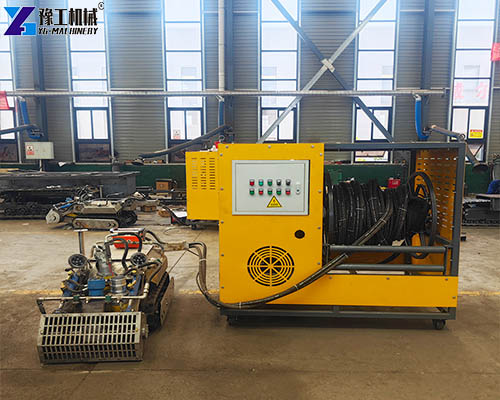
- Powered reel system
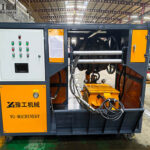
- Complete hydraulic power station
- Tracked drive system
- Abrasion-resistant pump components
Optional configurations: Custom hose lengths, power configurations, and flotation accessories.
Our Service Package
Overseas buyers get full support from selection to deployment.
- Application matching. Tell us your tank or pond dimensions, access opening, sludge type, and disposal distance. We recommend the right model.
- Full export documentation. Customs compliance, packing list, commercial invoice.
- Factory testing. Every robot is run-tested in water before shipping.
- Remote deployment support. Step-by-step guidance for setup, deployment, and operation.
- Spare parts availability. Impellers, tracks, seals, hoses, camera components—stocked and ready.
- Warranty coverage. One year on structural and mechanical defects, with ongoing technical support.

Final Takeaway
A sludge cleaning robot is a productivity multiplier. It cleans faster than manual labor. It covers more ground than a stationary pump. It works without confined entry. The right robot matches your access point, your tank geometry, your sludge consistency, and your required flow.
We build exactly that. No mismatched specs. Just reliable equipment from a supplier who supports you after delivery.
Need the right sand dredging machine for your job?
Tell us:
- Your tank or pond dimensions
- Your access opening size (manhole, hatch, or opening)
- Your sludge type (sand, silt, oil, tailings, or mixed)
We’ll recommend the right model—no upsell, just the correct fit.
WhatsApp / WeChat / Phone: +86 159 3715 3321
Email: admin@chinayugongmachinery.com
Deploy the robot. Clean the bottom. Close the job.