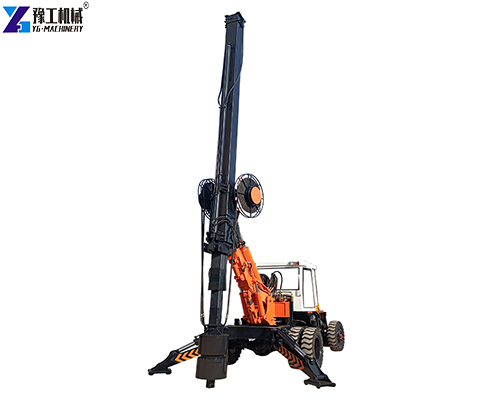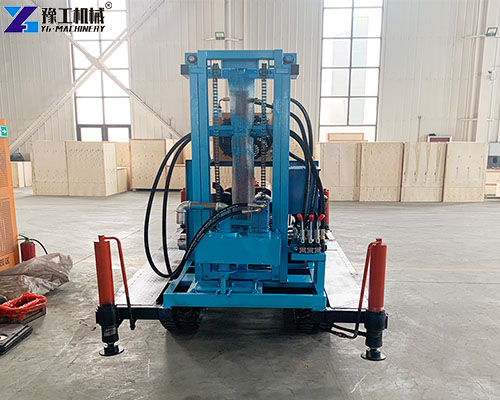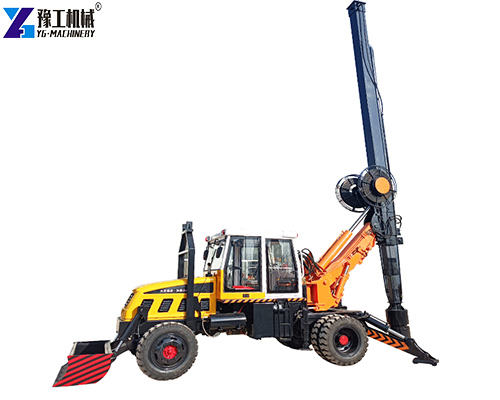

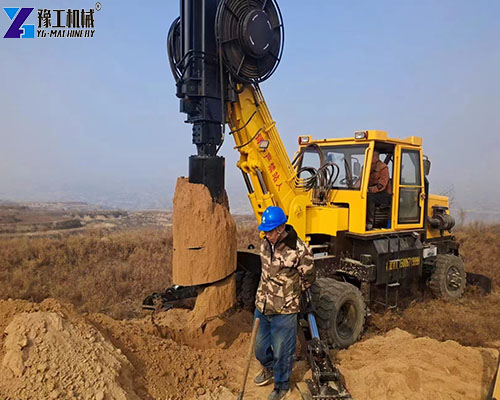
Hydraulic rotary rig is a piling machine that uses a hydraulic power system to drive the drill rod and drilling tool for rotary cutting. The drilling tool removes soil and rock through repeated drilling and unloading until the designed pile depth is reached.
The YG series includes YG13, YG15, YG16, and YG20 models in the documented conventional small rotary drilling range. These models provide maximum drilling depths of 13- 20 m and maximum drilling diameters of 1000- 1600 mm.
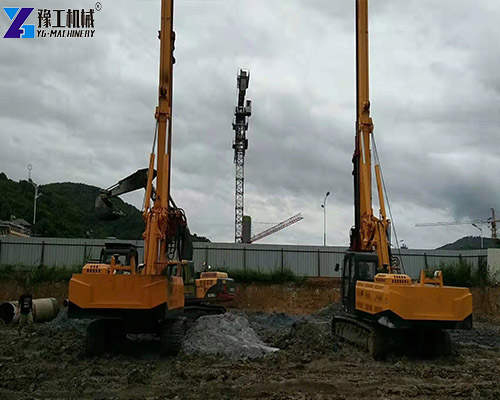
The machines are intended for small engineering projects and pile foundation work. The product information also identifies applications such as slope protection piles and small-diameter municipal piles for the small rotary drilling category.
Hydraulic Rotary Rig Technical Parameters
| Model | YG13 | YG15 | YG16 | YG20 |
| Max.Drilling Diameter | 1000mm | 1600mm | 1500mm | 1600mm |
| Max.Drilling Depth | 13m | 15m | 16m | 20m |
| Max. Rotary torque | 50KN.m | 45kN .m | 46KN.m | 36KN.m |
| Rotary angle | 360° | 180° | 180° | 360° |
| Rotary speed | 10-45r/min | 17-45r/min | 20-46r/min | 22-43r/min |
| Dimension(m) | 3.1×1.92×3.5m | 6.8×2.27×3.2m | 10 x 2.3x 3.2 m | 9.5×2.6×3.5m |
| Weight | 9ton | 13 ton | 11 ton | 17.8 ton |
The YG13 has the highest listed rotary torque, while the YG20 provides the greatest drilling depth. YG15 and YG20 both have a maximum drilling diameter of 1600mm.
Receive Detailed Parameter List
Small Rotary Drilling Rig Core Features
1. Hydraulic Rotary Drilling System
The small rotary drilling rig uses a hydraulic power system as the core of its operation. The power head drives the drill rod and drilling tool to rotate and cut the soil or rock.
The drilling process consists of drilling, filling the bucket, lifting the drilling tool, unloading the material, and repeating the cycle until the required depth is reached.
2. Multiple Model Configurations
The hydraulic rotary rig range includes four documented conventional small models. Their drilling depths range from 13m to 20m, while maximum drilling diameters range from 1000mm to 1600mm.
This allows customers to compare the models according to required pile diameter and drilling depth.
3. Different Rotary Performance
The four models provide different rotary torque and speed ranges.
The YG13 has a maximum rotary torque of 50kN.m, while the YG20 provides a maximum rotary torque of 36kN.m. Rotary speed ranges from 10-45r/min on the YG13 to 22-43r/min on the YG20.
Get Your Project‑Specific Quote
Rotary Drilling Rig Machine Working Principle
The rotary drilling rig machine works by rotating the drill rod and drilling tool through the power head.
The drilling tool cuts the soil or rock, and the excavated material enters the drilling bucket. Once the bucket is filled, it is lifted to the surface and emptied. The process is then repeated until the designed pile depth is achieved.
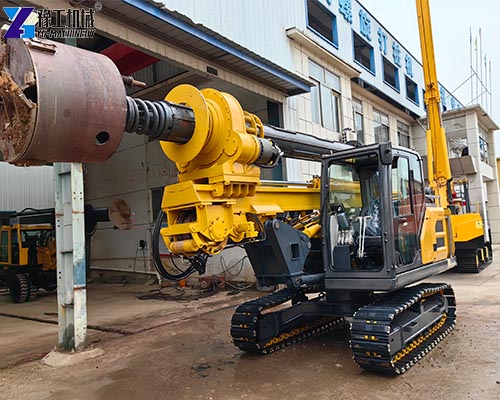
The basic machine structure includes:
- Mast
- Drill rod
- Power head
- Drilling tools
- Operator cabin
- Traveling system
- Slewing platform
- Counterweight
- Power system
- Winch mechanism
- Electrical system
- Hydraulic system

Rotary Piling Rig Application Areas
The hydraulic rotary rig is used for pile foundation construction in different engineering projects.
Documented application areas include:
- Cross-sea and cross-river bridges
- Urban transportation projects
- High-speed railways
- Large building complexes
- Commercial and civil buildings
- Transportation hubs
- Power tower foundations
- Photovoltaic foundations
- Coal mining
For the small rotary drilling category, the documented applications specifically include slope protection piles and small-diameter municipal piles.


Get Your Project‑Specific Quote
Hydraulic Rotary Rig Geological Adaptation
The hydraulic rotary rig can be configured with different drilling tools according to ground conditions.
| Ground Condition | Recommended Drilling Tool |
|---|---|
| Clay / Silt / Sand | Rotary drilling bucket |
| Clay / Soft Soil | Auger bucket |
| Medium Weathered Rock | Core drilling bucket |
| Slightly Weathered Rock | Core drilling bucket |
| Loose Sand / Gravel | Sand bucket |
Clay can cause drilling tools to become sticky, while sandy soil can be loose and prone to collapse. Gravel can increase drilling tool wear, and medium to slightly weathered rock requires equipment with sufficient rotary torque.

Small Rotary Drilling Rig Suitable Conditions
Suitable Applications
The hydraulic rotary rig is suitable for:
- Small engineering projects
- Slope protection piles
- Small-diameter municipal piles
- Selected pile foundation projects
- Soil and weathered rock drilling within the model’s working range
The exact model should be selected according to the required hole diameter, drilling depth, geology, and drilling tool.
Conditions Requiring Confirmation
Before selecting a rotary piling rig, customers should confirm:
- Required pile diameter
- Required drilling depth
- Soil or rock conditions
- Required drilling tool
- Site dimensions
- Transportation requirements
The supplied information does not provide detailed performance limits for every geological condition. Therefore, actual site conditions should be confirmed before final model selection.
Get Your Project‑Specific Quote
Rotary Piling Rig Technical Support
Choose the suitable hydraulic rotary rig according to drilling diameter, drilling depth, geological conditions, drilling tools, and transportation requirements.
The YG13-YG20 conventional small series provides four documented configurations:
- YG13: 13m maximum drilling depth
- YG15: 15m maximum drilling depth
- YG16: 16m maximum drilling depth
- YG20: 20m maximum drilling depth
Contact the technical team for complete specifications, drilling tool recommendations, model selection, and transportation information.