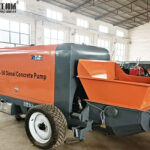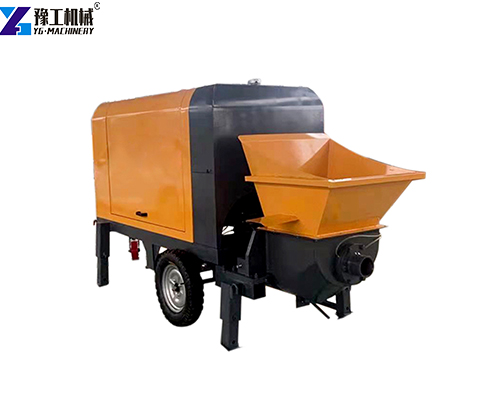
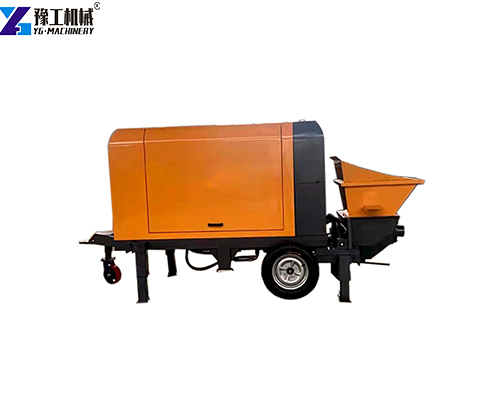
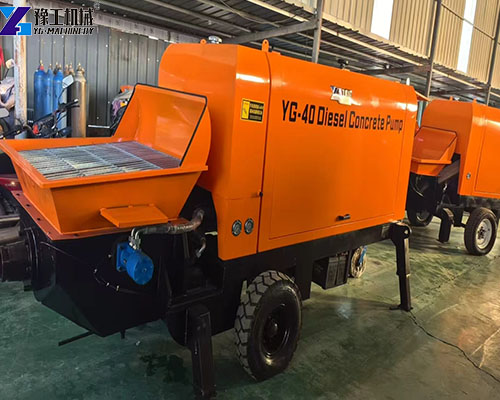
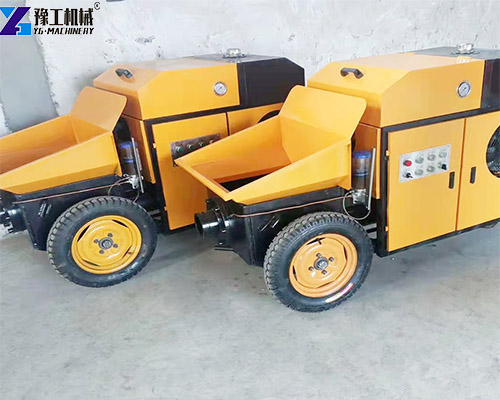
A towable concrete pump moves fresh concrete through a pipeline under pressure, so crews can place it quickly on housing, bridge and tunnel projects. Every concrete pump has two main parts: the pump body and the delivery pipe. Builders sort pumps by valve design (gate valve or S valve), by structure (towable, truck-mounted or pump truck) and by power (electric or diesel). This guide covers the working principle, the key parts, the data for our YG series and the sites each setup suits.
Get Your Project‑Specific Quote
Cement Concrete Pump Specifications by Model
The table below lists the data for our five hot-selling YG models. Use it to compare output, reach and weight before you choose a cement concrete pump.
| Model | YG-20 | YG-30 | YG-40 | YG-50 | YG-60 |
| Motor Power | 22kw | 37kw | 45kw | 55kw | 90kw |
| Diesel Fuel | 4102 | 4105 | 4108 | 6102 | |
| Working Efficiency | 8-12m³/h | 13-15m³/h | 20-25m³/h | 30-35m³/h | 55-60m³/h |
| Working Pressure | 15mpa | 20mpa | 23mpa | 23mpa | 23mpa |
| Aggregate Size | 0-2 cm | 0-3 cm | 0- 4 cm | 0- 4 cm | 0-5 cm |
| Vertical conveying distance | 40-50 m | 20-60 m | 30-130m | 30-150m | 30-150m |
| Horizontal conveying distance | 80-100m | 50-150m | 50-350m | 50-500m | 50-500m |
| Delivery pipe diameter | 80-100mm | 80-125mm | 80-125mm | 80-125mm | 125mm |
| Machine weight | 900kg | 1500-2000kg | 2200kg | 2200kg | 3500kg |
| Machine size | 3200*1480*1600mm | 3800*1600*1800mm | 3880*1650*1680mm | 4300*1600*1800mm | 4300*1600*1800mm |
Receive Detailed Parameter List
How a Trailer Mounted Concrete Pump Works
A hydraulic system drives the piston back and forth. When the piston pulls back, it creates negative pressure and draws concrete into the cylinder. When it moves forward, it pressurizes the concrete and pushes it into the pipeline. A distribution valve, such as an S valve, then switches the flow direction, so the cycle repeats without a break. Therefore, every stroke follows three stages: suction, compression and delivery.
A towable concrete pump follows the same cycle as every other concrete pump type. Only the structure and the power source change.
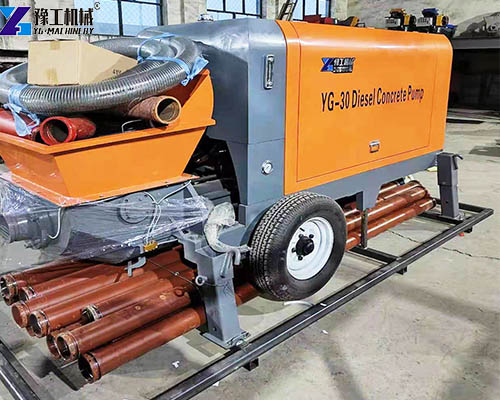
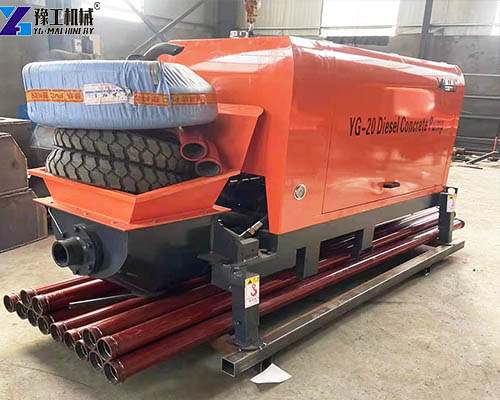
Hydraulic Concrete Pump Key Components and Systems
Four core parts form the base of every towable concrete pump:
- Hydraulic system: It supplies the power and controls the piston cycle and output pressure.
- Piston and cylinder: Together, they form a sealed chamber for suction and pressure.
- Distribution valve (S valve): It switches the concrete flow for continuous delivery.
- Hopper and delivery pipe: They hold the concrete and build the route to the placement point.
Beyond these parts, three systems shape how the YG series performs:
- Smart control system: A dedicated high/low pressure switching valve gives you two modes: high pressure with small displacement or low pressure with large displacement. Stepless displacement adjustment lets the output follow the working condition. Fully automatic centralized lubrication extends the life of moving parts and seals.
- Hydraulic and electrical system: An open dual-pump design runs two circuits, so the pumping circuit and the reversing circuit work independently. Bypass cooling and filtering, plus a large forced-air radiator, hold the oil temperature in check. A PLC manages hydraulic reversing, and the electrical section stays simple and dependable.
- Pumping system: The large-angle hopper improves material intake. The S-tube valve changes diameter gradually, so concrete flows smoothly. The pump also delivers high outlet pressure and uses long-life wear parts.
Key components come from Kawasaki (Japan), Parker (USA), Siemens (Germany) and Schneider.
Find The Right Solution For Your Job
Where a Towable Concrete Pump Works Best
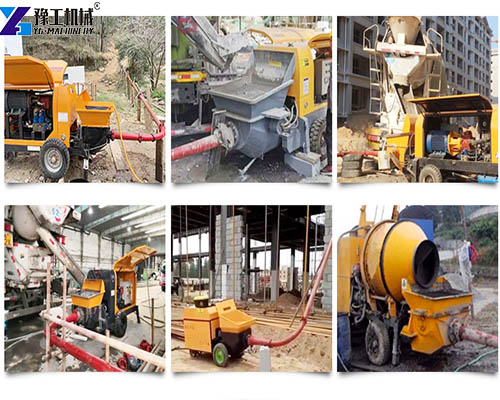
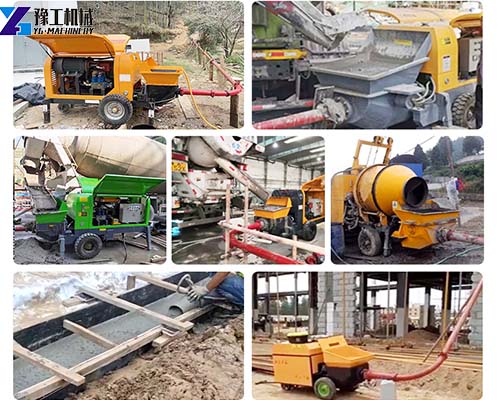
Concrete pumps mainly serve housing construction, bridges and tunnels. Because a trailer mounted concrete pump rides on its own trailer, crews tow it from one site to the next. Floor projects also benefit. They commonly use fine-stone concrete, with aggregate no larger than 2 cm, and typically 5 mm to 1 cm.
Your site decides the right model, so answer three questions first:
- What are the vertical height and the horizontal distance?
- How large is the aggregate (stone diameter)?
- What output do you need?
For example, if your aggregate stays under about 2 cm and the height stays within 30 m, a smaller model such as the YG-20 or YG-30 handles the job without extra capacity.
Get Your Project‑Specific Quote
YG Accessories and After-Sales Support
Every pump needs an outlet reducer, because the hopper outlet has a larger diameter than the 80 mm or 100 mm pipe most buyers use. We supply 45-degree and 90-degree elbows, outlet reducers, steel pipes, hoses, couplings, pipe clamps, cleaning balls, hose joints and remote controllers. The remote controller adjusts the delivery volume from up to 1 km away, and walls between you and the pump shorten that range.
Before we quote, we ask about your pumping height, horizontal distance, aggregate size and required output, because those answers decide the correct model. If you need help after delivery, send us your model number and a short description, and our team will assist you.
Contact us today with your project details, and we will recommend the towable concrete pump that fits your site.