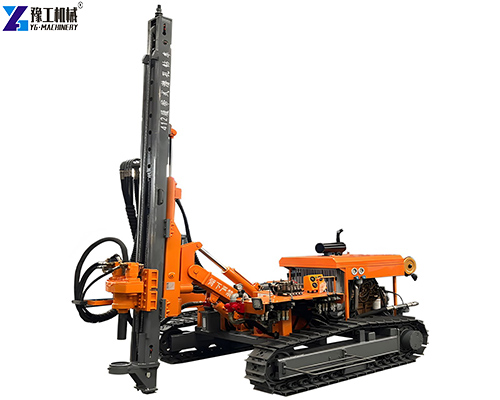
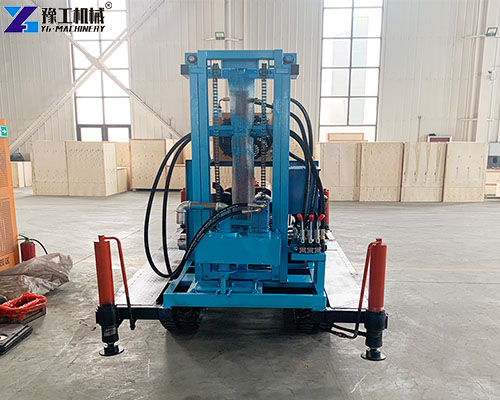
You need to lay pipes or cables under a road, a river, or a busy city street – but you cannot dig up the surface. What do you do? You use a horizontal direction drilling rig. This machine drills underground without opening a trench. It starts from a small entry pit, drills at a controlled angle, passes under obstacles, and comes out at a target point. Then it pulls the pipe back through the hole. No traffic disruption. No damaged pavement. No digging up historic sites or farmlands.
YG Machinery offers five models of HDD drilling equipment: YG-160A, YG-180, YG-280, YG-320, and YG-320A. These machines are designed for installing water pipes, gas lines, power cables, telecommunications ducts, and oil pipelines. They work in soft soil, hard rock, and everything in between. Maximum pull force ranges from 160KN to 320KN. Torque goes up to 12000N.m. Maximum pipe diameter is φ300mm to φ1200mm, and the longest single drill can reach 1500 meters.
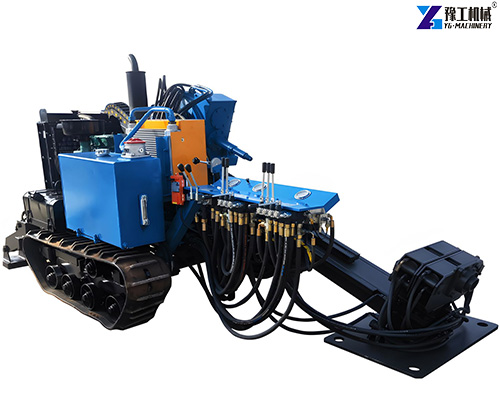
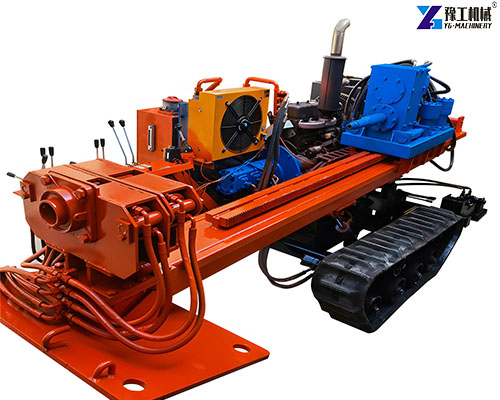
Horizontal Direction Drilling Rig Models – Key Parameters
Before you buy, you need to compare the five models. Here are the core specifications from the YG document.
| Model | YG-160A | YG-180 | YG-280 | YG-320 | YG-320A |
| Engine rated power | 100KW | 97KW | 160KW | 140KW/160KW | 160KW |
| Push and pull | Cylinder | Motor | Motor | Cylinder | Motor |
| Maximum drag/feed force | 160/100KN | 180/180KN | 280/280KN | 320/320KN | 320/320KN |
| The maximum torque of the powerhead | 5000N.n | 6000N.n | 10000N.n | 12000N.n | 12000N.n |
| Powerhead speed | 0-180r/min | 0-140r/min | 0-120r/min | 0-140r/min | 0-140r/min |
| Moving speed of powerhead | 30m/min | 20m/min | 20m/min | 20m/min | 20m/min |
| Moving speed of the powerhead | Φ600mm | Φ600mm | Φ750mm | Φ800mm | Φ800mm |
| Drill rod length (single) | 3m | 3m | 3m | 3m | 3m |
| Drill pipe diameter | Φ60mm | Φ60mm | Φ73mm | Φ73mm | Φ73mm |
| Drill pipe diameter | 10-23° | 10-22° | 10-23° | 10-20° | 10-20° |
| Maximum mudflow | 160L/min | 250L/min | 320L/min | 320L/min | 320L/min |
| Maximum mud pressure | 100bar | 80bar | 80bar | 80bar | 80bar |
| Overall quality | 6700kg | 8500kg | 12500kg | 11500kg | 11200kg |
| Dimension(length*width*height) | 5700*1820*2400mm | 6400*2270*2340mm | 7100*2260*2450mm | 7100*2250*2450mm | 7100*2250*2550mm |
What these numbers mean for you:
- Drag/feed force is the pushing and pulling strength. Higher numbers let you drill longer distances and pull larger pipes.
- Torque is the twisting power. Higher torque helps you drill through hard rock.
- Mud flow clears cuttings from the hole. More flow means faster drilling in sandy or loose soil.
All five models use 3m drill rods. The working temperature range is -15°C to +45°C. Most non‑hard‑rock areas are suitable for drilling.
What Makes A Horizontal Direction Drilling Rig Better Than An Open Trench?
If you have never used a trenchless machine, you might wonder why you should switch. Here are the real advantages from the YG document.
- No surface damage – You do not cut roads, sidewalks, or landscaping. This is critical for city work, airport runways, railway crossings, and protected land.
- Fast construction – Because you do not dig, backfill, and repave, the job finishes much faster—less labor, less equipment on site, less disruption.
- High accuracy – The rig drills at precise angles. You can steer around buried obstacles like existing pipes or large rocks. The depth is controlled from the surface.
- Lower total cost – Even though the machine costs more than a backhoe, the total project cost (including road repair, traffic control, and site restoration) is often lower with directional drilling.
- Long pipe life – When you bury pipes at 6 to 18 meters deep (typical for river crossings), the surrounding soil has very little oxygen and few corrosive chemicals. This naturally protects steel pipes and extends their service life.
- Works in hard rock – Many people think directional drilling is only for soft soil. YG machines can drill through hard rock when you use the right rock drill tools.
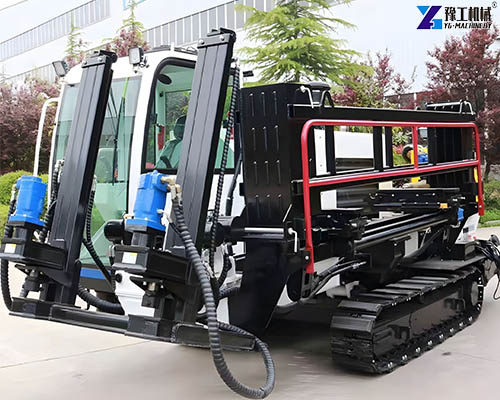
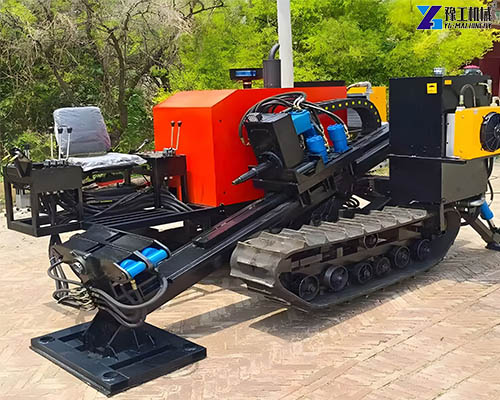
How Does A Hdd Drilling Equipment Work?
Step 1 – Pilot drilling
You set up the rig at the entry point. The powerhead pushes and rotates the drill rod with the attached drill bit. The bit cuts through the soil at a preset angle. The guidance system tells you exactly where the bit is underground – depth, left/right position, and tilt. You steer the bit to avoid obstacles. The drill continues until the bit emerges at the target exit point. Meanwhile, the mud pump sends slurry through the rod and out of the bit to keep the hole open.
Step 2 – Reaming (enlarging the hole)
After the pilot bit exits the ground, you remove the bit. You attach a reamer to the drill rod. Then the powerhead pulls the rod backward. The reamer spins and cuts the borehole wall, making the hole wide enough for your pipe. You may need to ream several times with progressively larger reamers, depending on the pipe diameter.
Step 3 – Pipe pullback
You attach the pipe to the reamer. The powerhead continues pulling the drill rod backward. The reamer cuts the final diameter, and the pipe follows right behind it. The pipe is pulled all the way through the underground borehole until it emerges at the entry side. The pipe is now installed – without ever opening a trench.
This process works for pipes from φ300mm to φ1200mm. The maximum single pull length can reach 1500 meters, according to the document.
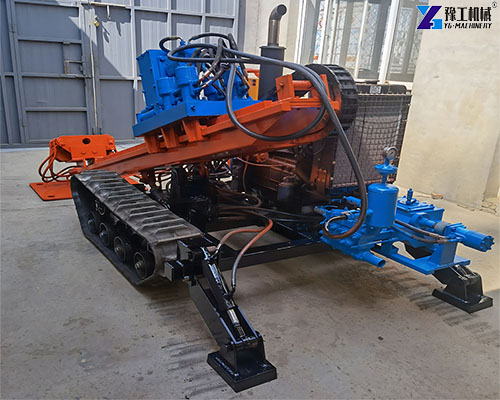
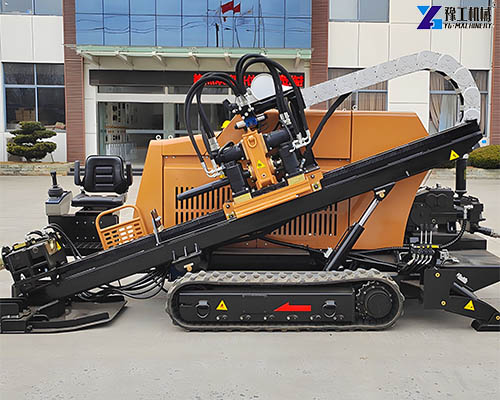
Is A YG Horizontal Direction Drilling Rig Right For You?
If your job requires installing pipes or cables under roads, rivers, railways, or sensitive land, a hdd drilling equipment is the only sensible choice. An open trench would cost too much in traffic control, surface repair, and permits, or be completely impossible in protected areas.
YG offers five models with pull forces from 160KN to 320KN. The YG-160A is a good entry‑level machine for smaller pipes and shorter distances. The YG-280 and YG-320 models handle larger diameters and harder ground. All models work in most non‑hard rock areas. For rock, ask about rock drill tools.
The machines come with a 2‑year warranty, 15‑day delivery, and optional engineer support. Automation upgrades like the auto‑rod box and hydraulic anchor save labor and speed up jobs.
Contact YG directly for a quote based on your pipe diameter, soil type, and required crossing length.
Common Questions Buyers Ask
For standard models without the automatic rod loader: one wooden crate, about 12-13 cubic meters. For models with the automatic rod loader: two wooden crates, total about 16-18 cubic meters (recommended for a 20ft container). For the 5‑ton model (YG-160A?), a 20ft container works. For 13‑ton to 43‑ton models, you need a 40ft container. Larger machines may require a flat rack or bulk vessel. Confirm with YG.
Yes. YG has professional large rock drill tools. Tell YG your site geology, and they will recommend the right bits and mud motors.
The machine has a high degree of automation and is easy to learn. YG provides an operation manual and operation videos. You can also hire a local engineer.
Yes, if you need, we can send engineers to assist you, and they are free for one week. Beyond the free time, you will be paid $150 per day for the engineer, and accommodation will be provided.
Yes. You can choose any color.
Yes. YG can make sticker‑type logos and send them to you. You apply them yourself.