Mr. Luo runs a quarry in Paraguay. Last year, he bought a cheap breaker for his 20‑ton excavator. Within two months, the housing cracked, the piston seized, and he had it repaired three times without success. Eventually, the whole breaker was scrapped, and the excavator‘s main control valve was scored by iron particles in the return oil.
He later came to us and said, “The money I saved by being cheap that month wasn’t even enough to fix my excavator.”
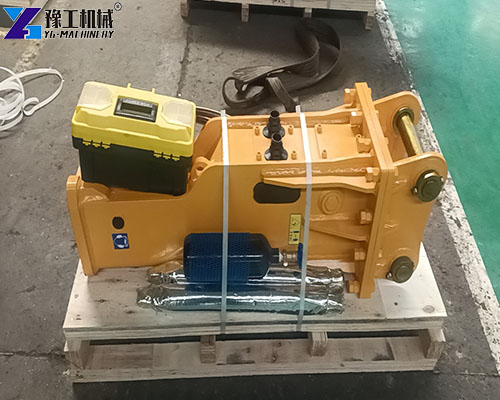
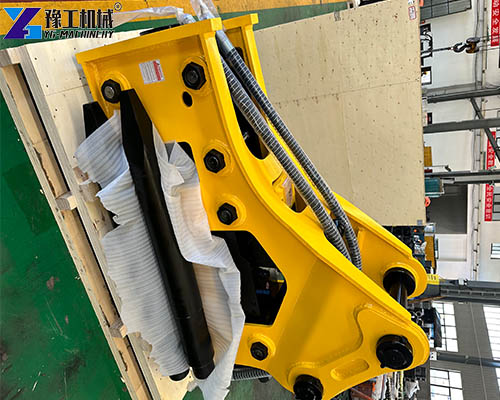
What he needed was a hydraulic rock breaker machine, not a piece of iron that just looked like a breaker.
Below, we use the pitfalls Mr. Luo fell into to show you how to choose a real breaker attachment for excavator — and how to avoid the same mistakes.
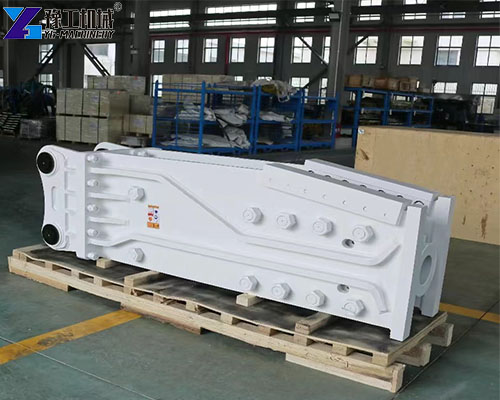
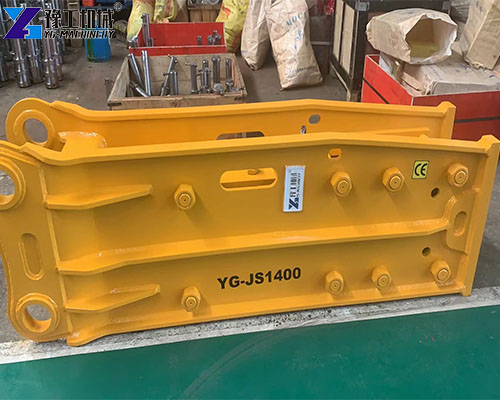
Mistake 1: Looking Only At Price, Ignoring Matching
Mr. Luo‘s excavator was 20 tons. The breaker he bought was sized for a 15‑ton machine. Result: it couldn’t break hard rock, suffered frequent blank firing, and the piston and cylinder were scored.
Correct matching requires looking at the Suitable Carrier Weight and Operating Pressure in the spec table.
Our hydraulic rock breaker machine covers everything from 0.5‑ton mini excavators up to 80‑ton large machines.
| Model | ChiselDiameter | SuitableCarrierWeight | Main bodyWeight | OperatingPressure | HydraulicOil Flow | Blow Frequency | HoseDiameter |
| mm | Ton | kg | Kg/cm 2 | I/min | bpm | inch | |
| YG350 | 35 | 0.5-1 | 40 | 90-120 | 15-25 | 800-1300 | 1/2 |
| YG400 | 40 | 1-3 | 53 | 90-120 | 15-25 | 800-1300 | 1/2 |
| YG450 | 45 | 1.2-3.0 | 67 | 90-120 | 20-30 | 700-1200 | 1/2 |
| YG530 | 53 | 2.5-4.5 | 85 | 90-120 | 25-50 | 600-1100 | 1/2 |
| YG600 | 60 | 2-5 | 140 | 90-120 | 25-50 | 600-1100 | 1/2 |
| YG680 | 68 | 4-7 | 152 | 110-140 | 40-70 | 500-900 | 1/2 |
| YG750 | 75 | 6-9 | 210 | 120-150 | 50-90 | 400-800 | 1/2 |
| YG850 | 85 | 7-14 | 278 | 130-160 | 60-100 | 400-800 | 3/4 |
| YG100 | 100 | 10-15 | 475 | 150-170 | 80-110 | 350-700 | 3/4 |
| YG1250 | 125 | 15-18 | 616 | 150-170 | 80-110 | 350-700 | 3/4 |
| YG1350 | 135 | 16-26 | 846 | 160-180 | 130-150 | 400-800 | 1 |
| YG1400 | 140 | 18-26 | 916 | 160-180 | 120-180 | 350-500 | 1 |
| YG1400A | 140 | 18-26 | 952 | 160-180 | 120-180 | 350-500 | 1 |
| YG1500 | 150 | 27-35 | 1088 | 160-180 | 150-190 | 350-700 | 1 |
| YG1550 | 155 | 28-36 | 1309 | 180-200 | 200-260 | 250-400 | 1-1/4 |
| YG1650 | 165 | 30-40 | 1438 | 180-200 | 200-260 | 250-400 | 1-1/4 |
| YG1650P | 165 | 30-40 | 1586 | 180-200 | 200-260 | 250-380 | 1-1/4 |
| YG1750 | 175 | 35-40 | 1929 | 180-200 | 210-290 | 200-350 | 1-1/4 |
| YG1850 | 185 | 35-45 | 2411 | 190-220 | 220-270 | 200-250 | 1-1/4 |
| YG1990 | 190 | 40-55 | 2626 | 190-220 | 220-290 | 180-200 | 1-1/4 |
| YG2100 | 210 | 60-80 | 3396 | 200-240 | 290-350 | 150-200 | 1-1/4 |
For Mr. Luo‘s 20‑ton excavator, he should have chosen the YG1400 (fits 18‑26 tons) or YG1400A (same class). Instead, he picked a smaller one, which resulted in poor performance and early failure.
Mistake 2: Ignoring Operating Pressure And Flow
Every breaker attachment for excavator has a designed range of operating pressure and flow. Too low pressure gives no power; too high pressure blows the seals.
Our spec sheet clearly lists Operating Pressure and Hydraulic Oil Flow. For example, the YG1400 requires 160‑180 kg/cm² pressure and 120‑180 L/min flow. These figures are based on common excavator hydraulic systems. Just tell us your excavator model, and we will match the right breaker.
Mistake 3: Not Knowing The Difference Between Silenced, Side‑Type, And Top‑Type
Mr. Luo had no idea there were different shapes. He bought randomly, only to find the breaker either interfered with the arm or was inconvenient to service.
We offer three types:
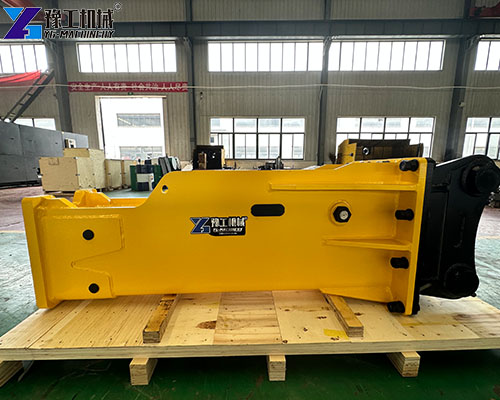
- Silenced type: Housing with sound insulation, lower noise — suitable for urban or night work. The housing also provides extra protection.
- Side‑type (triangular): Most universal, fits most working conditions, easy to maintain.
- Top‑type (right‑angle): Compact structure, suitable for tight spaces or special mounting angles.
Which one to choose depends on your excavator brand, arm structure, and working environment. We will recommend based on your situation.
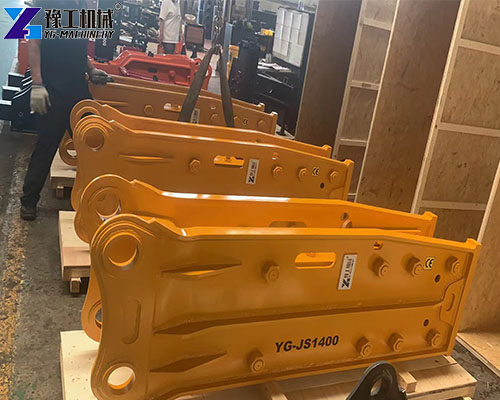
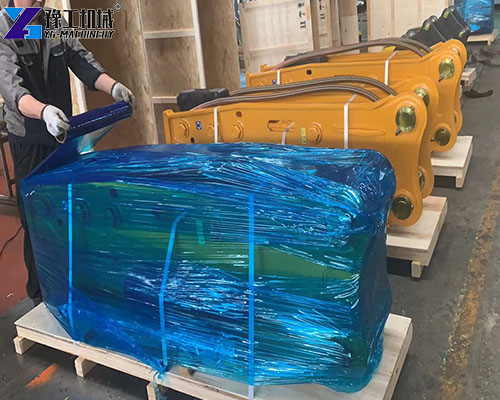
Why Our Hydraulic Rock Breaker Machine Is More Durable?
We do not make cheap breakers. Every hydraulic rock breaker machine uses high‑purity alloy steel for critical parts — piston, cylinder, chisel — with case hardening heat treatment. The housing is integrally forged or high‑strength cast, not welded from pieces.
Just look at the weight. For a 20‑ton class breaker, our YG1400 weighs 916 kg. Some no‑name brands weigh only 700 kg. Where did the missing weight go? Thinner steel plates, shorter piston, thinner chisel. When breaking rocks, those light breakers bounce, crack, and snap.
Weight is not the only indicator, but it is an honest design indicator.
Where Our Breakers Have Been Sold?
Paraguay, Portugal, Italy, Mexico, Suriname, Argentina, New Zealand, Puerto Rico — quarries, demolition crews, and municipal contractors in these countries use our breaker attachment for excavator.
They choose us not because we are the cheapest, but because our uptime is high. A good hydraulic breaker works for three years without major problems. A poor one needs repairs every three months.
Selection Checklist (For You)
If you are considering buying a hydraulic rock breaker machine, please prepare the following information:
- Excavator brand and weight (exact tons)
- Excavator operating pressure range (see the auxiliary hydraulic specs in your manual)
- Main material to break: granite, concrete, frozen ground, or soft rock?
- Will you work in urban areas or at night? (to decide whether a silenced type is needed)
Send us this information, and we will provide a matching proposal and quotation the same day. Our parameter table covers 21 models from 35mm chisel diameter up to 210mm — one of them will match your excavator.
One Honest Word
Mr. Luo later switched to our YG1400. Two years have passed. Apart from normal chisel and seal replacement, he has had no failures. He calculated that the money he saved by buying cheap originally was less than one‑tenth of what he had earned with our breaker.
A good breaker attachment for excavator won‘t keep you fixing it every day. It will just break rocks for you day after day.
Which kind of boss do you want to be?