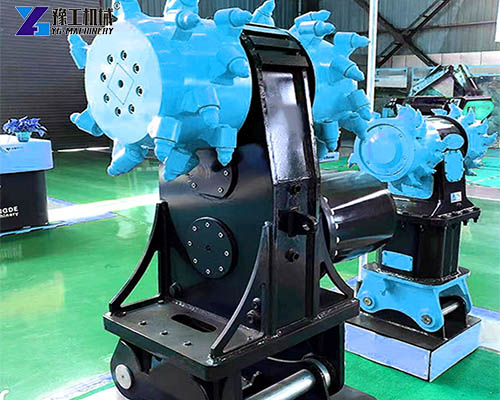
You’ve got a boulder the size of a small car.
Your excavator bucket just scratches it.
Blasting? Too dangerous. Too many permits.
A jackhammer? It would take three days and ruin your operator’s back.
There’s a tool that turns your excavator into a demolition beast.
It’s called a breaker attachment for excavator. And it’s the reason contractors in Paraguay, Italy, and Mexico finish rock jobs in hours, not days.
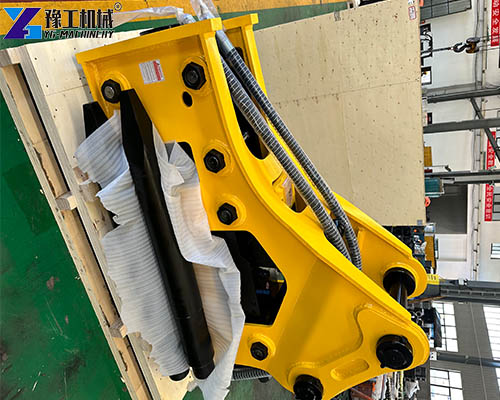
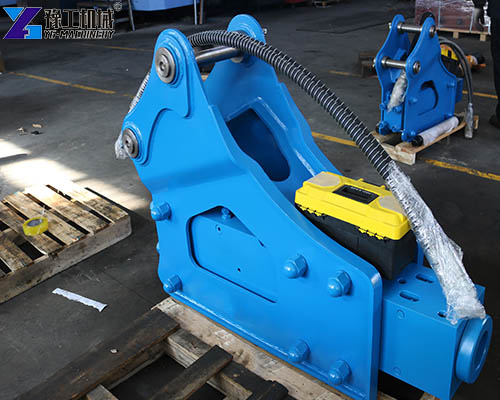
What Is A Hydraulic Hammer Attachment Anyway?
Think of a giant electric jackhammer – but powered by your excavator’s hydraulics.
Inside a steel casing, a piston moves up and down very fast (up to 1,300 blows per minute).
At the bottom, a chisel (called a tool bit) hits the rock or concrete.
Each blow delivers thousands of foot-pounds of energy.
The hydraulic hammer attachment turns your digging machine into a breaking machine in about 10 minutes – just swap the bucket, connect two hoses, and go.
Who Actually Buys A Breaker Attachment For Excavator?
From our real customer list (we ship to over 15 countries):
Quarries and mines – breaking oversize rocks after blasting. One hit splits a boulder into manageable pieces.
Demolition contractors – tearing down concrete buildings, bridge decks, and parking structures. The hammer eats through rebar-reinforced concrete like a knife through cake.
Utility contractors – breaking asphalt and concrete to reach buried pipes or cables. Much faster than a walk‑behind breaker.
Road construction crews – removing old pavement, breaking curbs, crushing concrete for base material.
Land clearing and rock excavation – when you hit a granite ledge while digging a foundation, the hammer breaks it into rubble.
One customer in Argentina told us, “I used to rent a breaker once a month. After buying my own hydraulic hammer attachment, I started offering rock breaking as a separate service. Now I use it three times a week. Paid for itself in four months.”
What Are The Different Types?
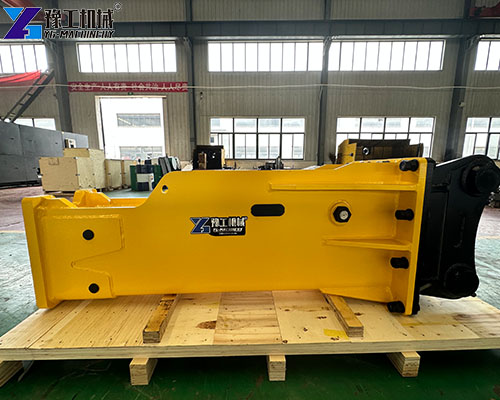
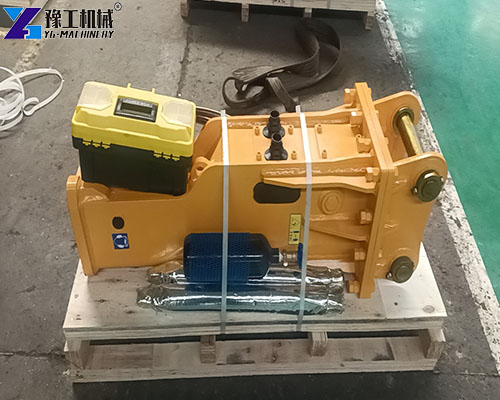
1. Triangle type – the most common. The hammer body is triangular. Good balance, fits most excavators, easy to maintain.
2. Straight type (box type) – more compact. Better for tight spaces like trenching or basement demolition. Lighter weight.
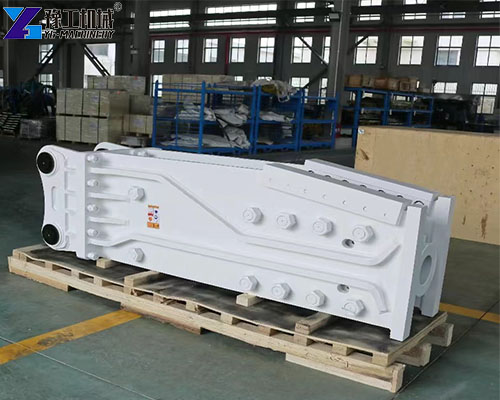
3. Silent type – has an extra outer casing with sound insulation. Quieter operation. Required on urban jobsites with noise limits (hospitals, schools, residential areas).
Our hydraulic hammer attachment line includes all three. Tell us your noise requirements, and we’ll recommend the right one.
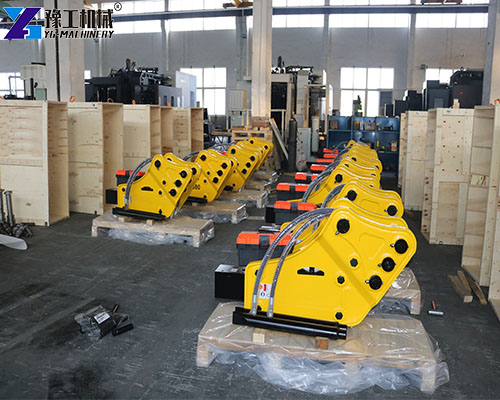
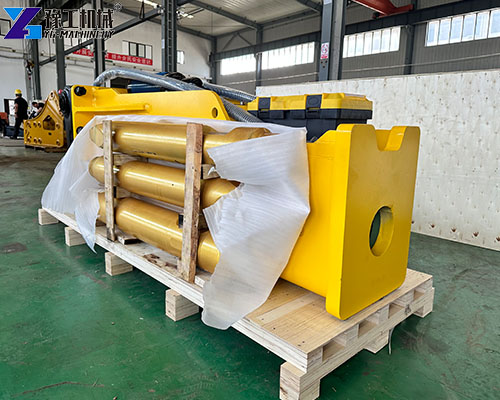
The Numbers You Actually Care About
| Model | Chisel (mm) | Excavator size (ton) | Hammer weight (kg) | Blows per minute | What it means |
| YG350 | 35 | 0.5–1 | 40 | 800–1300 | Tiny breaker for mini excavators. Break small rocks, sidewalk slabs. |
| YG400 | 40 | 1–3 | 53 | 800–1300 | Small landscaping, trenching in soft rock. |
| YG450 | 45 | 1.2–3 | 67 | 700–1200 | Popular for 2–3 ton machines. |
| YG530 | 53 | 2.5–4.5 | 85 | 600–1100 | Light demolition. Break concrete steps, small foundations. |
| YG600 | 60 | 2–5 | 140 | 600–1100 | Good for 4–5 ton excavators. |
| YG680 | 68 | 4–7 | 152 | 500–900 | Medium duty. Break thin walls, asphalt. |
| YG750 | 75 | 6–9 | 210 | 400–800 | Most popular size for 8 ton excavators. Breaks reinforced concrete. |
| YG850 | 85 | 7–14 | 278 | 400–800 | Heavy demolition. Apartment buildings, bridge decks. |
| YG1000 | 100 | 10–15 | 475 | 350–700 | Serious power. Breaks large boulders, thick foundations. |
| YG1250 | 125 | 15–18 | 616 | 350–700 | Quarry and mining. |
| YG1350 | 135 | 16–26 | 846 | 400–800 | Very heavy. Tearing down concrete silos, dams. |
| YG1400 | 140 | 18–26 | 916 | 350–500 | Almost 1 ton hammer. For 20–25 ton excavators. |
| YG1500 | 150 | 27–35 | 1088 | 350–700 | For 30 ton machines. Breaking railway sleepers, thick slabs. |
| YG1550 | 155 | 28–36 | 1309 | 250–400 | High production. |
| YG1650 | 165 | 30–40 | 1438 | 250–400 | For heavy demolition and quarry primary breaking. |
| YG1750 | 175 | 35–40 | 1929 | 200–350 | Nearly 2 tons. Mount on 40 ton excavator. |
| YG1850 | 185 | 35–45 | 2411 | 200–250 | Massive hammer. Breaks granite boulders. |
| YG1990 | 190 | 40–55 | 2626 | 180–200 | 2.6 tons. For 50 ton class. |
| YG2100 | 210 | 60–80 | 3396 | 150–200 | The big boss. 3.4 tons. Breaks anything. |
What’s the most popular?
For a standard 8–10 ton excavator, the YG750 or YG850 is the sweet spot. Big enough for most demolition, light enough not to tip the machine.
What About Oil Flow And Pressure? (The Two Numbers You Must Check)
Every hydraulic hammer attachment needs a certain flow (litres per minute) and pressure (bar) from your excavator.
- Too low flow → hammer cycles slowly, weak blows.
- Too high flow → hammer overheats, seals blow.
- Wrong pressure → internal damage.
The spec table shows:
- Operating pressure: 90–240 bar (most excavators are in this range)
- Oil flow: 15–350 L/min (smaller hammers need less, big ones need much more)
Before buying, check your excavator’s hydraulic specs. Or send us your machine model – we’ll match it for free.
One customer in Portugal bought a YG850 for his 8-ton excavator. The flow was perfect. He said, “I was worried it might be too heavy. But the hammer breaks concrete twice as fast as my old one.”
How To Install A Breaker Attachment For Excavator?
- Remove your bucket. Keep the bucket pins safe.
- Attach the hammer’s bracket to your excavator arm using the same pin holes.
- Connect the two hydraulic hoses to your auxiliary circuit. One pressure, one return.
- Add a third line if your hammer has an auto‑lube system (recommended for large hammers).
- Set your excavator’s auxiliary flow to the hammer’s spec (use the flow control valve).
- Test the hammer on a small rock – listen for a solid “bang,” not a weak “tap”.
We include a manual and a video. First installation takes 1–2 hours. After that, 10 minutes to swap from bucket to hammer.
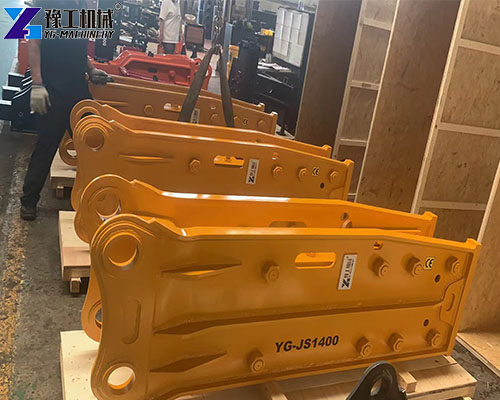
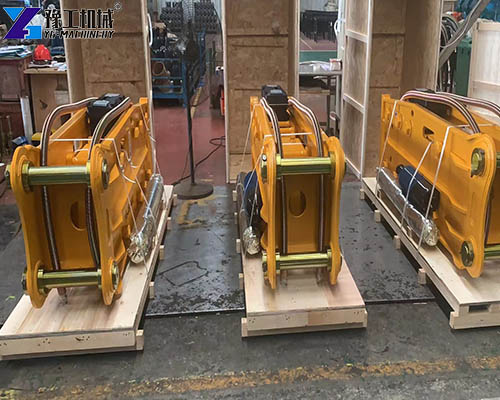
Safety Tips – Don’t Break Yourself While Breaking Rock
- Always grease the tool bit every 2 hours. Dry bits get stuck and damage the hammer.
- Don’t run the hammer without a tool bit – the piston will destroy itself.
- Don’t use the hammer as a crowbar – side loads break the bushings.
- Don’t operate under the hammer – pieces of rock can fly out. Stay in the cab.
- Check bolts daily – the hammer vibrates. Loose bolts fall off.
One safety manager in New Zealand said, “We had a hammer blow a hose. Hot oil sprayed everywhere. Now we use our breaker attachment for excavator with a hose burst protection valve – standard on your models.”
Try A Hydraulic Hammer Attachment On Your Site – 30 Days, No Risk
You’re thinking: “What if it doesn’t fit my machine? What if it’s too weak?”
We’ll ship you the hammer based on your excavator specs. You mount it. You break your hardest rock for 30 days.
If it doesn’t perform – too slow, too weak, or if you simply don’t like it – return it. Full refund. We pay return shipping.
This offer is for the first 8 units worldwide.
One Last Truth
A bucket digs. A hammer breaks.
If you’re in demolition, quarrying, or utility work, a breaker attachment for excavator isn’t a luxury – it’s a necessity.
You can keep hammering with a jackhammer for three days. Or you can mount a hydraulic hammer and finish in three hours.
Your competitors in Paraguay, Italy, and Mexico have already switched.
The question is: what are you waiting for?
👉 Email admin@chinayugongmachinery.com now. Tell me:
- Your excavator brand, model, and weight
- What material do you break (concrete, rock, asphalt)
- Do you need a silent type or standard?
I’ll reply within 24 hours with:
- The exact model for your machine
- A video of that hammer in action
- A delivered price to your port
Stop scratching. Start breaking.