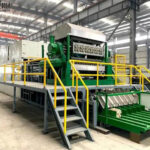
You’ve got waste paper. Lots of it: cardboard boxes, old newspapers, office waste, printer paper. And you want to turn that waste into valuable products—egg trays, fruit trays, coffee cup carriers, industrial packaging.
Egg tray manufacturing machine does exactly that. It pulps waste paper, forms it into trays using molds, and dries the finished products. But here’s the catch—there are different capacities, different drying systems, and different machine types. Pick the wrong one, and you’re overpaying for capacity you don’t need, or underbuying and struggling to meet orders.
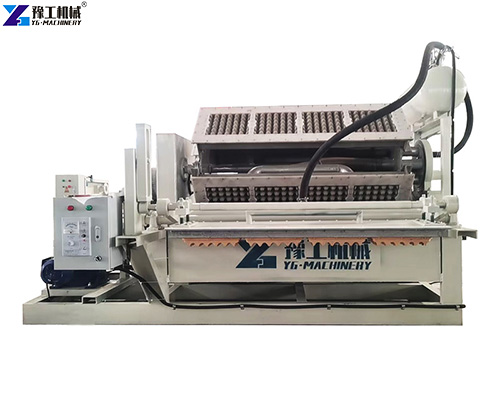
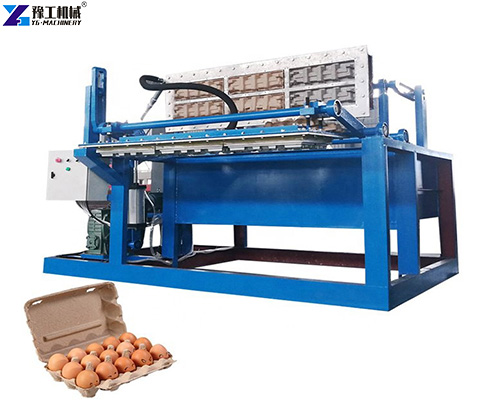
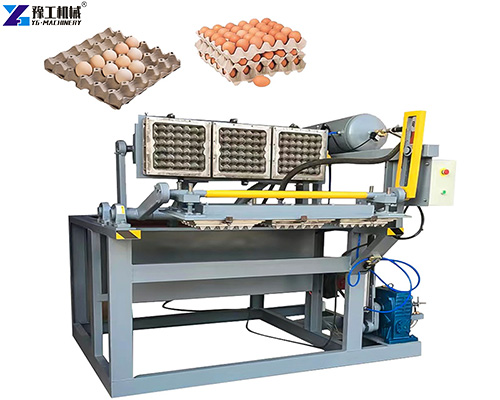
What Is an Egg Tray Manufacturing Machine?
The formal name is pulp molding equipment. It uses molds to shape wet paper pulp into finished products. But because egg trays account for over 80% of production in this industry, everyone calls it an egg tray making machine or egg tray equipment.
What else can it make? Coffee cup carriers, fruit trays, industrial packaging, seedling pots, bottle trays, and other molded pulp products: the same machine, different molds.
What materials does it use? Almost any waste paper: newspapers, books, magazines, cardboard, office paper, A4 scrap, craft paper, industrial packaging, waste paper bags. A4 paper and books are ideal—they break down cleanly and produce strong trays.
What are the three machine types?
- Flip molding machine — simple design, lower output, good for entry-level production
- Rotary drum machine — continuous production, higher output, the most common type
- Reciprocating molding machine — precision forming, good for complex shapes
Our Egg Tray Manufacturing Machine Line
| Model | Capacity/H | Power/hour | Paper Consumption/H | Water Consumption/H | Dry System | Weight | Dimensions (main machine) |
| YG-1500 – 4X1 | 1500pcs/h | 38kw | 120kg | 240kg | dry naturally | 3000kg | 2800*2200*1900 |
| YG-2500 – 3X4 | 2500pc/h | 55kw | 200kg | 400kg | multi-layer drying | 4000kg | 2900*1800*1800 |
| YG-3000 – 4X4 | 3000pcs/h | 60kw | 240kg | 480kg | multi-layer drying | 4800kg | 3250*1800*1800 |
| YG-4000 – 4X8 | 4000pcs/h | 95kw | 320kg | 640kg | multi-layer drying | 7000kg | 3250*2300*2500 |
| YG-5000 -5X8 | 5000pcs/h | 95kw | 400kg | 800kg | multi-layer drying | 8000kg | 3300*2300*2500 |
| YG-7000 -6X8 | 7000pcs/h | 120kw | 480kg | 960kg | multi-layer drying | 10000kg | 3400*2300*2500 |
First Decision: Egg Carton Making Machine Capacity
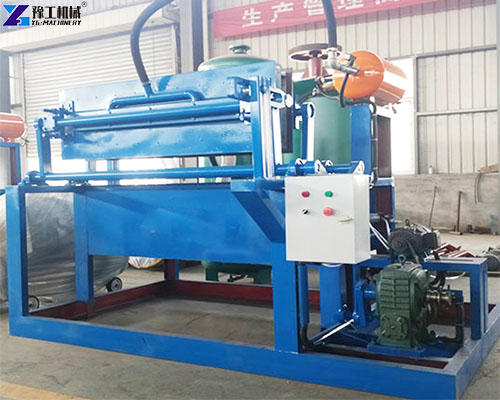
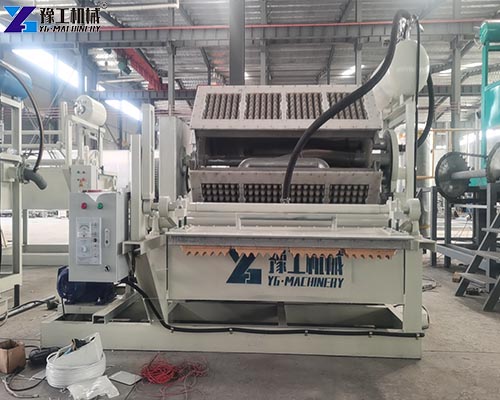
Capacity is measured in pieces per hour. This is the most important number—it determines your daily output, your equipment cost, and your space requirement.
- YG-1500-4X1: 1,500 pcs/h, 38kw, 3,000kg
- YG-2500-3X4: 2,500 pcs/h, 55kw, 4,000kg
- YG-3000-4X4: 3,000 pcs/h, 60kw, 4,800kg
- YG-4000-4X8: 4,000 pcs/h, 95kw, 7,000kg
- YG-5000-5X8: 5,000 pcs/h, 95kw, 8,000kg
- YG-7000-6X8: 7,000 pcs/h, 120kw, 10,000kg
How to choose: Calculate your daily order volume. If you need 2,500 pieces per hour, the YG-2500-3X4 is correct. If you need 7,000 pieces per hour, you need the YG-7000-6X8.
Second Decision: Egg Crate Making Machine Drying Method
This is the biggest cost decision after the machine itself. Drying consumes energy—how you dry directly affects your operating cost per tray. There are four common methods. Each has tradeoffs in energy cost, labor, space, and automation.
Sun-Drying (Natural Drying)
- Process: Formed trays placed on racks (bamboo or galvanized) and pushed outside. Sun and wind dry them naturally.
- Racks needed: 100–200 frames. Each frame holds 24–30 mesh sheets. Each mesh sheet holds 3–4 trays.
- Time: Weather-dependent. Takes hours to a full day.
- Advantages: Zero energy cost. Lowest operating cost.
- Disadvantages: High labor requirement. Large floor space. Weather-dependent—no production on rainy days.
- Best for: Regions with consistent sun, cheap labor, low land cost.
Drying Oven (Batch Drying)
- Process: Trays placed on galvanized racks, pushed into an insulated oven. Dried at 180-220°C for about 30 minutes.
- Oven capacity: 10–12 trolleys. Each trolley holds 90–100 trays. Recommend 10 extra trolleys for cycling.
- Advantages: Works in any weather. Compact footprint.
- Disadvantages: Higher energy cost. Still requires manual rack handling (higher labor).
- Best for: Medium-scale production. Regions with unpredictable weather.
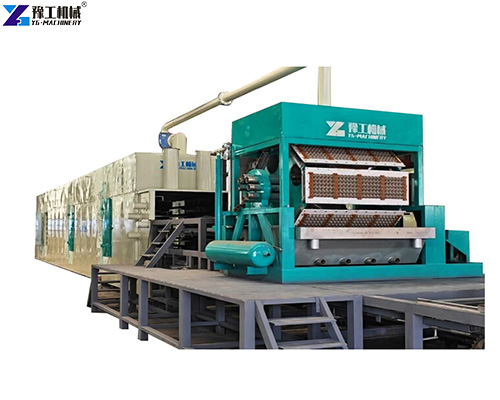
Tunnel Dryer (Continuous Flow)
- Process: Formed trays enter a long tunnel (40–70 meters) on a conveyor belt. Dried at 180-200°C for 15 minutes. Exit at the other end.
- Fuel options: Coal, wood, natural gas, diesel.
- Advantages: Lower construction cost than multi-layer. Can achieve high automation.
- Disadvantages: Long building footprint. Higher drying cost per tray due to heat loss.
- Best for: Large-scale production with ample floor space and cheap fuel.
Multi-Layer Metal Dryer
- Process: Trays enter a 6-layer drying chamber on trays. 25 minutes at 180-200°C. Exit from the bottom.
- Chamber size: 18 meters long × 6 layers high.
- Fuel options: Coal, wood, natural gas, diesel.
- Advantages: Compact footprint. Lower energy consumption per tray. High automation.
- Disadvantages: Higher upfront investment.
- Best for: Medium to large production with limited floor space. The most popular choice for serious operations.
Which Drying Method Is Right for You?
- Sun-drying: Choose this if you have cheap labor, plenty of land, and consistent sunny weather. Zero energy cost makes it attractive in countries with low labor costs.
- Oven drying: Choose this if you have limited space, low production volume, and unpredictable weather.
- Tunnel drying: Choose this if you have large floor space and need continuous high-volume production with some automation.
- Multi-layer metal drying: Choose if you have limited floor space, need automation, and can afford higher upfront investment. This is the most popular choice for medium- to large-scale operations.
What About Egg Tray Molding Machine Product Variations?
The same egg carton making machine can produce different products by changing molds. It’s the same process—just a different-shaped mold.
- Egg trays — standard product, highest demand
- Fruit trays — apple trays, pear trays, citrus trays
- Coffee cup carriers — 2-cup, 4-cup, 6-cup designs
- Industrial packaging — corner protectors, edge guards
- Seedling pots — nursery and horticulture pots
- Bottle trays — wine bottle dividers, glass bottle trays
- Electronics packaging — molded pulp inserts
Molds are an investment—but having multiple mold sets lets you diversify your product line and respond to different market demands. A paper egg tray making machine can switch between products in minutes—just change the molds, check the settings, and start production. This flexibility is one of the biggest advantages of the process.
Our Service Package
Overseas buyers get full support from selection to operation.
- Capacity and product assessment. Tell us your daily production target and what you want to produce. We recommend the right machine and mold set.
- Drying method consulting. We help you choose the right drying system based on your climate, labor cost, and space.
- Power and paper source verification. We check your local voltage and recommend appropriate paper sources for your region.
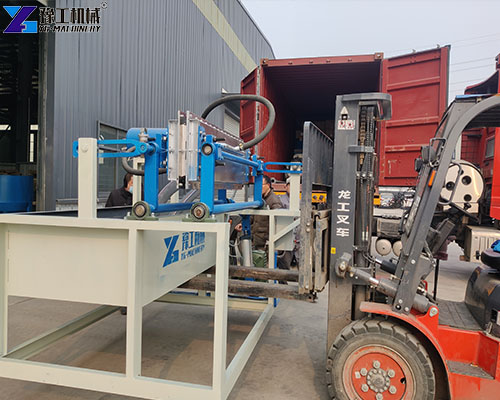
- Full export documentation. Customs compliance, packing list, commercial invoice, certificate of origin.
- Pre-shipment testing. Each machine is tested with paper and water before shipping.
- Remote installation and training. Video guidance, manuals, and live support for setup and operation.
- Spare parts availability. Molds, vacuum pumps, screens, transfer components, heating elements—stocked and ready.
Final Takeaway
Egg tray manufacturing machine is a waste-to-value investment. Choose the wrong capacity, and you can’t meet orders, or you overpaid for unused capacity. Choose the wrong drying method, and you’re spending too much on energy or labor. Choose the wrong molds, and you’re limited to one product.
The right machine matches your production target, your drying conditions, and your product mix.
We build exactly that. No mismatched specs. Just reliable equipment from a supplier who supports you after delivery.
Need the right egg tray manufacturing machine for your operation?
Tell us:
- Your daily production target (pieces per day)
- Your local weather and available space for drying
- What products you want to produce
We’ll recommend the right model and drying configuration—no upsell, just the correct fit.
Turn waste into revenue. Produce trays. Grow your business.
Phone / WhatsApp / WeChat: +86 159 3715 3321