You want to start embroidering—or scale up what you’re already doing. But the options are overwhelming. Mini machines. Single head. Two heads. Four, six, eight heads. Different needle counts. Different working areas. And prices that range from affordable to “is this really necessary?”
A garment embroidery machine can transform your production. It adds value to plain products, opens new revenue streams, and makes your workshop more competitive. But buy the wrong configuration—too many heads, too few needles, the wrong voltage—and you’ve wasted budget on a machine that doesn’t fit your actual work.

What Is A Garment Embroidery Machine?
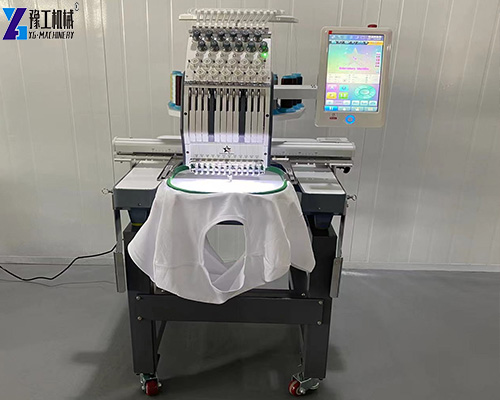
It’s a computer-controlled sewing machine that stitches patterns, logos, and designs onto fabric. Instead of doing it by hand—slow, inconsistent, impossible at scale—you load a digital design, set up the fabric, and the machine does the rest.
What can you embroider?
- Finished garments (shirts, polos, jackets)
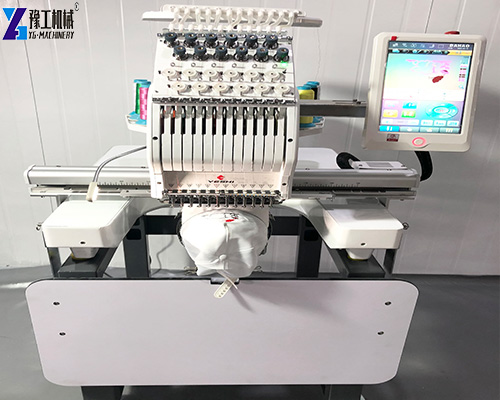
- Hats and caps
- Cut pieces (fabric panels before assembly)
Different configurations handle different product types. A basic garment embroidery machine works well for finished goods. But cut pieces—often called “Cut pieces” in Chinese manufacturing—may need special handling depending on the machine type.
What’s the difference between head counts?
Each head is an independent stitching unit. One head embroiders one item at a time. Two heads do two items simultaneously. Six heads do six. You get the idea.
More heads = higher output per hour. But also higher cost, more floor space, and more complex operation.
What about needle count?
Needles = colors. A 12-needle machine holds 12 spools of thread in different colors. The machine switches between them automatically as the design requires. Fewer needles mean fewer color changes—or more manual intervention.
So when someone asks: “How many injections are needed?” — they’re really asking: “How many colors can you run without stopping?”
Which Configuration Fits Your Business?
This is the core decision. And it depends on three things: your typical order size, your product type, and your market.
Mini and Single-Head Machines
Best for: Startups, sample makers, small-batch custom work, repair shops.
One head. One item at a time. Perfect for learning the craft, running test runs, and taking small custom orders. Also great for workshops that do hats and small accessories, where you change setups frequently.
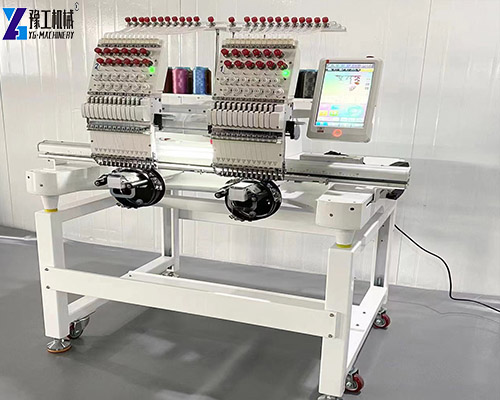
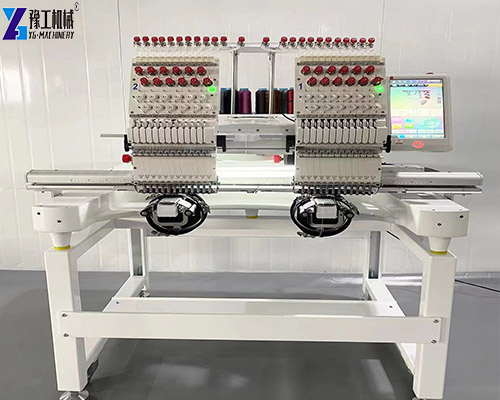
Two-Head Machines
Best for: Growing workshops, consistent small-batch orders, versatility.
Two heads mean double the output of a single-head garment embroidery machine without double the complexity. You can still run different designs on each head if needed. Good balance of cost and capacity.
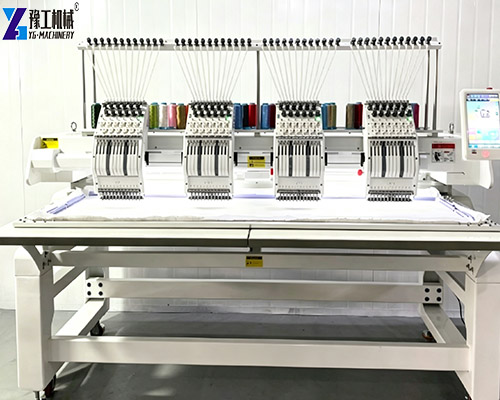
Four-, Six-, and Eight-Head Machines
Best for: Production shops, contract embroidery, bulk orders.
This is where a computerized embroidery machine for sale starts paying serious dividends. Four, six, or eight heads running simultaneously. High throughput. Consistent quality across every piece.
Common markets: Peru, Argentina, Brazil, Mexico—and other regions where apparel manufacturing and custom embroidery are active industries.
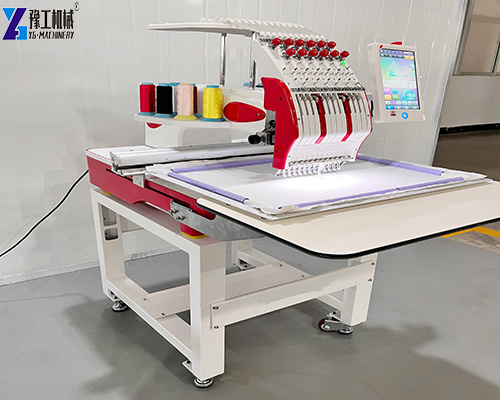
Good Vs. Bad: What To Look For In A Garment Embroidery Machine?
Not all machines deliver the same results—even if the spec sheet looks similar.
The Low-Quality Ones (What to Avoid)
Cheap computer control. The brain of the machine glitches, skips stitches, or loses pattern memory. You spend hours troubleshooting instead of producing.
Sluggish speed. Advertised at 1000 RPM but struggles to reach it. Embroidery takes longer, and productivity drops.
Flimsy frame construction. The machine shakes during high-speed operation. Stitches become uneven, and parts wear out faster.
Unstable voltage handling. Some markets run 110V/60Hz. Others use 220V/50Hz. A poorly built industrial embroidery machine for sale might not handle both properly—or worse, the supplier doesn’t confirm your voltage before shipping.
The High-Quality Ones (What Matters)
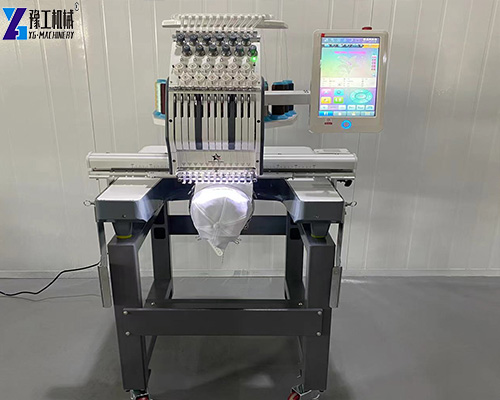
Reliable computer system. A proven controller—like the DAHAO A15—with ample pattern memory (200 million stitches) and storage for hundreds of designs. You upload designs, set parameters, and run production with confidence.
Consistent top speed. 1000 RPM that actually delivers. Fast, clean stitching, order after order.
Solid build. Stable frame, precise mechanisms, quiet operation. The machine doesn’t vibrate itself loose.
Flexible power compatibility. 110V/60Hz or 220V/50Hz—your choice. The supplier verifies before shipping so you don’t get a doorstop.
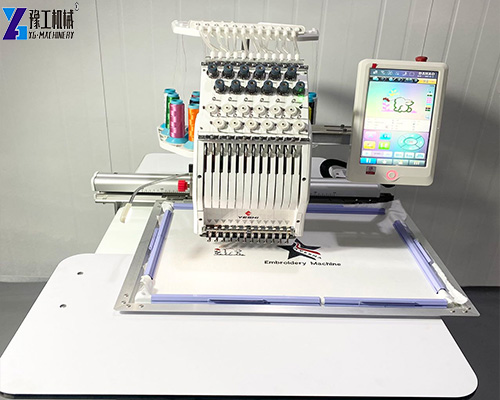
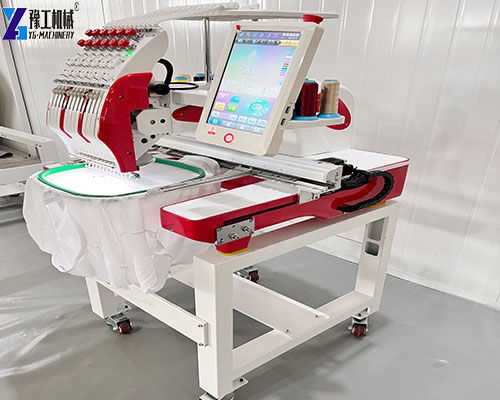
Our Machines: Clean, Capable, Configured For You
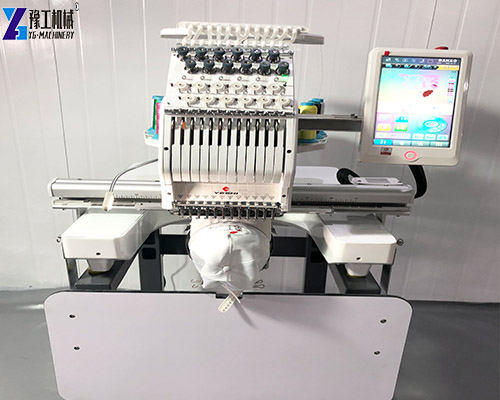
We manufacture garment embroidery machines that are straightforward, reliable, and built for real workshops.
Clear Configurations
We make choosing simple:
| Model | YG-1201CT | YG-1202CT | YG-1203CT |
| Needles | 9/12/15 needles | 12needles | 9/12/15 needles |
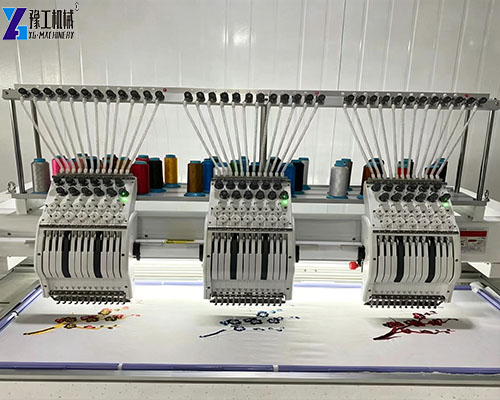
| Head | 1 head | 2 head | 3 head |
| Working area | 360*510mm | 400*500mm | 400*450mm |
| Max Speed | 1000RPM | 1000RPM | 1000RPM |
| Computer | DAHAO A15 | DAHAO A15 | DAHAO A15 |
| Package size | wooden case 92*88*85cm | wooden case 1.37*1.12*0.92m | wooden case 2.07*1.12*0.98m |
| Gross weight | 210KG | 420KG | 690KG |
| Maximum number of stitches | 5 million needles | ||
| Number of patterns | 500pcs | ||
| Memory pattern capacity | 200 million needles | ||
| Electricity | 110V/60Hz or 220V/50Hz | ||
And we offer 4-head, 6-head, and 8-head models beyond those shown—same quality, scaled for production.
DAHAO A15 Controller
Industry-proven computer system. Runs designs smoothly. Stores up to 500 patterns and 200 million stitches. Reliable, user-friendly, and backed by years of real-world use.
Wooden Case Packaging for Safe Shipping
Each industrial embroidery machine for sale is securely packed in a reinforced wooden case. Dimensions and weights are clearly documented—no surprises at customs, no hidden shipping costs.
Voltage Flexibility
110V/60Hz or 220V/50Hz available. Tell us your local standard, and we ship accordingly.
Up to 5 Million Stitches Between Maintenance
That’s the design limit on stitch count. You get long, uninterrupted production runs before routine service is needed.
One-Stop Export Service For Overseas Buyers
We know that buying a garment embroidery machine from overseas can feel risky. Here’s how we make it straightforward:
- Free configuration guidance. Tell us your product type, typical order volume, and target market. We recommend the right head and needle configuration—not the most expensive one, the right one.
- Full export documentation. Customs clearance, shipping compliance, wooden case packaging—all handled.
- Factory testing before shipping. Every machine is tested for stitching accuracy, speed consistency, and software function before it leaves.
- Remote setup and training. Video guidance, operation manuals, and live support to get you running quickly.
- Genuine spare parts available. Needles, bobbins, caps, and electronic components—stocked and ready to ship.
- Warranty coverage. One-year warranty with long-term support after.
Final Takeaway: Match the Machine to Your Work
A computerized embroidery machine for sale with too few heads won’t meet your deadlines. One with too many heads eats your budget for no reason.
The right garment embroidery machine fits your product type, matches your typical order volume, runs on your local voltage, and has the needle count your designs actually need.
We build exactly that. No over-engineering. No cutting corners. Just solid embroidery equipment from a supplier who answers questions—before and after the sale.
Ready to choose the right garment embroidery machine?
Tell us:
- What products do you embroider? (garments, hats, cut pieces)
- How many pieces per day or week?
- What’s your local voltage?
We’ll give you a clear, no-obligation recommendation—and help you avoid the expensive mistakes that cost other buyers time and money.
Phone / WhatsApp / WeChat: +86 159 3715 3321
Stitch smarter. Produce faster. Grow your business.