You need to produce chain link fencing. Maybe for highway barriers. Maybe for agricultural enclosures. Maybe for construction sites, sports fields, or industrial yards. The demand is steady. The product is simple—but the machine that makes it? That’s where choices get tricky.
A chain link fence machine is a specialized piece of equipment. It takes wire and forms it into the diamond-pattern mesh that everyone recognizes. But not all machines are the same. Wire diameter, mesh size, width, production speed, and edge type all vary. Pick the wrong configuration, and you’ll struggle with output, waste wire, or produce fencing that doesn’t meet spec.
This article explains it all in plain language. No technical overload. Just practical decisions based on what you want to produce.

What Is A Chain Link Fence Machine?
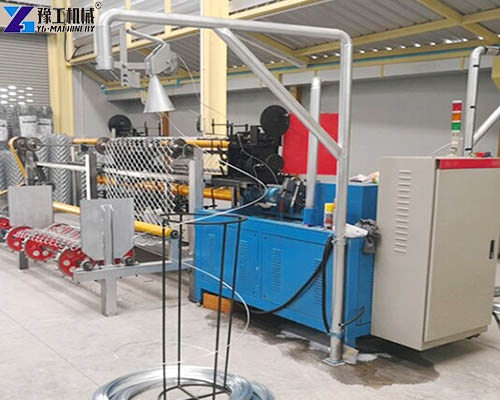
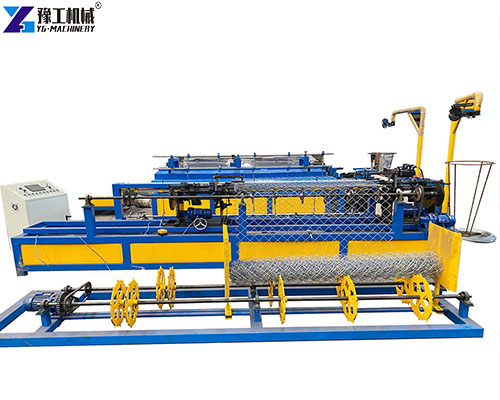
Think of it as a wire-forming production line. Coiled wire feeds into the machine. The machine straightens the wire, bends it into a continuous zigzag pattern, and weaves the zigzags together to form the familiar diamond mesh. The mesh then rolls up into a finished roll of fencing.
The process is continuous and largely automated. One operator can manage the entire production run.
What makes a chain link fence machine different from other wire machines?
- It produces the distinctive diamond-shaped openings
- The wire is woven, not welded (so it’s flexible, not rigid)
- Edges can be knuckled (smooth), twisted (sharp), or one of each
What products come off a wire mesh welding machine?
- Highway and road barriers
- Farm and livestock enclosures
- Garden and landscaping fencing
- Construction site safety fencing
- Tennis courts and sports field enclosures
- Industrial perimeter fencing
A wire mesh welding machine produces welded wire mesh—rigid panels where wires are spot-welded at intersections. That’s a different product for a different application. Our machine produces woven chain link fencing, which is more flexible, easier to roll, and better suited for perimeter and barrier applications.
A wire fence making machine is the broader category. It includes both welded and woven fencing machines. Our machine falls firmly in the woven category—but the production process is efficient, and the output is consistent.
What To Look For In A Chain Link Fence Machine?
Specs can look similar. Build quality determines whether the machine runs for years or breaks down every week.
What to Avoid
- Flaky wire straightening. The wire must be perfectly straight before forming. Poor straighteners produce inconsistent mesh, wavy edges, and rolls that are rejected.
- Weak weaving mechanism. The forming heads must withstand continuous operation. Cheap mechanisms wear out fast, producing uneven mesh and frequent downtime.
- Inconsistent tension control. Uneven tension produces one side tighter than the other. Finished rolls curl, lie unevenly, and are hard to install.
- No edge style flexibility. Some machines lock you into one edge type. If your customer wants knuckled and twisted, you can’t produce it.
- Poor spare parts support. Wire fence machines have many wear parts—forming heads, dies, cutters. If replacements aren’t available, the machine stops.
Quality Indicators
- Heavy-duty construction. Thick steel, robust bearings, precise alignment. The machine runs for years without slop or play.
- Reliable forming heads. Consistent mesh patterns, hour after hour. No sudden shifts in mesh size.
- Adjustable speed and tension. Fine-tune production for different wire gauges and mesh sizes.
- Edge style versatility. The machine handles knuckled, twisted, or mixed edges as needed.
- Availability of consumables. You can source forming heads, straightening rolls, and other wear parts when needed.

The Two Models: Which One Fits Your Output?
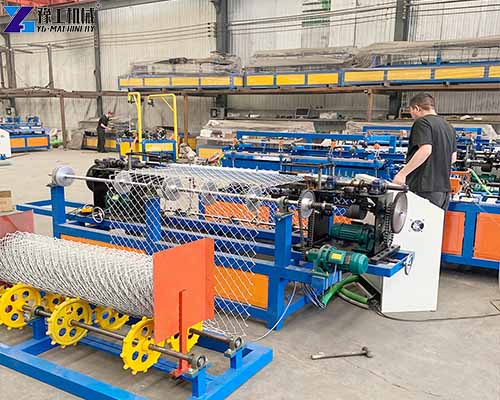
We offer two standard configurations. Choose based on your desired production speed and wire/mesh range.
| Model | YG-20-100 | YG-25-80 |
| Wire diameter | 1.6-4mm | 2-4mm |
| Mesh size | 20-100mm | 25-100mm |
| Mesh width | 0.5-4m | 0.5-4m |
| Speed | 70-80m²/h | 120-180m²/h |
| Mesh length | 30m, adjustable freely as per your request | |
| Mesh side | Knuckled and twisted, or knuckle, or twisted | |
| Raw material | Galvanized wire, PVC-coated wire, etc. | |
| Machine size | 4.2*2.2*1.7m | 6.7*1.43*1.8m |
| Weight | 2000kg | 4200kg |
| We can design the machine according to your wire diameter, mesh hole size, mesh width, and voltage. | ||
YG-20-100 — Entry to Mid-Level Production
Best for: New operations, smaller workshops, moderate daily output. Good for agricultural fencing, garden enclosures, and standard construction fencing.
Why choose this model: Lower investment, smaller footprint, lighter weight. Still produces quality fencing at a reliable pace.
YG-25-80 — Mid to High-Volume Production
Best for: Established operations, higher-volume orders, industrial and highway fencing. Much faster output per shift.
Why choose this model: Double the speed of the YG-20-100. Heavier construction. More throughput means more fencing per day and faster payback.
Key features across both models:
- Adjustable mesh size. Dial in the specific opening you need for each production run.
- Variable-width capability. Produce fencing from 0.5 m to 4 m wide on the same machine.
- Edge flexibility. Knuckled, twisted, or one of each—choose per order.
- Material versatility. Galvanized wire, PVC-coated wire, and other materials.
- Custom electrical configuration. We match the machine to your local voltage—no power conversion issues.
- Full roll output. Finished fence rolls up automatically, ready for packaging.
Customization capability: We can design the machine according to your specific wire diameter, mesh hole size, mesh width, and voltage. You’re not locked into a standard configuration that doesn’t quite fit your market.
Common Mistakes Buyers Make
Avoid these costly errors.
Mistake 1: Choosing speed over quality. A faster machine that produces inconsistent mesh isn’t a bargain. Rejected rolls cost money and time. Speed matters—but consistent quality matters more.
Mistake 2: Overlooking the wire diameter range. If your market uses 1.6 mm wire and you buy a machine that starts at 2 mm, you can’t serve that market. Know your wire range before you buy.
Mistake 3: Ignoring edge style requirements. Some customers specifically request knuckled and twisted edges. If your machine only does one edge style, you lose those orders.
Mistake 4: Underestimating weight and floor space. These machines are heavy and long. The YG-25-80 weighs over 4 tons and spans 6.7 meters. Make sure your floor can support it and your shop has the space.
Mistake 5: Buying from a supplier who disappears after delivery. A wire fence making machine has wear parts. You need replacement forming heads, dies, and other consumables. Choose a supplier who stocks these parts and answers questions.


Our Service Package
We support overseas buyers with a complete service package.
- Application match. Tell us your target wire diameter, mesh size, width, and desired speed. We recommend the right machine.
- Voltage customization. We build the electrical system to match your local power supply.
- Export documentation. Full customs compliance, packing list, commercial invoice.
- Factory testing. Each machine is run-tested with actual wire before shipping.
- Remote installation support. Video guidance, manuals, and live troubleshooting.
- Spare parts availability. Forming heads, straightening rolls, cutters, dies—stocked and ready.
- Ongoing technical support. For the life of the machine.
Final Takeaway
A chain link fence machine is a long-term production asset. Choose the right wire range, mesh range, and speed to match your market. Choose quality construction that runs reliably shift after shift. Choose a supplier who supports you after the sale.
We build machines that hit that mark. No shortcuts. No inflated specs. Just solid equipment for real fencing production.
Need the right chain link fence machine for your shop?
Tell us:
- Your target wire diameter
- Your typical mesh size
- Your desired mesh width
- Your daily production target
We’ll recommend the right model—no upsell, just the right fit.
Phone / WhatsApp / WeChat: +86 159 3715 3321
Produce a quality fence. Meet your orders. Grow your business.