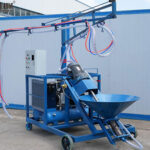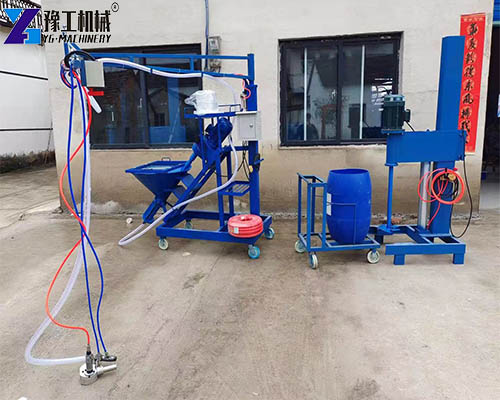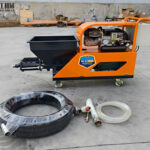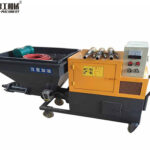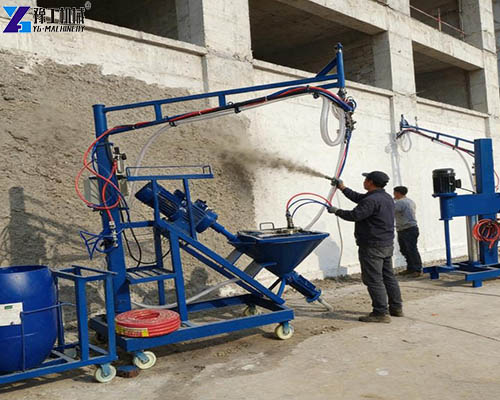
Producing GRC components manually can become difficult when orders increase. Manual fiber placement, mortar application, and shaping can lead to inconsistent production speed, uneven fiber distribution, and higher labor requirements.
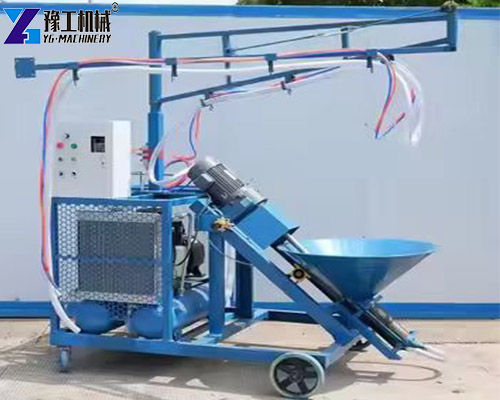
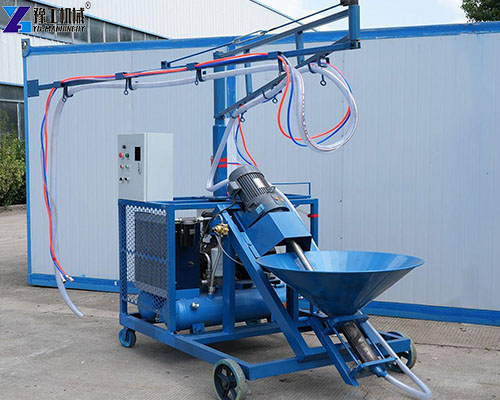
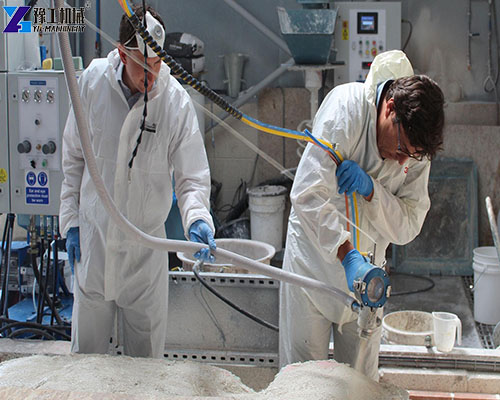
GRC sprayer is designed to automate the mixing, conveying, fiber cutting, and spraying process for Glass Fiber Reinforced Concrete. It can spray GRC mixtures onto molds or surfaces to produce architectural and decorative components more efficiently.
But which machine is suitable for your production?
The answer depends on output, working pressure, working area, motor power, required air supply, and the type of GRC products you manufacture.
Find The Right Solution For Your Job
GRC Sprayer Technical Parameters
The screw GRC shotcrete machine uses a 380V three-phase power supply and a 2.2-4.0 kW stepless speed regulation motor. Its rotating speed can be adjusted from 20 to 200 rpm while the machine is running.
| Parameter | Specification |
| Machine Name | Screw GRC Shotcrete Machine |
| Voltage | 380V, 3-phase |
| Frequency | 50Hz |
| Motor Power | 2.2-4.0kW |
| Rotating Speed | 20-200rpm |
| Horizontal Boom Radius | 4.5m |
| Delivery Capacity | 300-1600kg/h |
| Capacity | 60L |
| Working Pressure | 0.6-0.8MPa |
| Productivity | 200-400m²/h |
| Machine Size | 1400 × 1000 × 2200mm |
| Machine Weight | 220kg |
The combination of adjustable speed, 300-1600kg/h delivery capacity, and 0.6-0.8MPa working pressure gives buyers several specifications to consider when matching the machine to their production requirements.
Receive Detailed Parameter List
GRC Spray Equipment: What Does It Actually Process?
GRC spray equipment is used for Glass Fiber Reinforced Concrete, which combines cement, sand, water, and short glass fibers.
The basic production process is:
- Prepare the cement, sand, water, and short glass fibers.
- Continuously convey the mortar toward the spray gun.
- Cut the alkali-resistant glass fibers simultaneously.
- Mix the mortar and fibers at the spray gun.
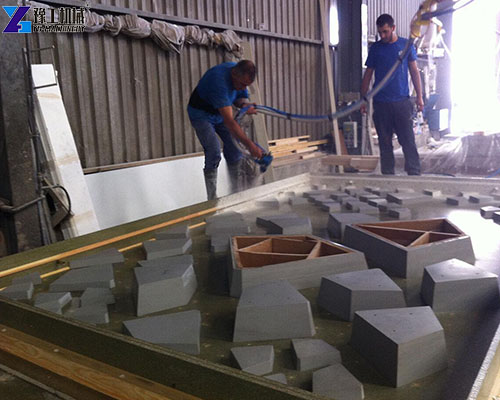
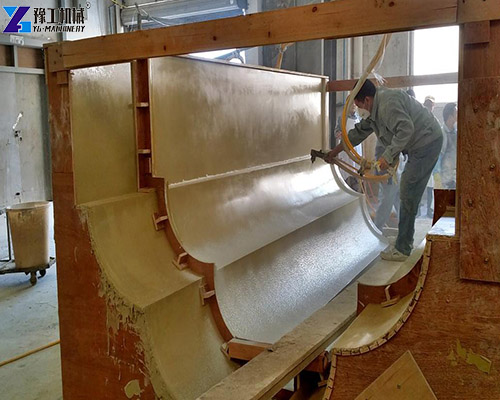
- Spray the mixture onto the mold surface under pressure.
- Apply the material in layers and compact it to form the component.
This process allows mortar and glass fiber to be sprayed together, helping improve the consistency of GRC component production.
Get Your Project‑Specific Quote
GRC Spraying Machine: How Does the Working Process Improve Production?
A GRC spraying machine combines material conveying and fiber handling into one production process.
Compared with manual fiber placement and mortar application, the machine addresses several common production problems, including low manual spraying efficiency, uneven fiber distribution, unstable component quality, rising labor costs, and material waste.
One important feature is synchronized glass fiber cutting and spraying.
The fiber is automatically cut and mixed with the mortar during spraying.
GRC Sprayer vs Mortar Sprayer: What Is the Difference?
The main difference is the material being processed.
| Factor | GRC Sprayer | Mortar Sprayer |
| Main Material | Cement + sand + glass fibers | Cement + sand |
| Fiber Handling | Synchronized cutting and spraying | Not designed for short fibers |
| Application | GRC panels, columns, thin shells | Plastering, rendering, wall coatings |
| Production Focus | GRC component manufacturing | General mortar application |
| Complex Decorative Components | Suitable | More limited |
A GRC sprayer is therefore more appropriate when glass fiber reinforcement is part of the production process.
For companies producing decorative GRC components, choosing equipment specifically designed around fiber handling can be more practical than adapting a standard mortar spraying system.
Find The Right Solution For Your Job
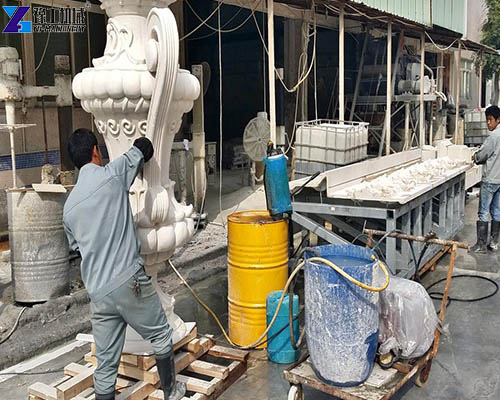
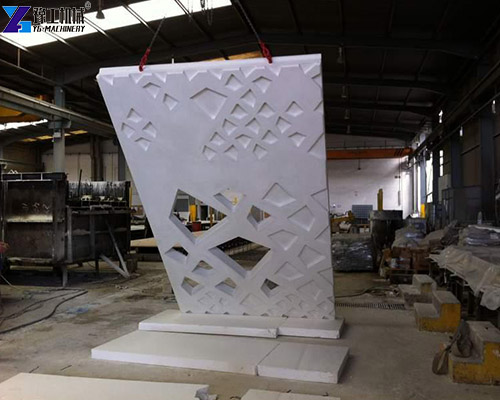
GRC Spray Equipment: What Products Can It Make?
GRC products can range from relatively simple architectural panels to complex decorative shapes.
- Exterior wall panels
- Decorative lines
- Roman columns
- Reliefs
- Artificial rock
- Garden and landscape components
- Curtain wall panels
- Sculptures
- Flower pots
- Customized irregular components
The equipment can therefore be used in architectural decoration, precast construction, landscape projects, and customized GRC manufacturing.
For manufacturers handling complex molds, the ability to spray irregular components is particularly useful.
GRC Spraying Machine: Which Specifications Should You Check?
When comparing the machine, do not focus only on motor power.
1. Delivery Capacity
The supplied model has a delivery capacity of 300-1600kg/h.
A higher material delivery requirement may make output capacity an important selection factor.
2. Working Pressure
The listed working pressure is 0.6-0.8MPa.
Pressure affects the spraying process, so buyers should compare the machine specification with their production requirements.
3. Working Area
The horizontal boom radius is 4.5m.
This specification is useful when considering the mold arrangement and operating area around the machine.
4. Motor Power
The machine uses a 2.2-4.0kW stepless speed-regulation motor.
The motor configuration should be considered together with the required production capacity and available factory power.
5. Compressed Air
The product information recommends matching the 4kW and 2.2kW machines with an 11kW screw air compressor.
This means buyers should consider the supporting air-compressor system when planning the complete production setup.
Get Your Project‑Specific Quote
GRC Sprayer Applications: Where Is It Most Useful?
A GRC sprayer can be considered for several types of manufacturing businesses.
1. Architectural Decoration
GRC component manufacturers can use it for exterior decorative panels, architectural lines, columns, and other decorative elements.
2. Precast Construction
Precast factories can use GRC equipment for curtain wall and decorative panel production where consistent forming is important.
3. Landscape Engineering
Landscape companies can produce sculptures, flower pots, artificial rocks, and other irregular components.
4. Building Material Manufacturing
Building material manufacturers can use the machine for continuous GRC panel production and to reduce dependence on manual production.
Find The Right Solution For Your Job
GRC Spray Equipment Selection Checklist
Before purchasing equipment, answer these questions:
1. What GRC Products Will You Produce?
Identify whether you mainly manufacture panels, columns, decorative lines, sculptures, landscape components, or irregular products.
2. How Much Material Do You Need to Spray?
Compare your required production rate with the machine’s 300-1600kg/h delivery capacity.
3. Do You Need Automatic Fiber Cutting?
If your production uses glass fiber reinforcement, synchronized cutting and spraying should be included in the selection criteria.
4. What Supporting Equipment Is Available?
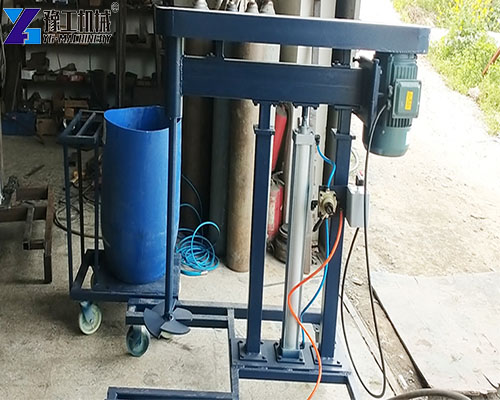
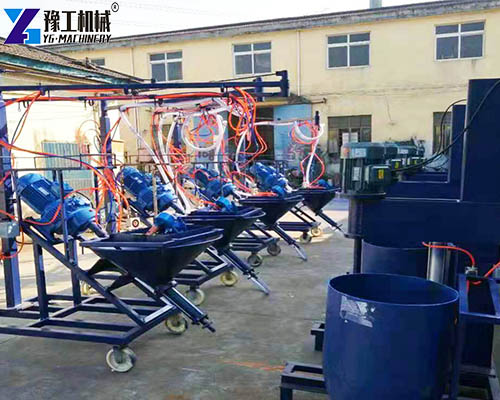
Consider the required mixer, air compressor, and material supply system before confirming the complete setup.
5. What Power Supply Does Your Factory Have?
The listed machine uses 380V, three-phase, 50Hz power, so factory electrical compatibility should be checked before ordering.
GRC Sprayer Final Buying Guide
Choosing the right GRC sprayer starts with the products you need to manufacture rather than simply selecting the machine with the highest output.
First, determine your required production capacity and working area. Then compare working pressure, motor power, rotating speed, fiber handling, supporting equipment, and available factory power.
The supplied machine provides 300-1600kg/h delivery capacity, 0.6-0.8MPa working pressure, a 4.5m horizontal boom radius, and 200-400m²/h listed productivity.
For GRC manufacturers, the ability to synchronize glass fiber cutting with mortar spraying is an important consideration. It can help reduce manual operations while supporting more consistent production.
The best machine is not necessarily the one with the highest rated capacity. It is the one that matches your GRC product type, production volume, mold design, factory conditions, and supporting equipment.
If you are planning a GRC production project, provide your product type, expected output, available power supply, and required working area. These details can help determine a suitable machine configuration.