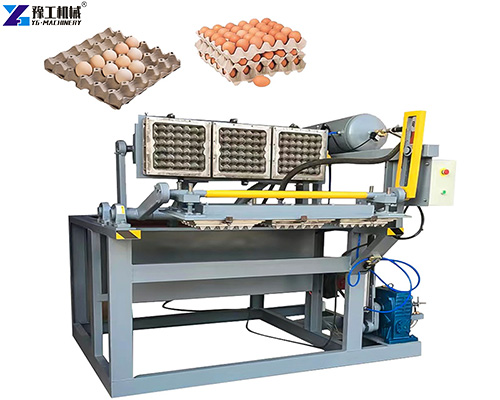
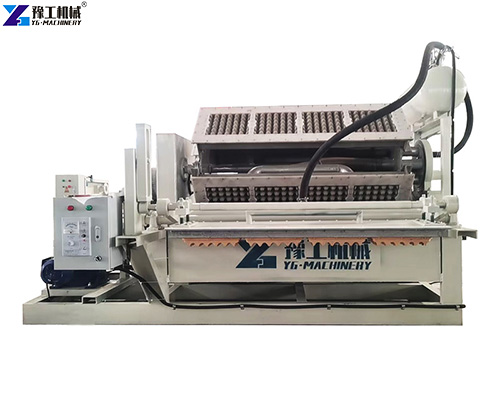
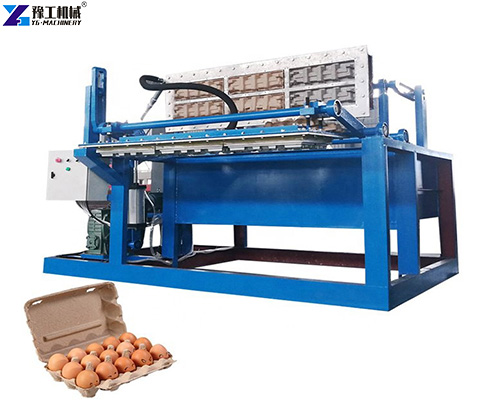
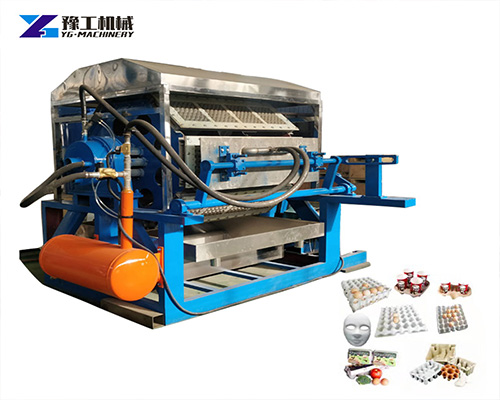
Molded pulp production lines are specialized industrial systems that convert waste paper (newspapers, cartons, printing scraps, and paper mill tailings) into biodegradable egg trays, egg boxes, shoe linings, and protective packaging for electronics. The current global boom in sustainable packaging demand and plastic reduction policies has driven a surge in demand for pulp molding equipment. YG Machinery has launched six fully automatic molded pulp production line models: YG-1500 (4×1), YG-2500 (3×4), YG-3000 (4×4), YG-4000 (4×8), YG-5000 (5×8), and YG-7000 (6×8). They feature PLC+touchscreen full automation, vacuum forming, compressed air demolding, multi-layer drying systems, and zero wastewater discharge. They offer extremely low labor costs (over 60% saving compared to semi-automatic machines), significant long-term operating cost advantages, energy-efficient motors, corrosion-resistant molds, and genuine brand electrical components. They are suitable for production scales ranging from 1500 to 7000 pieces per hour – from small poultry farms to large industrial packaging suppliers – and are a highly reliable choice for businesses seeking both environmental compliance and profitability.
But with six models and many semi-automatic or manual alternatives still on the market, how do you choose the right one? In this head-to-head comparison, we pit YG Machinery’s six fully automatic molded pulp lines against each other and against semi-automatic machines, focusing on hourly capacity, power consumption, drying method, floor space, and project suitability.
Technical Specifications Of YG Molded Pulp Production Line Models
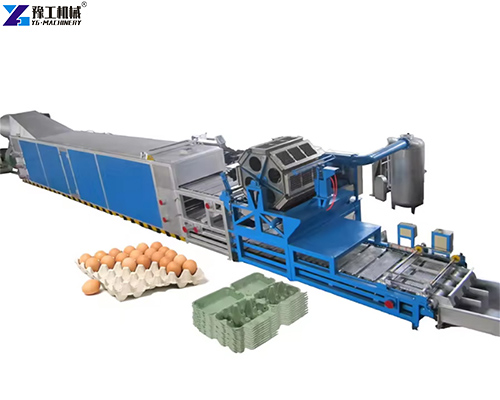
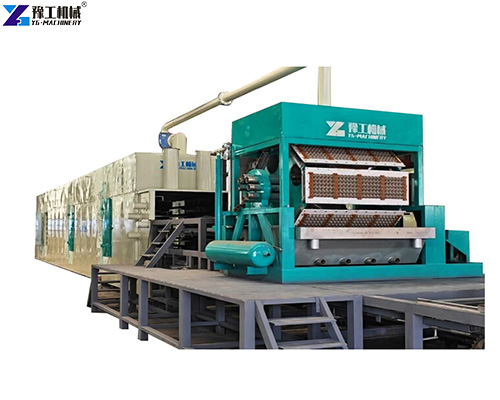
All six models are fully automatic systems designed for producing egg trays and other molded pulp products from waste paper. Below are the core parameters.
| Model | Capacity (pcs/h) | Power (KW/h) | Paper Consumption (kg/h) | Water Consumption (kg/h) | Drying System | Weight (kg) | Dimensions (main machine, mm) |
| YG-1500-4×1 | 1500 | 38 | 120 | 240 | Natural drying | 3000 | 2800×2200×1900 |
| YG-2500-3×4 | 2500 | 55 | 200 | 400 | Multi-layer | 4000 | 2900×1800×1800 |
| YG-3000-4×4 | 3000 | 60 | 240 | 480 | Multi-layer | 4800 | 3250×1800×1800 |
| YG-4000-4×8 | 4000 | 95 | 320 | 640 | Multi-layer | 7000 | 3250×2300×2500 |
| YG-5000-5×8 | 5000 | 95 | 400 | 800 | Multi-layer | 8000 | 3300×2300×2500 |
| YG-7000-6×8 | 7000 | 120 | 480 | 960 | Multi-layer | 10000 | 3400×2300×2500 |
All models use waste paper as raw material, with water recycling and zero wastewater discharge. The YG-1500 relies on natural sunlight drying, while all larger models include multi-layer metal drying lines for rapid, all-weather production.
Comparison Of YG Fully Automatic And Semi-Automatic Models
Many small businesses start with semi-automatic egg tray machines because of the lower upfront cost. But the long-term trade offs are significant. Let us break down four critical dimensions across YG’s lineup and compare them to semi-automatic alternatives.
Hourly Capacity and Labor Cost: A semi-automatic machine produces 500-800 pieces per hour and requires 4-5 operators. YG’s molded pulp production line produces 1500-7000 pieces per hour with only 1-2 operators. The YG-7000 produces 14 times more per hour than a typical semi-auto unit, while cutting labor by over 60%.
Drying Method and Production Speed: Semi-automatic machines almost always rely on natural sun drying (2-3 days depending on weather). This ties up floor space, depends on the climate, and risks mold growth on rainy days. YG’s models (except YG-1500) use multi-layer metal drying lines with hot air circulation – drying time is 20-40 minutes. This means you can produce continuously regardless of the weather, and finished trays are ready for packing within an hour. The YG-1500 is designed for very low-budget startups in sunny climates; it still uses vacuum forming and auto demolding, but drying is natural.
Power Consumption and Energy Efficiency: Semi-automatic machines often use inefficient motors and have no energy-saving features. YG’s fully automatic lines use energy-efficient motors and high-efficiency heating elements. While total power consumption is higher, the cost per thousand trays is much lower because of the high output. For example, the YG-7000 consumes 120 KW/h to produce 7000 trays – about 17.1 kWh per 1000 trays. A semi-automatic machine producing 7000 trays would take 8-10 hours and consume 30-40 KWH per 1000 trays, plus more labor. YG’s per-unit energy cost is 30-40% lower.
Mold Quality and Product Consistency: Semi-automatic machines use simple molds with weak vacuum suction, resulting in uneven thickness and rough edges. YG’s pulp molding system uses precision-machined aluminum or brass molds with uniform vacuum holes, producing trays with smooth surfaces, consistent wall thickness, and clean edges. The PLC-controlled transfer mold ensures accurate demolding without tearing. This is critical for customers who need export-quality egg trays or industrial packaging.
Core Advantages Of YG’s Fully Automatic Molded Pulp Lines Over Semi-Automatic Machines
Why do serious packaging producers switch to YG’s automatic egg tray production equipment? Four unbeatable strengths.
PLC + Touchscreen Full Automation: The entire process – pulping, suction molding, transfer demolding, drying, and product conveying – is controlled by a PLC system with a user-friendly touchscreen. Once you set parameters, the machine runs unattended. Semi-automatic machines require constant manual handling of wet trays, leading to breakage and inconsistent quality.
Zero Wastewater and Full Water Recycling: YG’s closed-loop water system recycles excess water from the molding step back to the storage tank. The only water loss is evaporation during drying. This meets strict environmental regulations and saves significant water costs. Many semi-automatic machines discharge wastewater, risking fines.
Fault Diagnosis and Easy Maintenance: The control system monitors each component in real time and automatically alarms when a fault occurs. The display shows exactly which part needs attention. Wear parts are highly interchangeable and easy to replace. YG provides a detailed list of high-wear components with estimated lifespans, so you can stock spare parts proactively.
Versatile Product Capability: With simple mold changes, the same machine produces fruit trays (apple, orange, pear), seedling trays, industrial liners, and disposable tableware. This flexibility lets you respond to market demand without buying new equipment. Semi-automatic machines rarely offer such versatility.
Which Molded Pulp Production Line Model Should You Choose?
Based on our comparison, here is the straightforward advice.
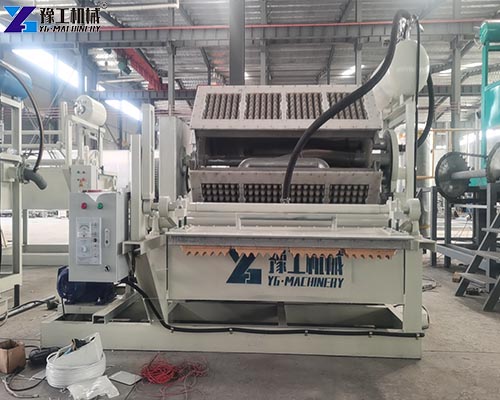
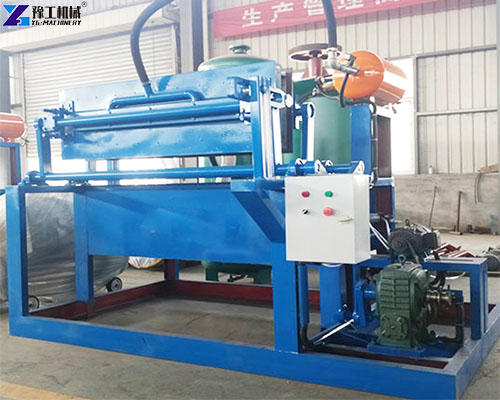
Choose YG-1500 (4×1) if: You have a very tight budget, operate in a sunny climate, and produce under 1500 trays per hour. Natural drying saves initial cost, but you need outdoor space and accept a slower turnaround. Ideal for small farms or family workshops.
Choose YG-2500 or YG-3000 if: You run a medium-sized egg farm or local packaging supplier. You need multi-layer drying for year-round production. The 55-60 kW power consumption is manageable, and the 4000-4800kg weight fits standard factory floors. Most popular models for first-time buyers.
Choose YG-4000 or YG-5000 if: You supply multiple farms or have export orders. These models offer the best output-to-power ratio. The 4×8 and 5×8 mold configurations provide efficient forming cycles.
Choose YG-7000 if: You run a large-scale packaging factory serving industrial clients. At 7000 pcs/h, this is the highest capacity in its class. The 120 kW power is offset by the lowest per-unit labor and energy cost. Ideal for dedicated pulp molding operations.
Avoid semi-automatic machines if: You plan to produce more than 2000 pieces per day, or if your region has strict environmental regulations on wastewater. The labor cost and quality inconsistency simply are not competitive.
Recommend A Trustworthy Manufacturer Of Molded Pulp Production Line
Stop losing money on slow, labor-intensive semi-automatic methods. YG Machinery – has supplied molded pulp production lines to packaging manufacturers in over 35 countries. Our team provides 24/7 technical support, custom mold design, installation guidance, and spare parts stocking.
We have successfully exported paper egg tray forming machines to Ghana. For your reference: Our Ghanaian customer purchased our YG-2500 paper egg tray forming machine, which reduced production costs by 50% compared to imports and eliminated inventory shortages, successfully solving the problems of high costs and unstable supply of imported egg trays.
Contact us now for a free production consultation, a customized quote based on your target hourly output, or a live video demonstration. Take the first step toward profitable, eco-friendly packaging that customers demand.