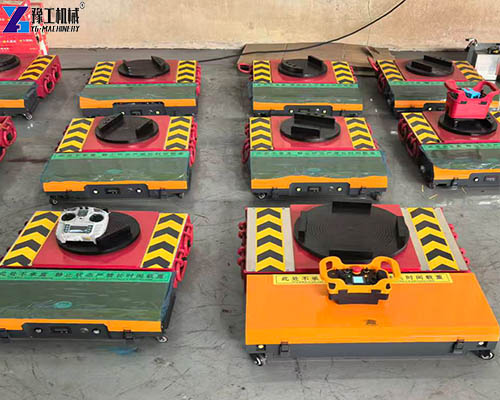
Moving heavy industrial equipment is not always a job for a forklift or overhead crane. When the equipment needs to be moved through a narrow workshop, positioned close to the floor, or turned within limited space, a low-profile electric transport solution can be more practical. Load moving skates are designed for this type of internal material handling. They use battery power and remote control to move heavy loads over relatively short distances, making them suitable for machinery relocation, equipment installation, factory moves and heavy component handling.
YG Machinery provides electric machinery skates in different load ranges, including 10T, 20T, 25T, 30T, 40T, 50T and 60T models. Depending on the equipment weight, dimensions and working conditions, customers can also combine multiple units for larger or irregular loads.
If you are looking for an electric material handling cart for moving CNC machines, molds, transformers or other heavy equipment, the key is not simply choosing the largest capacity. Ground conditions, equipment dimensions, bottom clearance, turning requirements and operating time should all be considered.
Find The Right Solution For Your Job
What Are Load Moving Skates Used For?
Load moving skates are low-profile, battery-powered transport equipment designed to move heavy machinery and industrial loads across a workshop or project site.
Unlike conventional transport equipment that may require considerable turning space, these electric skates are designed around a compact structure and remote-controlled operation.
Typical loads include:
- CNC machines
- Lathes and machining equipment
- Injection molding machines
- Large molds
- Stamping equipment
- Transformers
- Generators
- Pumps and compressors
- Steel components
- Large industrial machinery
The equipment is particularly useful when the load needs to be moved inside a factory or positioned accurately during installation.
For example, a factory relocating a CNC machine may need to move the equipment through a restricted production area. A conventional forklift may require more clearance, while an overhead crane may not be available at every location. A low-profile heavy equipment moving dolly can provide another option for this type of task.
Find The Right Solution For Your Job
Why Use an Electric Material Handling Cart Instead of Traditional Equipment?
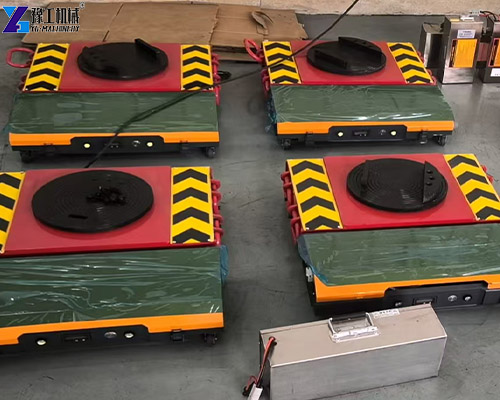
Different heavy-load transportation methods have different limitations. The right solution depends on the working environment.
| Transport Method | Common Limitation | Electric Skates |
| Overhead crane | Requires suitable lifting structure and operation space | Floor-based movement |
| Forklift | Requires turning space and suitable access | Low-profile design |
| Manual machinery skates | Requires more manual effort | Battery-powered drive |
| Conventional trailer | Less flexible for precise indoor positioning | Low-speed directional control |
| Fixed transport system | Less flexible for temporary relocation | Mobile and reusable |
For indoor machinery relocation, the combination of electric drive, wireless remote control and low-profile construction can make the transportation process more flexible.
This does not mean electric skates replace every forklift, crane or trailer. Instead, they are best considered when the project requires a compact and controllable method for moving heavy loads along the floor.
Find The Right Solution For Your Job
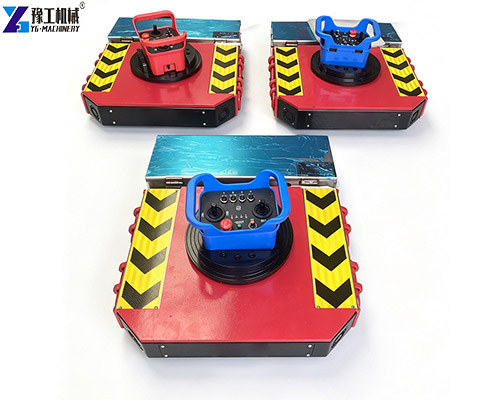
What Makes These Heavy Equipment Moving Skates Different?
Several features are important when moving heavy machinery in industrial environments.
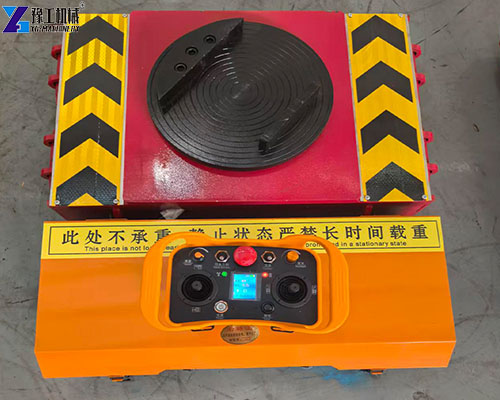
1. Remote Control Operation
The remote-control design allows the operator to control the transporter without standing directly beside the moving load.
Different models can be equipped with C6/C7 remote controllers or industrial remote-control options depending on configuration.
This is particularly useful when the operator needs a clear view of the equipment and travel path.
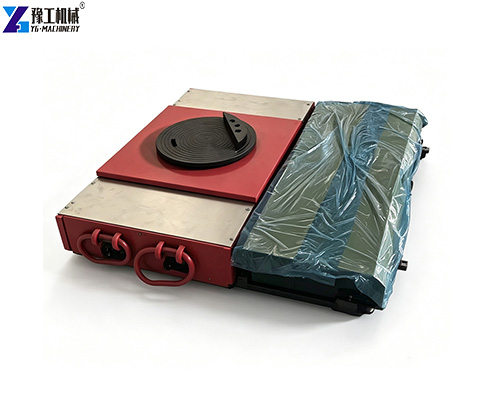
2. Low-Profile Construction
The compact height of the transport unit makes it easier to position the equipment underneath suitable loads.
Depending on the model, the overall height is approximately 145–185 mm, while the overall dimensions increase with load capacity.
This low-profile structure can be useful when equipment has limited clearance underneath.
However, the actual bottom clearance of the customer’s equipment should always be confirmed before selecting a model.
3. 360° Flexible Movement
Industrial workshops do not always provide wide, straight transportation routes.
Load moving skates can be configured for flexible movement in restricted working environments, which can be useful around machinery, production lines and equipment installation areas.
For customers working with long, wide or irregular equipment, multiple skates can also be configured together for coordinated movement.
4. High-Hardness Polyurethane Wheels
The supplied models use high-hardness polyurethane drive wheels in different sizes according to capacity.
For example, the specifications include 80 × 120 mm, 90 × 135 mm and 140 × 140 mm wheel configurations, with the largest model using eight 140 × 140 mm polyurethane wheels.
Wheel selection should be considered together with the actual floor condition and load distribution rather than looking only at the rated capacity.
5. Battery-Powered Drive
The machines use 48V battery systems, with battery capacity varying by model.
The current specifications include configurations from 48V 30Ah on the smaller model to 48V 120Ah on higher-capacity models.
The listed continuous working time ranges from approximately 2–3 hours for the 10T model to 4–5 hours for the 40T–60T models. Actual operating time will depend on load, travel distance, floor conditions, stopping frequency and operating conditions.
Find The Right Solution For Your Job
Can Load Moving Skates Handle Oversized Equipment?
Yes, multiple units can be considered when a single transporter is not suitable for the equipment dimensions or load distribution.
For example, a long industrial machine may require several supporting points rather than one central transporter.
A multi-unit configuration can help distribute the load and coordinate movement.
Before recommending this configuration, the following information should be confirmed:
- Total equipment weight
- Equipment length and width
- Center of gravity
- Bottom clearance
- Required number of support points
- Floor condition
- Travel distance
- Turning requirements
- Required operating method
This is especially important for project-based applications because capacity alone does not determine whether a transporter is suitable.
Find The Right Solution For Your Job
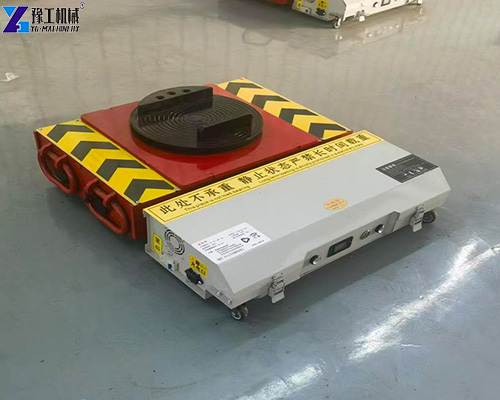
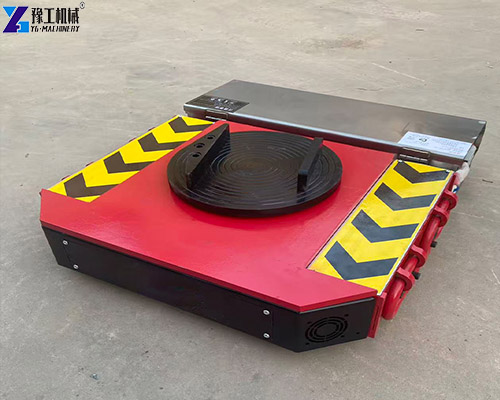
Why Choose YG Load Moving Skates?
YG’s standard product range covers 10T to 60T, with different motors, controllers, battery configurations, wheel sizes and structural specifications across the range.
The main advantages of the product range include:
- 10T–60T standard models
- Battery-powered operation
- Wireless remote control
- Low-profile structure
- Adjustable travel speed
- Polyurethane drive wheels
- Multiple capacity options
- Multi-unit coordinated operation
- Auxiliary wheel configurations
- Customized load-bearing platforms
- Project-based configuration
For non-standard equipment or unusual transportation conditions, the machine can be evaluated according to the customer’s equipment dimensions, weight, floor conditions and movement requirements.
Get Your Project‑Specific Quote
Frequently Asked Questions About Load Moving Skates
Load moving skates are low-profile transport devices used to move heavy machinery and industrial equipment across floors. Electric versions use battery-powered drive systems and remote controls.
The supplied specifications list an adjustable travel speed of approximately 2–10 m/min.
The listed continuous working time ranges from approximately 2–3 hours to 4–5 hours, depending on the model. Actual operating time can vary according to load and working conditions.
Configurations can be adjusted for different project requirements, including auxiliary wheels, remote controls, batteries, wheels, chargers and customized load-bearing platforms.
Get Your Project‑Specific Quote
Need Load Moving Skates for Your Equipment?
The right transporter depends on more than the equipment’s total weight. Equipment dimensions, bottom clearance, center of gravity, floor conditions, travel distance and turning requirements all affect the final configuration.
If you are considering load moving skates, send us the following information:
- Equipment type
- Total weight
- Length × width × height
- Bottom clearance
- Floor material and slope
- Required moving distance
- Turning space
- Whether one or multiple transporters are required
YG can then recommend a suitable model and configuration for your application.
Contact YG Machinery for a load moving skates solution for your heavy equipment.