Lie 1: “You need a separate line for truck tyres and car tyres.”
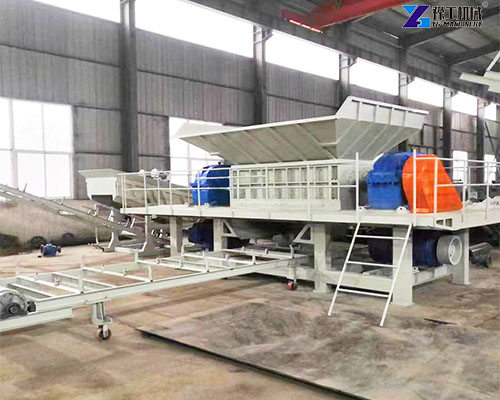
Truth about our tyre recycling production line: The same line handles both. Truck tyres have more steel and thicker rubber. Car tyres have less. Our machines — from the tyre shredder to the magnetic separator — are built to process both. The YG-3 model processes 1‑3 tons per day. The YG-30 processes 30‑35 tons per day. Neither cares whether the input is from a passenger car or a mining truck. A car tyre recycling production line is just a tyre recycling line. The tyres don‘t know the difference.
Lie 2: “Removing the steel wire is difficult and dangerous.”
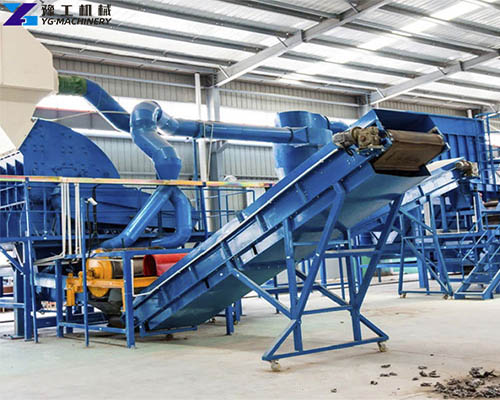
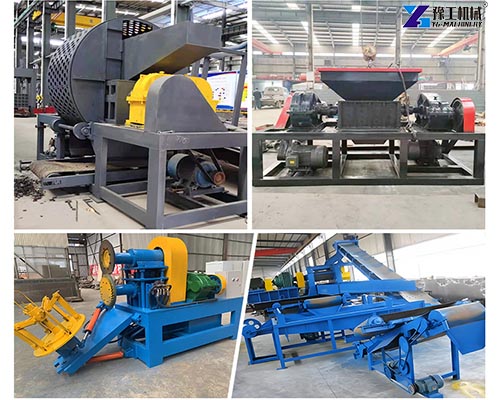
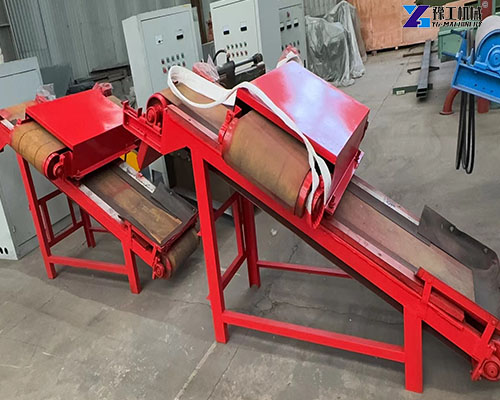
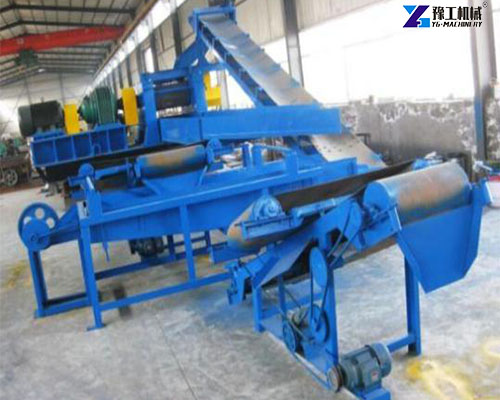
Truth about our tyre recycling production line: Look at the semi-automatic line. First step: bead wire remover. It pulls the steel bead ring out of the tyre bead. Then a tyre cutter slices the sidewall. A strip cutter turns it into strips. A block cutter makes rubber blocks. By the time the rubber reaches the magnetic separator (three‑roller magnetic separator), the steel is already loose. The magnet pulls it out cleanly. No sharp wires flying around. No workers are picking steel out by hand. A car tyre recycling production line that does the separation mechanically is safer and faster.
Lie 3: “Rubber powder lines are too expensive for small operators.”
Truth about our tyre recycling production line: The YG-3 model costs less than a new pickup truck (we don‘t list prices, but you can ask). It processes 1‑3 tons per day. That is roughly 100‑300 car tyres. It uses batch processing — not fully continuous — so the upfront equipment is simpler and cheaper. You get a reactor size of φ1400×4900mm and a total shipped material weight of about 18 tons. For a small workshop, that is manageable. A tyre recycling line does not have to be a million‑dollar plant. Start small. Expand later.
Lie 4: “Rubber crumbs have no real market.”
Truth about our tyre recycling production line: Rubber crumbs (3‑28mm) are sold. They go into:
- Plastic running tracks
- Sports field infill (soccer, football)
- Playground safety mats
- Rubber tiles and pavers
- Mosaic planters
- even asphalt modifier for roads
Finer rubber powder (under 1mm) goes into new rubber products, shoe soles, gaskets, and seals. Some customers use the powder for pyrolysis oil. The YGL-16 model is designed specifically for rubber powder production (8 tons per day). So yes, there is a market. A car tyre recycling production line turns waste into a sellable commodity.
Lie 5: “Continuous lines are always better than batch lines.”
Truth about our tyre recycling production line: Batch processing (YG-3, YG-6, YG-10, YG-16) works like this: load the reactor, heat it, process the rubber, cool it, unload. It is simpler. Less automation. Lower upfront cost.
Continuous processing (YG-30) runs 24/7. Material goes in one end, product comes out the other. No stopping. Higher output (30‑35 t/d). But also higher power (256kw vs. 16‑55kw) and larger land (70m long).
Which is better? Depends on your volume. If you process less than 10 tons per day, a batch is fine. If you have a steady supply of 30+ tons daily, continuous pays off. A tyre recycling line should match your tyre inflow, not your ego.
Lie 6: “These lines are too noisy for residential areas.”
Truth about our tyre recycling production line: Noise level ≤60 dB across all models. That is quieter than a vacuum cleaner (70‑80 dB), about the same as normal conversation. The shredders and mills have sound‑dampened housings. The magnetic separators don‘t clank. The conveyors run on rubber belts, not metal chains. You can install a car tyre recycling production line in a light industrial zone without receiving noise complaints from the neighbours.
Lie 7: “The power consumption will eat your profit.”
Truth about our tyre recycling production line: Power ranges from 16.65kw (YG-3) to 256kw (YG-30). At first glance, 256kw sounds terrifying. But do the math. YG-30 processes 30 tons per day. At 256kw running 24 hours, that is 6,144 kwh per day. Divided by 30 tons = 205 kwh per ton. At $0.10 per kwh, that is $20.50 per ton in electricity. One ton of rubber crumb sells for much more than that (varies by market, but typically $150‑300). The power cost is a small fraction of revenue. A tyre recycling line that uses efficient motors and proper insulation pays for its electricity easily.
One truth they never tell you: Many “recycling” lines just shred tyres into dirty, mixed fluff. No clean separation of steel and fibre. No consistent particle size. That ‘recycled‘ material goes straight to landfill or low‑value fuel.
Contact Us
Our tyre recycling production line separates steel (via magnetic separators), separates fibre (via nylon air separator), and produces clean rubber granules with adjustable particle size. The YG series gives you:
- Models from YG-3 (1‑3 t/d) to YG-30 (30‑35 t/d)
- Batch or continuous processing
- Reactor sizes from φ1400×4900mm to φ1800×18500mm
- Low noise (≤60 dB)
- Multi‑purpose: rubber powder, granules for sports fields, or feedstock for pyrolysis
You don‘t need to guess what to do with old tyres. You need a line that turns them into something someone will pay for.
That‘s what we build.
Parameter Reference — Attachments
| Model | YG-3 | YG-6 | YG-10 | YG-16 | YGL-16 | YG-30 |
| Capacity | 1-3t/d | 4-6t/d | 8-10t/d | 12-16t/d | 8t/d (only for rubber powder) | 30-35t/d |
| Working Process | Batch | Batch | Batch | Batch | Semi-continuous | Fully continuous |
| Reactor Size | φ1400*4900mm | φ2200*6000mm | φ2600*6600mm | φ2800*7100mm | φ2800*7100mm | φ1800*18500mm |
| Land (L*W*H) | 18m*4.2m*6m | 30m*12m*8m | 30m*13m*8m | 33m*13m*8m | 33m*13m*8m | 70m*20m*10m |
| Power | 16.65kw | 37.85kw | 44.3kw | 55.6kw | 55.6kw | 256kw |
| Burner | 2*200,000 kcal | 2*300,000 kcal | 2*300,000 kcal | 2*400,000 kcal | 2*400,000 kcal | 2.5 million kcal per set |
| Total Weight of Shipped Materials | About 18t | About 24.5t | About 28t | About 34.5t | About 34.5t | About 150t |
| Noise (dB) | ≤60 | ≤60 | ≤60 | ≤60 | ≤60 | ≤60 |